

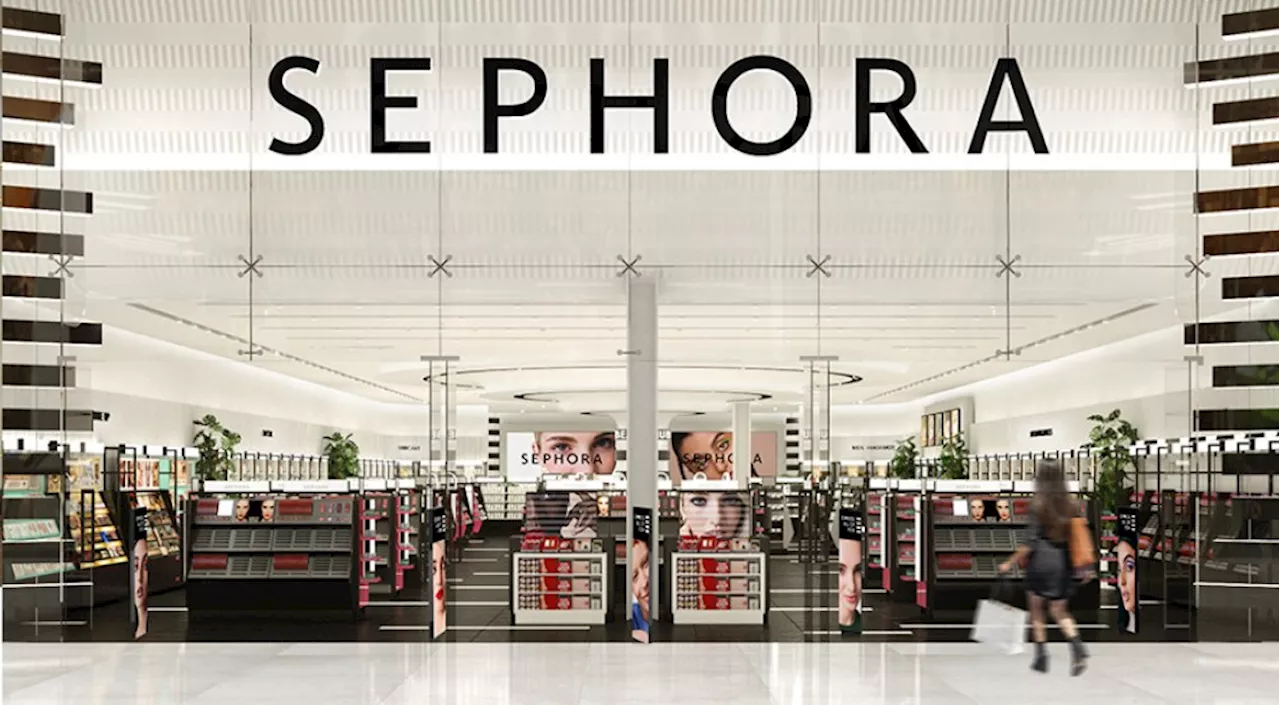
After an 18-year hiatus, Sephora is aggressively rebuilding its presence in the United Kingdom through a strategic partnership with Marks & Spencer. The beauty giant plans to manage the full beauty category within M&S stores, ranging from small 50-square-meter boutiques to larger 300-square-meter setups.
The 18-year gap between Sephora's 2005 exit and its UK return
Sephora is not a stranger to the British market, but its previouus attempt ended in 2005 when the retailer struggled to compete with established giants like Boots. Since then, the brand has been absent from the UK landscape, but its recent re-entry—starting at London’s Westfield mall—is proving to be a different story. As reported by WWD, the retailer has already expanded to 18 stores across the country, including locations in Kent's Bluewater shopping center.
This comeback is part of a larger "cultural redevelopment" aimed at making the brand feel local again. Unlike its previous tenure, Sephora is now leveraging a mix of physical storefronts and a booming digital presence to capture a market that is heavily influenced by trends coming out of the United States .
A full beauty takeover in stores ranging from 50 to 300 square meters
The partnership with Marks & Spencer represents a significant escalation in Sephora's strategy compared to its other international collaborations. While the retailer works with El Corte Inglés in Spain on only a portion of their beauty assortment, the M&S deal involves Sephora taking charge of the entire beauty category. This move is designed to ensure a consistent customer experience across the UK,regardless of whether a shopper is in a massive flagship or a compact shop.
According to Spindler, the assortment within these M&S locations will vary based on the available floor space, which can range from as little as 50 square meters to as much as 300 square meters. To complement the physical stores, the partnership will also utilize marksandspencer.com to offer a wider online range, including home delivery and Click & Collect services from M&S locations nationwide.
Why the UK's skincare appetite is driving the E.l.f. Beauty debate
A major driver behind this expansion is the specific behavior of the British consumer, who shows a massive appetite for skincare. Spindler noted that UK shoppers have a unique ability to pivot between mass-market products and premium luxury within the same shopping trip. This fluidity is why the potential inclusion of brands like E.l.f. Beauty is being closely watched.
While some might categorize E.l.f. as a strictly mass-market brand, Spindler argues that the brand's success is actually rooted in its high-value marketing model. While Sephora has not confirmed if E.l.f. will be part of the M&S lineup, the brand's ability to fuel assortments with what consumers are actively searching for makes it a likely candidate for the new UK strategy.
Will M&S essentials shoppers become the next Rare Beauty obsessed?
The ultimate success of this partnership depends on how well two very different customer bases interact. As Paul Archer, CEO of the brand advocacy platform Duel, noted to WWD, there is a question of whether the traditional M&S shopper—who often visits for food and fashion essentials—will be enticed by Sephora’s high-energy beauty curation.
There are still several unknowns regarding the rollout. While the partnership is confirmed, the specific brand lineup for the M&S stores has yet to be announced. The industry is waiting to see if the "credibility" Sephora holds with younger shoppers can successfully cross-pollinate with M&S's recent efforts to modernize its image through events like London Fashion Week.
Comments 0