
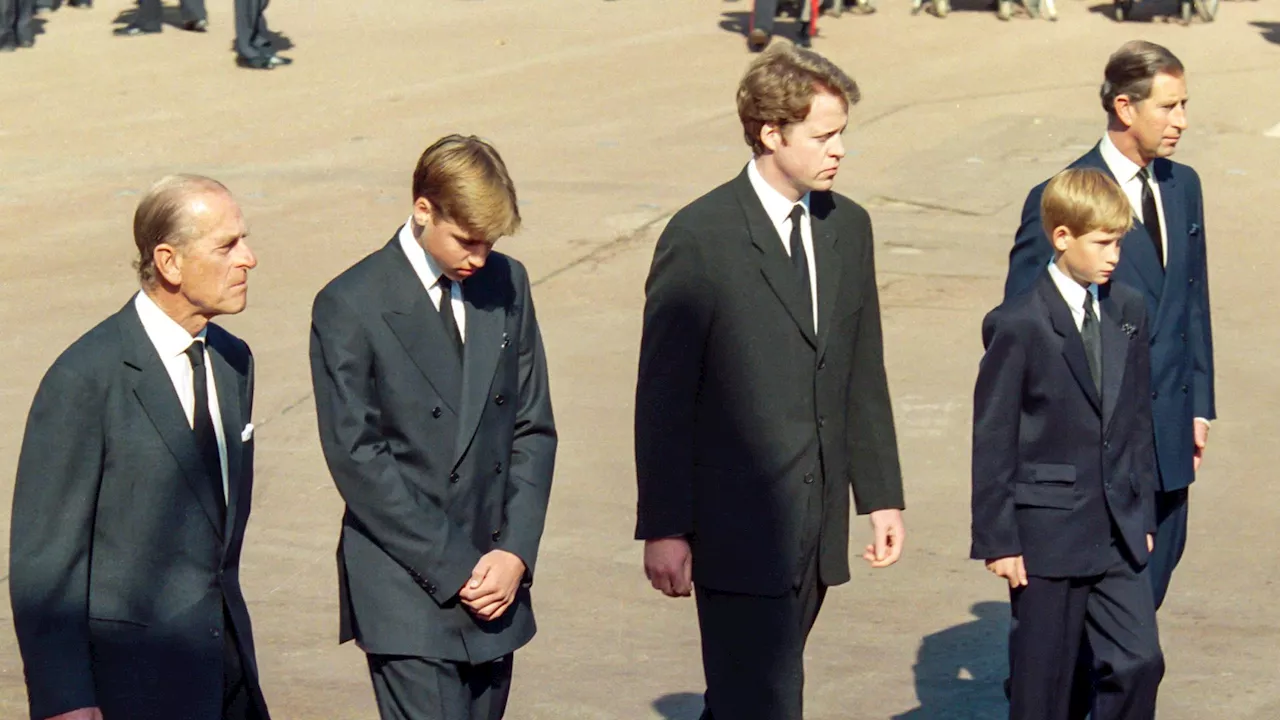
Earl Spencer has shared new details regarding the 1997 funeral of Princess Diana. in a recent book, he describes a tense disagreement between Prince Philip and King Charles over the procession's layout during one of the most watched events in royal history.
How Prince Philip overruled King Charles on the 1997 funeral formation
According to Earl Spencer , the arrangement of the five chief mourners walking behind Princess Diana's caskeet was not a simple matter of protocol, but a point of contention. Prince Charles, now King Charles III, had reportedly planned a specific formation where he would occupy the center position with Prince William to his right and Prince Harry to his left.
However, the report says that Prince Philip intervened, using an "even voice" to shut down any disagreement. Prince Philip insisted that King Charles represent his sister and the wider family by staying in the middle with the two grandsons on either side, while Earl Spencer and Prince Philip themselves would occupy the outside flanks. this shift ensured that the motherless Prince William and Prince Harry were shielded and supported by their father and grandfather.
Earl Spencer notes that during this emotionally devastating day on September 6 , 1997, Prince Philip's usual gruff demeanor was absent. Instead,he describes the Duke of Edinburgh as exhibiting a "calm and quiet kindness" and a clear determination to support his grandsons through their grief.
The 'pained' reaction of King Charles to his father's authority
The interaction highlights the rigid hierarchy of the House of Windsor, even in moments of extreme tragedy. Earl Spencer recalls that when Prince Philip overruled the plan, King Charles "looked pained" by the correction. Despite his apparent frustration, the then-Prince of Wales capitulated to his father's authority without saying a word.
This moment of submission reflects the lifelong dynamic between the two men, where the Duke of Edinburgh's word was final. For the readers of Pembece, this glimpse into the royal internal machinery reveals that even the most curated public images—like the solemn walk to the funeral carriage—are often the result of last-minute power struggles and strict familial commands.
Why the Palace suggests fraternal grief 'colored' Earl Spencer's memory
The claims made in the new book have not gone unchallenged.. A spokesperson for King Charles III issued an extremely rare response to the allegations, noting that while the Palace does not typically comment on books, the King is mindful of how grief can distort one's perspective. The statement suggests that the "pain of fraternal grief" can cloud reason and "color memory" in ways that may not be recognized even decades later.
This response leaves several critical questions unanswered. It remains unclear whether the Palace is denying the specific conversation about the funerl formation occurred, or if they are simply questioning Earl Spencer's interpretation of the emotions involved. Furthermore, the source does not provide a direct rebuttal to the specific claim that Prince Philip overruled King Charles, focusing instead on the psychological effects of loss.
A 1997 moment that mirrored the lifelong tension between the Spencers and the Windsors
This dispute over a funeral walk is more than a royal anecdote; it is part of a decades-long friction between the Spencer family and the British monarchy . The 1997 funeral was a pivotal moment where the public's affection for Princess Diana clashed with the monarchy's desire for controlled tradition. By including Earl Spencer on the flanks of the procession, the arrangement acknowledged the importance of Diana's birth family, even as tensions simmered beneath the surface.
The current resurfacing of these memories suggests that the wounds of 1997 have not fully healed. As the royal family continues to navigate the legacies of both Prince Philip and Princess Diana, these archival disputes serve as a reminder of the precarious balance between private family grief and the performative requirements of the Crown.
Comments 0