

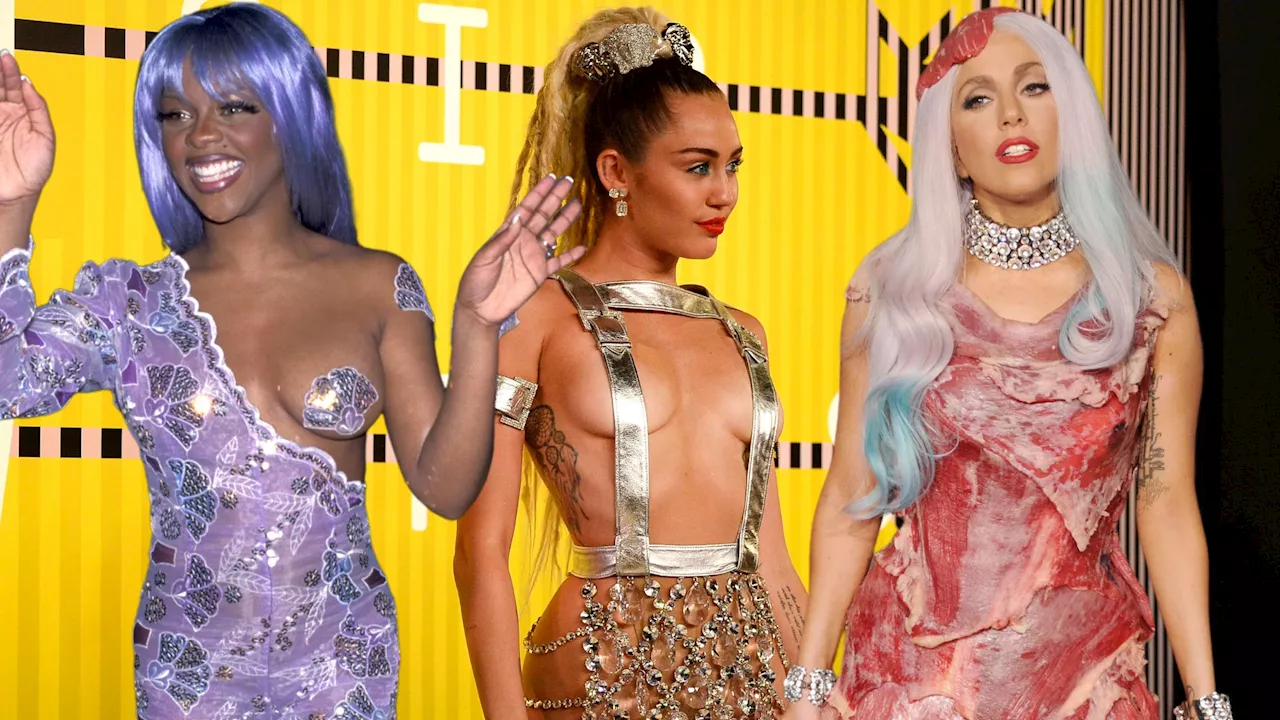
The MTV Video Music Awards have spent decades defining the intersection of music and high-concept fashion. Since its 1984 debut, the ceremony has remained a space where traditional dress codes are routinely ignored in favor of spectacle.
The era of Lil' Kim's seashell pasties and Rose McGowan's chainmail
The VMAs built their reputation on pure, unadulterated shock value. As the report highlights, the late 1990s and early 2000s were defined by artists who used their bodies as the primary medium for disruption. We saw Lil' Kim make history in 1999 with her lilac jumpsuit and iconic seashell-shaped nipple pasty, and Rose McGowan risk it all in a 1998 chainmail midi dress that famously left little to the imagination.
This period wasn't just about skin; it was about subverting expectations of what a pop star should look like. Whether it was Courtney Love's 1995 mix of ripped fishnets and leopard print or Lady Gaga's 2010 meat dress, the goal was to ensure the audience couldn't look away. These moments created a legacy of "underwear-as-outerwear" that still echoes through the industry today.
From Madonna's "Boy Toy" belt to Taylor Swift's Easter eggs
As the industry has matured, the method of making an impact has shifted from physical shock to intellectual engagement. While Madonna's 1984 debut in a punk-rock wedding dress with a "Boy Toy" belt was about raw attitude, modern stars like Taylor Swift use fashion to communicate complex narratives.. According to the source, Swift's 2014 Mary Katrantzou gown, featuring embroidered alphabet letters, was widely interpreted by fans as a clue regarding her upcoming album.
This evolution suggests that the "shock" of the modern era is found in the details rather than the amount of skin shown . Today's pop stars, including Sabrina Carpenter and Tyla, often lean into archival loans and tributes to music icons to build their brand. The red carpet has become a scavenger hunt for the most dedicated fans, moving the conversation from "what are they wearing?" to "what does this mean?"
The enduring influence of Y2K and the "naked dress" trend
The visual language of the VMAs often cycles through decades of aesthetic trends. The report notes how Britney Spears' 2000 performance in a crisscross bra top and denim skirt epitomized the Y2K uniform, a look that continues to resurface in contemporary fashion. We see this cycle repeat in the recent 2024 appearance of Addison Rae, who embraced a padded bra and tulle train look in a custom Miss Claire Sullivan co-ord.
Even the "naked dress" remains a staple, though its execution has changed. While Rose McGowan's 1998 look was about raw exposure, more recent iterations, such as the 3D-flower embroidered sheer dress worn by Larsson, suggest a more whimsical, high-fashion approach to the trend. This suggests that while the "rules" of the VMAs are non-existent, the trends themselves are deeply cyclical.
Will the 2026 VMAs find a new way to break the internet?
With the next ceremony scheduled for September 28, 2026, the industry is left wondering how artists will top the legendary moments of the past. The source notes that it is increasingly difficult for A-list artists to shock the masses after decades of seeing everything from teddy bear bodysuits to meat dresses .
One major question remains: can a "shock" moment still exist in an era where every outfit is designed to be a viral TikTok moment? As artists move toward highly curated, "Easter egg" laden looks, the possibility of a truly spontaneous, unscripted fashion moment feels diminished. We are also left to wonder if the "naked" trend has reached its peak or if there is a new, even more daring aesthetic waiting in the wings.
Comments 0