

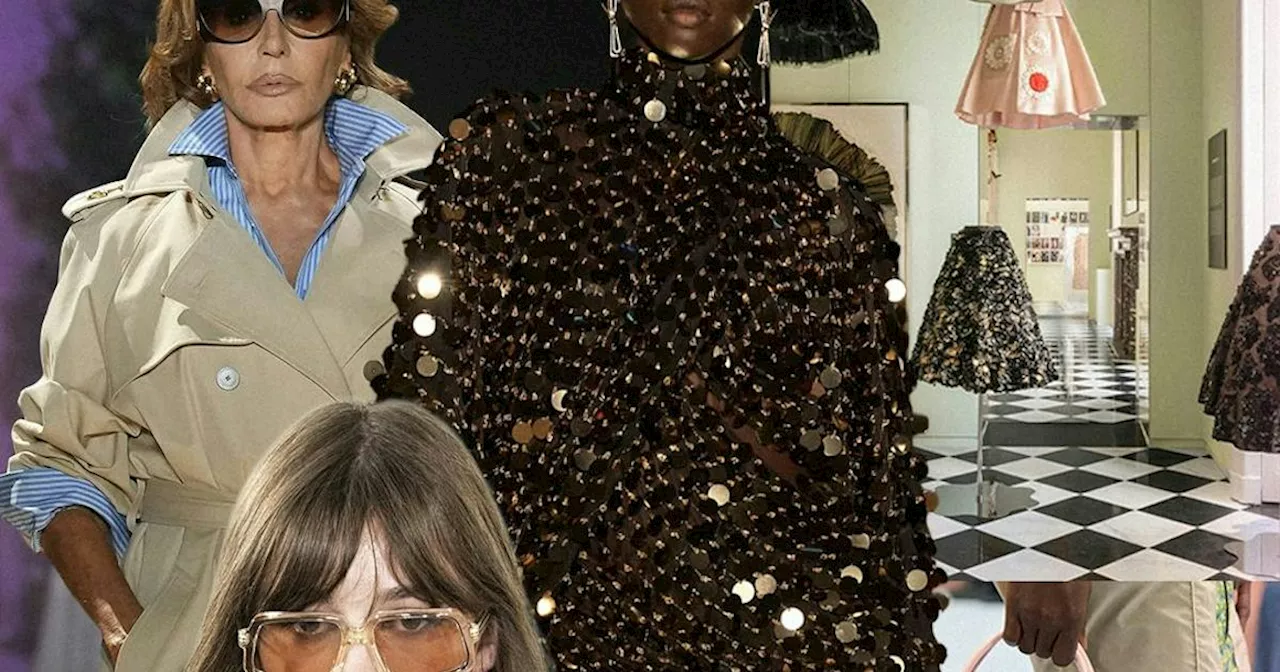
Milan Fashion Week Spring 2027 featured over 50 shows and 80 presentations across a week of Italian luxury. Highlights included a retail-inspired set for Gucci and a massive archival exhibition for Prada.
The 1988 archive look anchoring the eight-story Pradasphere
Prada has transformed its presence in the Galleria Vittorio Emanuele II into a vertical journey through the brand's history. According to the report, the new eight-story space houses the "Pradasphere" exhibition, which features the final look from Miuccia Prada’s first ready-to-wear collection from 1988. This archival focus extends to a rotating room of skirts, bridging the gap between a 2004 exhibition and the current Spring 2027 collection designed by Miuccia Prada and Raf Simons.
This move reflects a broader trend in luxury fashion where heritage is no longer just a footnote but the main attraction. By turning a retail space into a museum, Prada is leaning into the "archive luxury" craze that has dominated social media, where Gen Z consumers treat vintage pieces as high-status artifacts. The Pradasphere isn't just a store; it's a strategy to solidify the brand's intellectual authority in a crowded market.
Demna’s Gucci runway as a supersized fantasy store
In one of the season's most conceptual moments, Demna reimagined the Gucci runway as a giant, fictionalized version of a Gucci boutique. As the report describes, the set included racks and counters where models did not simply walk, but instead "shopped" and lingered, turning the presentation into a piece of live fashion theater. This approach shifts the focus from the garment as an object of art to the garment as an object of consumption.
This "retail theater" echoes the surrealist tendencies seen in recent internet-culture-driven fashion, where the experience of buying the item is as curated as the item itself. By blurring the line between the catwalk and the checkout counter, Gucci is commenting on the performative nature of luxury shopping in the digital age.
Six-high stacked Havaianas and Bottega Veneta fishnets
Footwear in Milan took a turn toward the avant-garde, following a trend of "freaky footwear" that began with Chanel's resort sandals. MM6 Maison Margiela collaborated with Havaianas to produce flip-flops stacked six-high in a rainbow of colors. Meanwhile, at Bottega Veneta,Kendall Jenner and other models wore feet encased in twisted fishnets, while Marni introduced strappy sandals paired with attached knee-high socks.
This pivot toward the exaggerated and the "ugly-chic" suggests a fatigue with the minimalist "quiet luxury" that has dominated the last few seasons. When brands like Bottega Veneta and Marni embrace distorted silhouettes, they are signaling a return to maximalism and a desire to provoke a reaction on social media feeds,where visual shock value drives engagement.
Raffaella Carrà's influence on Fendi and Lee Miller's solarization at Ferragamo
The season embraced a high-glamour "diva mode," with Fendi's Maria Grazia Chiuri drawing inspiration from Italian pop icon Raffaella Carrà to create a collection of lace and lingerie. At Ferragamo, Maximilian Davis closed his show with Anok Yai in a gown inspired by the solarization photography of Lee Miller and Man Ray. Davis noted in the show notes that he was inspired by women who "were subjects of imagery but also traveled the world to create their own."
This focus on female agency and historical icons marks a shift toward more narrative-driven collections. Rather than just presenting a "vibe," houses like Ferragamo and Fendi are anchoring their Spring 2027 looks in specific feminist and artistic histories, appealing to a reader who wants their luxury purchases to carry intellectual weight.
The missing details on Sunnei's debut at Moschino
While the season was packed with activity, the report notes that there was only one official creative-director debut: Sunnei founders Loris Messina and Simone Rizzo at Moschino. However, the report provides very little detail on the actual aesthetic direction or the specific looks presented by the Sunnei duo. It remains unclear how Messina and Rizzo intend to evolve the Moschino identity, which has historically been defined by camp and irony, and whether their vision will align with the more archival or surrealist trends seen at Prada and Gucci.
Comments 0