
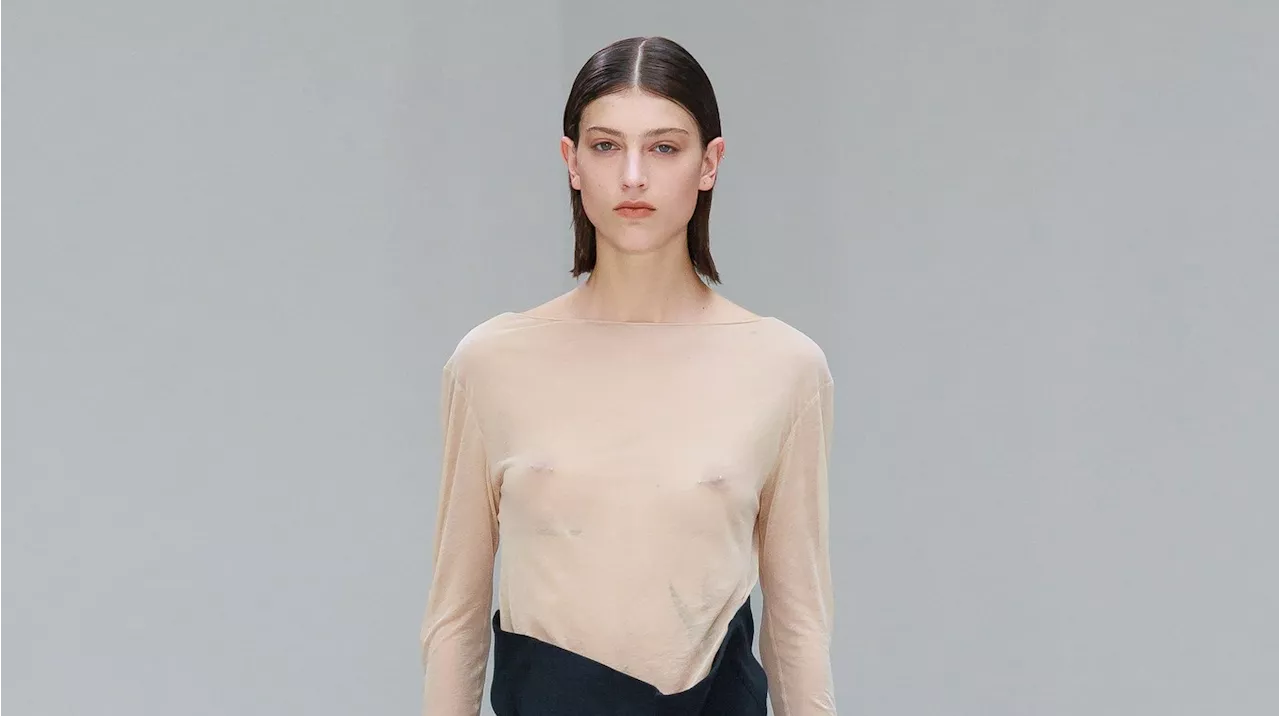
Shanghai-based designer Ruohan Nie recently unveiled her Spring 2027 collection, titled "Between Strokes," which blends industrial art with traditional heritage. The showcase featured a mix of modular garments and sculptural elements that reimagined the designer's previous approach to silhouette.
How the 'heng, shu, pie and na' stokes shaped the silhouettes
The conceputal core of the Spring 2027 collection is rooted in the fundamental movements of Chinese calligraphy. According to WWD, Ruohan Nie drew inspiration from the four primary strokes—heng (horizontal), shu (vertical), pie (left-falling), and na (right-falling)—to create a visual langguage for the clothing.. By translating these gestures into physical forms, the designer moved away from traditional tailoring toward something more sculptural.
To achieve this, Ruohan Nie employed a combination of strategic cutouts and origami-inspired folds. These techniques allowed the garments to shift and move freely on the body, mirroring the fluid yet disciplined nature of ink on paper. This approach transforms the clothing from mere apparel into a series of architectural statements that challenge the viewer's perception of space and fabric.
The 8-yarn linen grid that defines the collection's texture
Technical innovation is a hallmark of the "Between Strokes" collection, particularly in the way Ruohan Nie manipulates raw materials. As WWD reported, one of the standout checkered looks was crafted from linen that underwent a complex weaving process. This specific fabric was constructed using eight yarns crossing in four directions across two surfaces to create a precise, structural grid.
This level of textile engineering suggests a move toward a more tactile, three-dimensional approach to luxury. By focusing on the intersection of yarns, Ruohan Nie creates a tension between the organic nature of linen and the rigid geometry of the grid, echoing the curved aluminum sculptures that anchored the show's physical space.
Why windbreakers and vests entered Ruohan Nie's design vocabulary
In a departure from the long, lean proportions that defined her earlier work, Ruohan Nie introduced a variety of outerwear to the Spring 2027 lineup. The collection now includes windbreaker-style pieces and versatile vests, signaling a shift toward a more utilitarian and wearable aesthetic.. This expansion of the wardrobe suggests that the designer is looking to integrate her avant-garde sensibilities into the daily rhythms of moden dressing.
These new additions function as "building blocks" within the collection. Ruohan Nie treated jackets, skirts, and sleeves as modular components that could be divided and recombined.. This modularity allows the wearer—or the designer—to rearrange the garment's form, creating a customizable experience that mirrors the way a calligrapher might rearrange strokes to form a new character.
A shift from the rigid proportions of Ruohan Nie's earlier work
The Spring 2027 collection represents a pivotal moment in Ruohan Nie's evolution as a designer. While her previous collections were often noted for their strict, elongated silhouettes, this latest iteration prioritizes a loosened character . This transition reflects a broader trend in global fashion where the boundary between "conceptual art" and "ready-to-wear" is becoming increasingly blurred, allowing for more organic movement and comfort .
By loosening the proportions, Ruohan Nie is not just changing the fit of the clothes but is altering the emotional resonance of the brand. The move from rigidity to fluidity suggests a designer who is becoming more comfortable with ambiguity and the way fabric naturally drapes on the human form, rather than forcing the body to adhere to a predetermined architectural shape.
Which unconventional materials will accompany the curved aluminum sculptures?
While the report highlights the use of linen and aluminum, it leaves several questions regarding the full material palette of the collection. WWD mentions the use of "unconventional materials" alongside knit manipulation, but does not specify exactly what these substances are. Whether these include recycled plastics,bio-fabrics, or industrial metals remains to be seen.
Furthermore, it is unclear how the modular "building block" system will be implemented for the consumer. It remains an open question whether these garments will be sold as customizable sets or as fixed pieces that merely look modular. As the fashion world looks toward 2027, the scalability of such complex, hand-woven linen grids will also be a point of interest for industry analysts.
Comments 0