
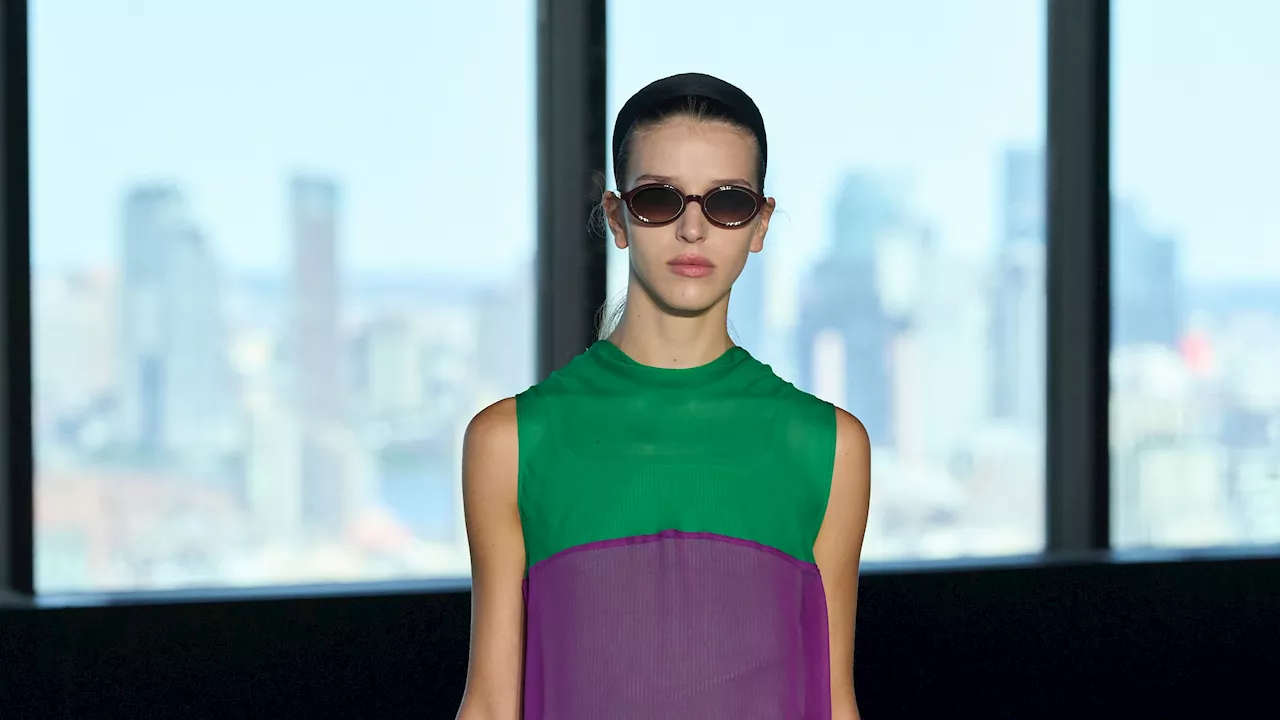
Designer Zankov recently debuted his Spring 2027 Ready-to-Wear collection,drawing inspiration from 1960s space-age aesthetics. the show blended his Soviet Russian roots with a futuristic, shimmering mod style.
A Soviet-insired nod to 1960s mod style
The collection opened with the track “Le Tourbillon,” a song that set a romantic, nostalgic tone for the runway. As reported in the source, Zankov used this musical backdrop to transport the audience to his childhood in Soviet Russia, specifically drawing on his mother's distinct mod aesthetic.
This personal history manifested in textures and silhouettes reminiscent of the mid-century era. Zankov recalled his mother's preference for mohair sweaters and metallic platform shoes, elements that helped inform the collection's blend of analogue nostalgia and forward-looking design.. By leaning into these 1960s touchstones, the designer attempts to reconcile the simplicity of the past with an unfathomable future.
Purple corduroys and disco-ball paillettes take center stage
Color and texture were the primary drivers of the Spring 2027 show, with a heavy emphasis on high-shine finishes . The palette featured striking purples paired with green, alongside a fuchsia pink button-down layered under an orange paillette-laden vest. The designer's signature shimmering paillettes returned with a "disco ball sheen," moving away from subtle accents toward more maximalist, sparkling statements.
Specific pieces like paneled purple basketball-length shorts and metallic miniskirts paired with black tights suggest a pivot toward a more playful, "twee" aesthetic. This look combines the structured , geometric elements of 1960s mod fashion with the high-octane energy of disco, creating a hybrid style that feels both vintage and modern.
The Meatpacking District move to DVF headquarters
Following his recent debut at Diane von Furstenberg, Zankov has transitioned his eponymous brand into the DVF headquarters located in New York's Meatpacking District. This strategic move places the two brands in the same building, a transition the report describes as a "left brain, right brain split" that allows the two creative energies to converge .
Zankov's design philosophy within this new space centers on the art of mixing disparate elements.. He expressed a belief that layering different textures and styles—such as a vintage-inspired jacquard quarter-zip sweater tucked under a printed wrap shirt—is an essential tool for the modern wardrobe.. This approach aims to provide a sense of "funk" and "cool" for the upcoming season.
Will the 'future of twee' actually land in our closets?
While the collection makes bold stylistic claims, several questions remain regarding the brand's commercial trajectory. The report suggests a potential "future of twee," but it is unclear how this specific, niche aesthetic will translate to broader retail markets or mainstream consumer habits. Additionally, while the designer speaks of a "stylish future," the specific ways Zankov intends to reconcile analogue nostalgia with modern technological leaps remain unaddressed in the current reporting.
Comments 0