
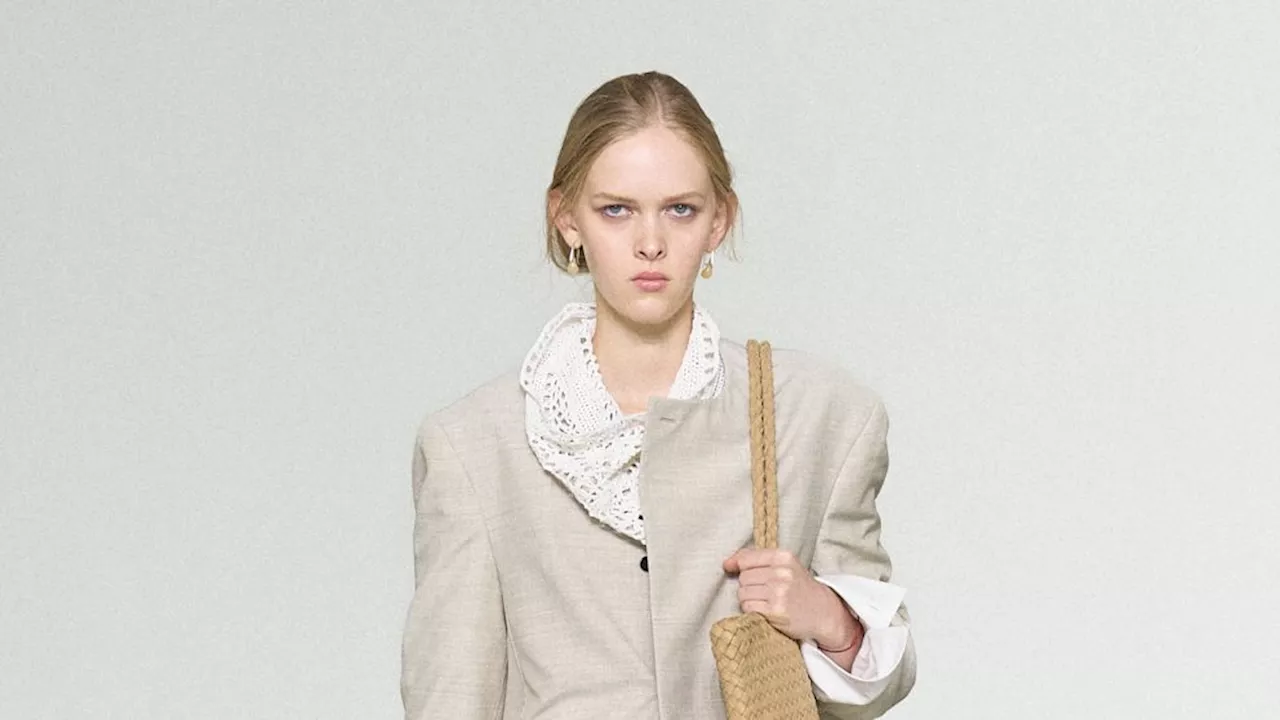
Louise Trotter recently debuted her third collection for Bottega Veneta in Milan.. the British designer focused on the transition between seasons, moving from heavy winter protection to the lightness of summer.
The 'de-robing' process from winter protection to summer lace
For Louise Trotter, the move from the northern hemisphere to Milan provided a new perspective on how the four seasons dictate the way people live and dress. This collection serves as an observation of that movement, which Trotter describes as a process of "de-robing" as the weather shifts from the protective layers of winter toward the openness of spring and summer.
This shift marks a significant evolution in Trotter's tenure at Bottega Veneta. During her first two seasons with the house, the sheer volume of available artisanship and luxury materials tended to make the garments feel overly heavy, particularly in the women's line.. By focusing on lightness this time, Trotter is attempting to align the brand's high-craft identity with a more breathable, wearable sensibility.
This approach mirrors a broader trend in luxury fashion where "quiet luxury" is evolving into a more tacttile, craft-oriented experience. By catering to an arty crowd that values creativity over blatant branding, Bottega Veneta continues to position itself as a sanctuary for those who prioritize the process of making over the logo.
From knotted hems to butter yellow chinos
The runway show began with a focus on outerwear that blended structure with an unexpected, casual edge. According to the report, the coats featured padded, slightly exaggerated shoulders, while some hems were knotted up, creating a look as if the wearer were preparing to wade into water.
As the collection transitioned into spring, the color palette shifted toward vibrant pastels... The report highlights a specific combination that captured the audience's attention: a lilac top layered over a boardroom blue-and-white striped button-down, paired with butter yellow chinos.. This juxtaposition of corporate staples with playful colors signals a move toward a more eclectic, lived-in version of luxury.
Adding to the technical display, Trotter incorporated baby intrecciato leather scarves wrapped around the waist. This use of the brand's signature woven leather demonstrates how the Bottega Veneta atelier is adapting its most famous technique into smaller, more versatile accessories that feel less formal and more integrated into a daily wardrobe.
Handmade lace and the electric red ruched dress
The final phase of the show embraced full summer aesthetics, utilizing a variety of high-texture fabrics. As the source reported, the collection featured a wide array of looks crafted from white handmade lace, chunky openwork crochet, and large-scale intrecciato patterns.
One of the most striking pieces was a vibrant red cotton dress, which featured ruching at the midsection and a knot on the side, flowing into a pleated full skirt of the same electric shade. This bold use of color and form was complemented by little black dresses (LBDs) adorned with crisscrossing skeins of silk fringe, blending classic evening wear with avant-garde textures.
The attention to detail extended to the accessories, where Trotter leaned into a handcrafted, almost primitive aesthetic. The earrings in the collection appeared to be either woven from leather or sculpted from clay, and were frequently worn mimatched, further emphasizing the "arty" and unconventional spirit of the Bottega Veneta woman.
The balance between the black one-shoulder dress and high-craft complexity
Despite the intricate textures and bold colors, the collection found a moment of stillness in a plain black one-shoulder long dress. this piece, devoid of embellishments, served as a necessary counterpoint to the complexity of the crochet and fringe, suggesting that Trotter is still searching for the perfect equilibrium between high-concept art and wearable minimalism.
However, several questions remain regarding the accessibility of this vision. While Trotter insists on the "everydayness" of these garments, the high price points of Bottega Veneta often clash with the idea of "wading into water" in a luxury coat. It remains to be seen if the brand's clientele will embrace this more casual, slightly undone approach to couture.
Furthermore, the report focuses primarily on the visual output of the show; it remains unclear how these seasonal transitions will be translated into the brand's commercial retail strategy for the upcoming year, or if the "de-robing" concept will extend into the men's collections with similar intensity.
Comments 0