

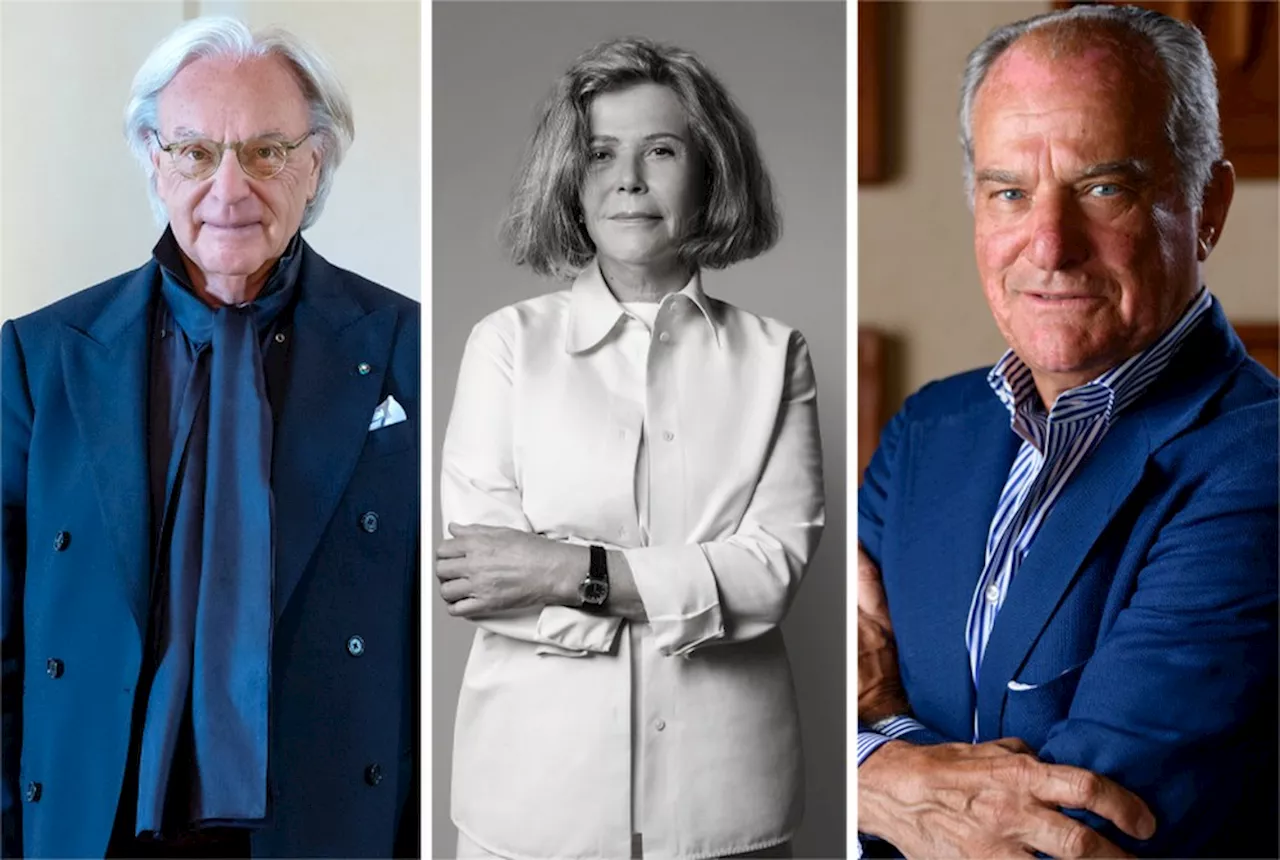
A recent report from WWD highlights the influential designers and executives currently steering the course of Italian culture and global luxury. The analysis profiles a diverse group of power players, ranging from streetwear disruptors to the stewards of legacy fashion houses like Armani and Kiton.
The $675 million Farfetch deal and the rise of D Capital
Davide De Giglio has transitioned from a streetwear catalyst to a strategic investor after co-founding the New Guards Group (NGG) in 2015. As reported by WWD, NGG became a dominant force by backing founder-led labels such as Off-White and Palm Angels before being acquired by the e-tailer Farfetch for $675 million in 2019. This move signaled a pivotal moment where internet-driven "hype" culture was formally absorbed into the luxury corporate structure.
Since exiting NGG in 2023, Davide De Giglio has launched D Capital, a boutique investment firm targeting niche luxury gems. The firm's portfolio reflects a blend of ultra-modern beauty and deep hitory, including a 55 percent stake in the menswear label Umit Benan and seed investments in Rhode—the skincare line founded by Hailey Bieber. D Capital is also attempting to revive Eredi Zucca, a fragrance and grooming house that dates back to 1652, illustrating a trend of using modern venture capital to breathe life into centuries-old Italian craftsmanship.
How Kiton's 60 flagships are pivoting to urbanwear via KNT
Antonio De Matteis, known as Totò, has spent since 2007 as the CEO of the Neapolitan brand Kiton, overseeing a global network of 60 flagships and 800 employees. While Kiton is rooted in traditional sartorial excellence , De Matteis is pushing the brand toward a younger demographic through the introduction of KNT (Kiton New Textures). This urbanwear collection, developed by his sons Mariano and Walter, represents a strategic attempt to make high-end tailoring relevant to the streetwear generation.
The expansion of Kiton under Antonio De Matteis has also moved into unexpected cultural territories, including a 2023 partnership with the Tottenham Hotspur soccer club and a collaboration with Cassina for the 2025 Salone del Mobile. While the report emphasizes the brand's growth, it remains to be seen if the KNT line can successfully bridge the gap between the rigid world of Neapolitan tailoring and the fluid preferences of Gen Z consumers.
Why Diego Della Valle delisted Tod's in 2024 to gain flexibility
Diego Della Valle, the chairman and CEO of the Tod's Group, made the strategic decision to delist Tod's from the Italian Stock Exchange in 2024. According to the report, this move was designed to shield the company from the quarterly scrutiny of puublic investors, allowing Della Valle more flexibility in his long-term vision. This preference for private control is mirrored in his management of Schiaparelli, which he acquired in 2007 and has seen a resurgence under creative director Daniel Roseberry.
Beyond the boardroom, Diego Della Valle uses his wealth to anchor the Tod's Group to Italian national identity through massive philanthropic projects. He has funded the restoration of the Colosseum in Rome and Milan's 16th-century Palazzo Marino. This blend of commercial agility—seen in the 40th anniversary of the Hogan brand—and cultural preservation ensures that the Tod's Group remains a symbol of the "Made in Italy" ethos.
The 40 percent voting power of Pantaleo Dell’Orco at Armani
Following the death of Giorgio Armani last year, Pantaleo Dell’Orco, known as Leo, has emerged as a central figure in the Armani Group. Dell’Orco now holds 40 percent of the voting shares and a 30 percent stake in the Giorgio Armani Foundation, positioning him as the primary steward of the brand's future. In addition to his financial control, he has taken on the role of creative director for the menswear collections, aiming to maintain continuity while introducing a more youthful energy to the house.
The transition at the Armani Group is not without its shifts in leadership; the group recently named Dario Vitale as the creative director of Emporio Armani to inject "new design blood" into the label. As the group moves forward, the industry is watching closely to see how Dell’Orco balances the strict aesthetic legacy of the late Giorgio Armani with the need for evolution in a rapidly changing luxury market.
From $800 hoodies to the helm of Gucci
The appointment of Demna as the artistic director of Gucci in March of last year marks a full-circle moment for the Georgian-born designer. Demna first disrupted the fashion world with Vetements, co-founded in 2014, where he famously sold oversized hoodies for $800 and challenged traditional notions of luxurry. His subsequent ten-year tenure at Balenciaga further cemented his reputation for irony, most notably with a leather bag that mimicked the Ikea Frakta carryall.
Demna's arrival at Gucci represents the ultimate synthesis of itnernet culture and heritage luxury. By applying the same irreverent, trompe-l’œil approach that defined his time at Balenciaga, Demna is tasked with steering one of Italy's most storied houses through an era where viral moments often outweigh traditional craftsmanship. His trajectory from the Royal Academy of Fine Arts in Antwerp to the head of Gucci exemplifies the current era of luxury: one where the "maverick" is now the establishment.
Comments 0