

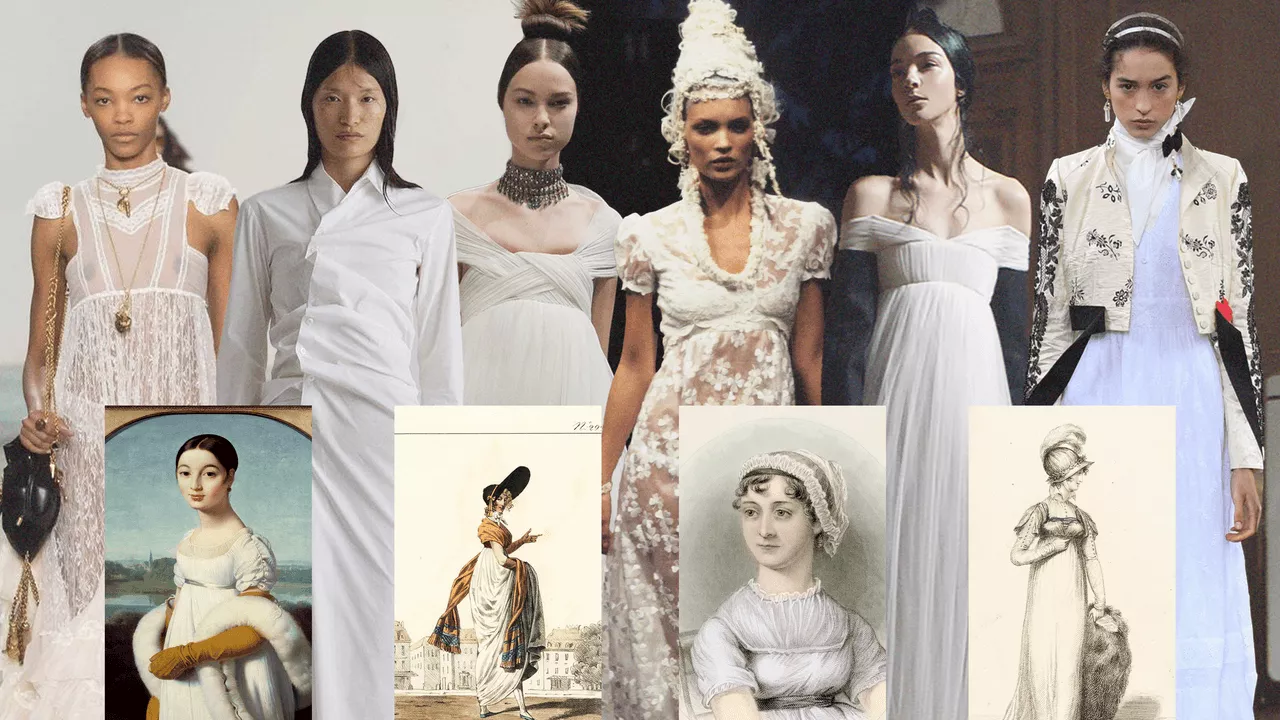
Modern fashion designers are drawing inspiration from the Regency era to celebrate Jane Austen’s Sense and Sensibility.. These looks emphasize fluid lines and high waists, moving away from the rigid structures of contemporary fashion.
The 2005 Sense and Sensibility re-release and the return of the empire waist
The current fascination with Regency-era silhouettes is closely tied to a renewed interest in the 2005 cinematic adaptation of Sense and Sensibility, which saw a re-release last year. according to the report, this cinematic nostalgia is fueling a return to the airy, straight-lined garments that defined Jane Austen's time. These styles are characterized by the "empire waist," a design choice that originally served as a reference to Napoleon.
These high-waisted dresses are designed with open necklines to emphasize the décolleté, often referred to as the "Regency shelf." This aesthetic prioritizes a lightness of form that contrasts sharply with the heavy, structured garments often found in modern high fashion.
How the Regency shelf contrasts with today's boxy runway silhouettes
For much of the recent fashion cycle, runways have been dominated by structural, boxy silhouettes that mask the wearer's form. However, as the report notes, there is a growing shift toward fluid slim suiting and the natural body. The Regency style is particularly appealing now because it accommodates the human frame without requiring the extreme modifications seen in other historical eras.
By embracing the fluid lines of the early 19th century, designers are offering an alternative to the oversized trends of the 2020s. This shift suggests a desire for clothing that feels more organic and less architectural, echoing the romanticism associated with the world of Jane Austen.
The shift from restrictive crinolines to Jane Austen's loose corsetry
A common misconception about historical dress is that it was always restrictive. In the world of Jane Austen, women did wear corsets, but they were not tightly laced in the way later Victorian garments were. The report highlights that Regency fashion avoided the use of panniers or crinolines, which historically prevented women from easily walking through doors or navigating the outdoors.
This lack of physical restriction mirrors the themes in Jane Austen's writing. The author focused less on the modification of the physical body and more on the "transformations of the mind and heart," particularly in the pursuit of love . This philosophy of comfort and emotional openness is what makes the Regency aesthetic feel relevant to the moddern woman.
Christian Lacroix's influence on Laird Borrelli-Persson's fashion philosophy
The intersection of literature and style is personified in the work of Laird Borrelli-Persson. borrelli-Persson's approach to fashion was deeply shaped by the work of Christian Lacroix, whose ability to blend romance with historicism served as a primary inspiration. This academic and artistic foundation was further solidified during Borrelli-Persson's time studying literature at Boston College and art history during a junior year abroad at Oxford.
By combining a scholarly understanding of the past with a modern eye for design, figures like Borrelli-Persson are helping to translate the domestic minutiae of Jane Austen's 251-year-old world into a visual language that resonates on today's runways.
Which designers contributed to the 61 Regency-inspired looks?
While the report mentions a collection of 61 Regency-inspired runway looks, it does not explicitly name every contemporary designer involved in the tribute. This leaves a significant question for fashion enthusiasts: which specific houses are leading this charge, and how are they modifying the empire waist for a 21st-century wardrobe?
Furthermore, it remains unclear if this trend is a fleeting homage to a movie re-release or a permanent shift toward more body-accommodating silhouettes in the luxury sector. The report focuses heavily on the historical and academic inspiration, but the specific commercial application of these 61 looks remains a point of curiosity.
Comments 0