
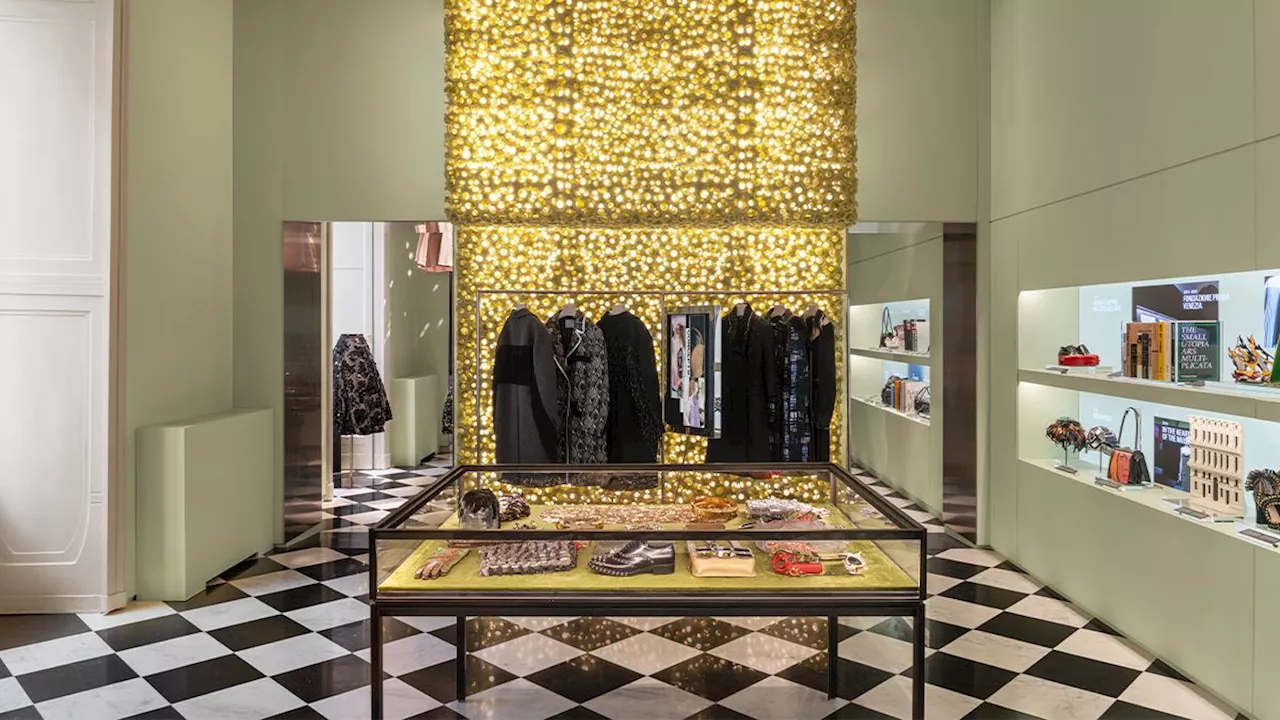
Prada is transforming its original Milanese site in the Galleria Vittorio Emanuele II into a massive eight-floor destination. The expansion, known as Prada Galleria, will integrate menswear, womenswear, and a permanent brand exhibition.
From 1913 Fratelli Prada to an eight-floor Milanese landmark
Prada is significantly expanding its footprint in Milan's historic Galleria Vittorio Emanuele II , evolving from a single boutique into a sprawling eight-floor complex. This move marks a strategic shift for the luxury house, which reported group revenues of €5.7 billion last year. By revisiting its 1913 origins as Fratelli Prada, the company is attempting to ground its modern identity in a deeper family history that predates its most famous eras.
This strategy follows a pattern seen in many heritage luxury brands that struggle to balance innovation with tradition. As Lorenzo Bertelli noted in the report, many brands face a "mid-life crisis" where they simply re-elaborate the past. Prada aims to avoid this by using its history to fuel future momentum rather than just looking backward. The project is a way to show that the brand's current maturity is a continuation of the work started by founders Mario and Martino Prada.
The "Passaggio Segreto" and the hidden treasures of the Prada archive
The new Prada Galleria features a unique underground tunnel called the "Passaggio Segreto," or Secret Passage . This connection links the existing menswear and womenswear boutiques while serving as a gallery for rare archival objects. According to the report,these "hidden treasures" are intended to reveal previously overlooked aspects of the brand's evolution, such as early experiments and obscure "firsts" from the company's history.
This architectural strategy of connection is designed to make the shopping experience feel like a journey through time. By using the underground space to display items that people may never have been aware of, Prada is turning a functional corridor into a storytelling tool. The passage serves as a physical manifestation of the brand's desire to bridge its lesser-known origins with its more celebrated recent history.
Miuccia Prada’s personal aesthetic in the Pradasphere and Appartamento
The expansion includes the "Pradasphere," a permanent exhibition located on the first floor, and the "Appartamento," a private hospitality space. The Appartamento was developed under the direction of Miuccia Prada to reflect her personal interior aesthetic, offering a glimpse into how she might imagine a domestic space.. This addition moves the brand beyond pure retail into the realms of art and private lifestyle curation.
The complex also integrates other established elements of the Prada Group, such as the Osservatorio Fondazione Prada and the historic Marchesi 1824 pasticceria. The report states that Marchesi 1824, which the group acquired in 2014, will be subsumed into this larger, unified Prada complex. This creates a multi-sensory destination where fashion, food, and art coexist within the same historic Milanese arcade.
Can the "Pradasphere" overcome Prada's history of being "esoteric" about its family?
While the project is ambitious, questions remain about how the public will receive this more personal side of the house. Lorenzo Bertelli admitted in the interview that the company has historically been "esoteric" and "shy" about sharing its family history. It remains to be seen if the "Pradasphere" exhibition can successfully translate these private archives into a compelling narrative for a global audience.
There is also the question of whether this focus on heritage will resonate with a consumer base that primarily associates Prada with the minmalism and nylon of the 1980s and 1990s . The company is betting that the brand's current maturity allows for this deeper exploration, but the success of the project will ultimately depend on visitor feedback and the brand's ability to remain contemporary while looking back.
Comments 0