

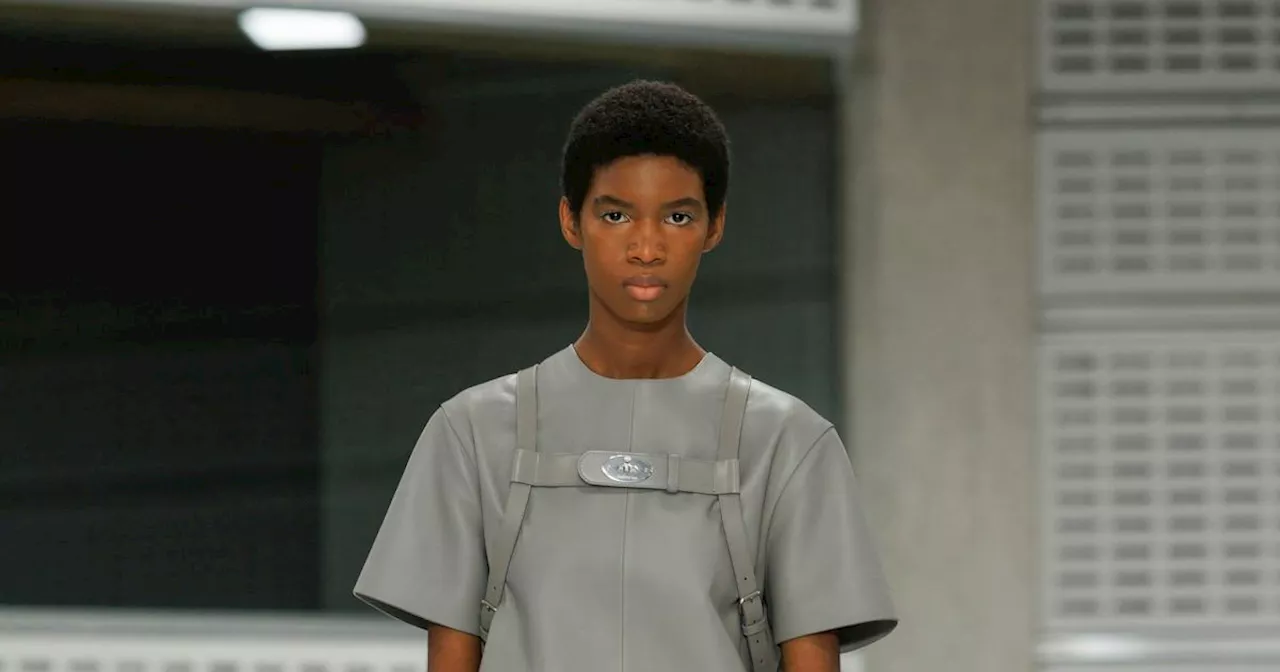
Christopher Kane has officially returned to the runway with his debut collection for the British heritage brand Mulberry. Held at London's Queen Elizabeth II Centre, the show marked a departure from the brand's previous high-concept theatricality in favor of a more grounded, leather-focused aesthetic.
Trading Claridge’s inflatable monsters for the Queen Elizabeth II Centre
The atmosphere of this debut stood in stark contrast to the high-octane spectacle of Mulberry’s 2010s heyday. During that era , the brand was synonymous with the "It Brit" movement, frequently staging extravagant shows at Claridge’s featuring giant mushrooms and inflatable monsters, often with icons like Kate Moss and Alexa Chung in the front row. As the report notes, the recent presentation opted for a much more utilitarian setting, utilizing a convention hall filled with simple office chairs.
This shift appears to be a deliberate attempt to clear away the excess.. Before the show, Kane shared a video on Instagram of an axe stripping bark from a tree, a metaphor that suggests he is pruning the brand to allow for fresh growth. By moving away from the fantastical sets of the past, Kane seems focused on the structural integrity of the brand rather than its ability to stage a circus.
Using the Bayswater’s semicircular cutouts as a ready-to-wear blueprint
Rather than introducing entirely new silhouettes, Kane has centered this collection on the DNA of the Bayswater, Mulberry’s signature structured top-handle bag. The design language of the bag—specifically its distinctive flap and semicircular cutouts—has been translated directly into the clothing . This includes tailored jackets with unique cutaway edges and skirts featuring various levels of scalloped hemlines.
The most striking application of this motif is found in a series of minidresses that appear to be constructed from layers of overlapping bag flaps, creating a textured, fringe-like effect.. Kane explained his decision to use these elements backstage, stating, "I’ve just always loved that bag, so it just felt right that we were using the flap like a logo." He described the effect as something that is "seen, but it’s not seen," suggesting a move toward more subtle, sophisticated branding.
Connecting Roger Saul’s Somerset roots to Motherwell’s football subculture
The collection also draws deep parallels between the history of Mulberry and Kane’s own personal influences. The designer incorporated elements of British youth subculture, such as oversized rugby shirts and sweatshirts, which nod to the football casuals he encountered growing up in Motherwell, Scotland. this choice bridges the gap between high fashion and the street-level energy that originally fueled the brand.
Kane also paid homage to the brand's origins, noting that founder Roger Saul began the company in Somerset in 1971 with just £500. by referencing Saul's humble beginnings of making leather belts at a kitchen table, Kane is positioning his own career—which began in his bedroom—as a continuation of that same entrepreneurial spirit. This connection to the brand's foundational craftsmanship serves to ground the new collection in a sense of historical continuity.
Whether the 'seen but not seen' aesthetic can replace the 'It Brit' era
While the collection successfully reinvents the brand's visual language, several questions remain regarding its commercial reception. The report focuses primarily on the creative execution and the designer's personal connection to the brand,but it leaves the following points unaddressed:
- How will the current luxury market react to this pivot from maximalist spectacle to a more understated, leather-centric approach?
- Will the inclusion of sportswear-inspired pieces like rugby shirts successfully bridge the gap between heritage luxury and modern street style?
- Is this "stripping back" a permanent strategic shift for Mulberry, or merely a seasonal reset?
Comments 0