
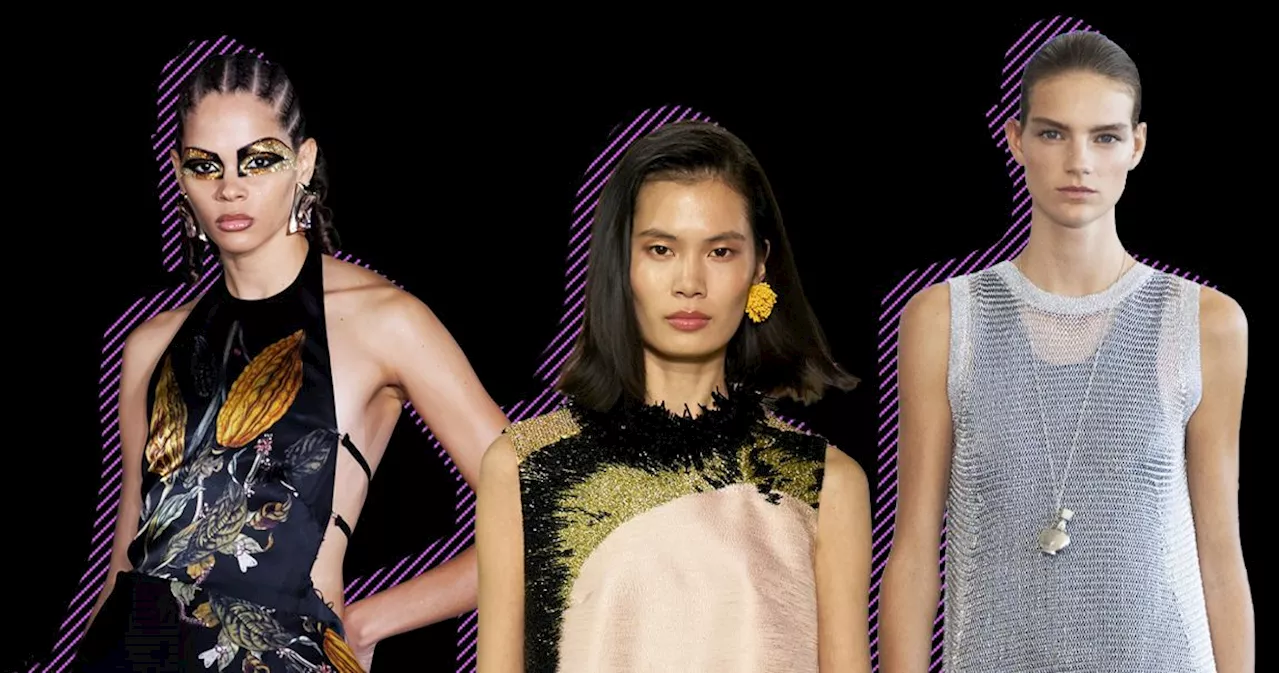
Fashion Week recently showcased a massive divide between gritty, culturally-driven street style and high-glamour legacy. While Raul Lopez’s Luar and Wes Gordon’s Carolina Herrera delivered standout performances, other designers struggled to find their footing.
Raul Lopez brings Renaissance silhouettes to the 1964 World’s Fair site
Raul Lopez’s Luar collection utilized the historic 1964 World’s Fair site in Queens to explre a collision of cultures.. The show,which featured a runway designed to orbit the Unisphere, was inspired by the designer's identity as a gay Dominican man. According to the report, the collection bridged the gap between the early Renaissance and the streets of New York City, guided by show notes titled "Christopher Street Columbus."
The designs emphasized a tension between "the street and the empire," using historical shapes like trunk hose to redefine modern masculinity. One notable look featured a cream-colored striped suit paired with white flip-flops and silver earrings. this approach allowed Lopez to move from historical references to a fresh,believable street edge that felt both deep and humorous.
Wes Gordon celebrates 45 years of Carolina Herrera with yellow tulips and fringe
Wes Gordon’s presentation for Carolina Herrera at the David H. Koch Theater offered a masterclass in brand storytelling. Set against a backdrop of tens of thousands of yellow tulips, the show celebrated the brand's 45th anniversary in the industry. The report notes that Gordon captured the essence of the founder,who was a contemporary of Andy Warhol.
The collection leaned heavily into vivid yellow tones and elegant silhouettes. Specific pieces included a minidress with yellow fringe and a slip dress featuring a magazine cover from the era when Herrera launched her company in New York. Gordon successfully balanced the brand's signature crispness with a sense of imaginative, modern wit.
The repetitive '60s knits of Henry Zankov and the ruffles of Diotima
Several designers struggled to maintain the momentum seen in the lead shows of the week. Henry Zankov presented a line of easy knits with a 1960s aesthetic, but the collection eventually felt repetitive to observers. Similarly, Colleen Allen’s use of velvet and Regency-inspired waistlines, while lovely, lacked the variety and surprise seen in other presentations.
Rachel Scott’s work for Diotima also faced criticism for its execution. While her designs were daring, the heavy use of organza ruffles on coats and dresses felt somewhat self-conscious. This lack of rhythmic variety stood in contrast to the high-energy, culturally-rich presentations from Luar and Carolina Herrera.
The missing street connection in Rachel Scott’s ruffles and Frances Howie’s tailoring
The question of everyday wearability remained a central theme for several emerging designers. For Rachel Scott at Diotima, the heavy organza lacked the "street connection" that makes clothing feel essential for daily life. The source suggests that her designs felt more like experimental pieces than items one would actually wear.
Frances Howie’s work for Fforme also left observers wanting more emotional depth. While her sikmmy knit dresses and mercury-colored slip dresses showed great technical rigor and lightness, the minimalist shapes failed to capture the imagination.. It remains to be seen if these brands can bridge the gap between technical precision and the "believable" street edge seen in Lopez's work.
Comments 0