

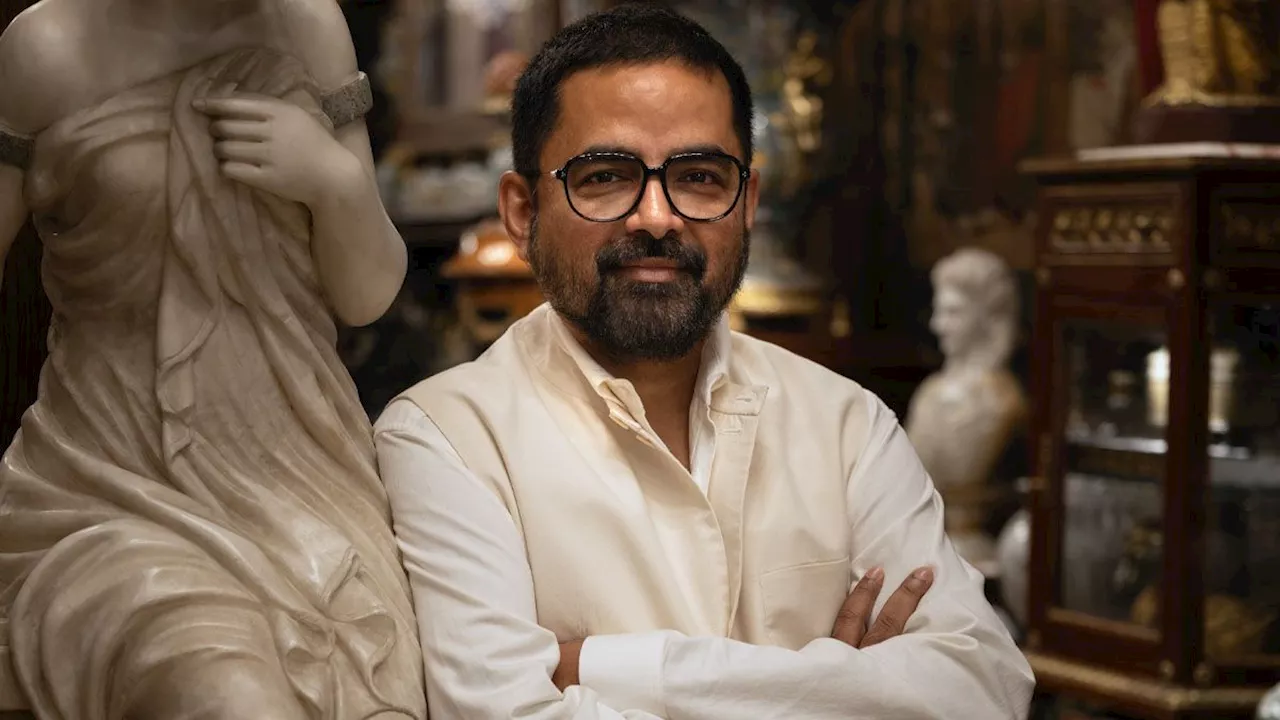
Sabyasachi Mukherjee is returning to New York Fashion Week this Tuesday, marking a twenty-year hiatus since his last runway appearance in the city. The designer is leveraging this return to transition his brand from a regional powerhouse into a dominant global luxury house.
The 20-year gap between the 2006 'Snail' collection and this New York return
When Sabyasachi Mukherjee first brought his artisanal 'Snail' collection to the United States in 2006 ,the experience served as a pivotal lesson in brand scaling. According to the report, Mukherjee realized that a label must achieve absolute dominance in its home market before it can successfully pivot to an international stage. This philosophy of 'slow fashion' and domestic strength has guided the brand's growth since its 2002 debut in Mumbai with the 'Kashgar Bazaar' collection.
This return to New York is not merely a fashion show but a symbolic reclamation of identity. By choosing to refer to his home city as 'Calcutta' rather than 'Kolkata,' Sabyasachi Mukherjee signals a commitment to the colonial-era artistic and literary heritage that informs his design codes. For the Pembece reader, this represents a shift in how luxury is defined—moving away from Eurocentric standards toward a localized, heritage-driven prestige.
How ABFRL's $107 million valuation is fueling a global retail footprint
The financial architecture behind Sabyasachi's ambition is anchored by a 2021 deal with Aditya Birla Fashion and Retail Limited (ABFRL). As reported, ABFRL purchased a 51% stake in the brand, valuing Sabyasachi at approximately INR 800 ($107 million), with $10 million specifically earmarked for US expansion. This capital infusion has allowed the brand to move beyond couture into a diversified luxury ecosystem.
The brand's physical presence now includes six flagship stores across Mumbai, Bengaluru, Hyderabad, Delhi, New York, and Calcutta. The Delhi flagship is a particular statement of scale, covering 2,415 square meters and featuring 120 chandeliers. This aggressive brick-and-mortar strategy is designed to ensure the house survives beyond its founder, creating an institutional strength similar to the legacy houses of Europe.
The shift toward high jewelry and the $2,000 Met Museum collaboration
Sabyasachi Mukherjee has strategically diversified his product offerings to capture a wider share of the luxury market. High jewelry, launched in 2017, now accounts for one-third of the brand's total revenues. This pivot into accessories was a precursor for other Indian designers, such as Masaba Gupta and Abu Jani Sandeep Khosla, who have since followed a similar diversification path.
The most significant current venture is a multi-year collaboration with the Metropolitan Museum of Art in New York. This partnership will debut a high jewelry collection inspired by the museum’s Byzantine archives, with pieces priced above $2,000. By aligning with a global cultural institution like the Met, Sabyasachi is attempting to convert Indian craftsmanship into global brand equity.
Reclaiming the narrative from being the 'anonymous backend' of European luxury
For decades, India has functioned as the invisible engine of global luxury, providing the embroidery, weaving, and stone-cutting for European houses. Sabyasachi Mukherjee is explicitly challenging this dynamic, arguing that India must create a modern luxury language that does not imitate Europe. His use of Banarasi silks, Kantha stitch work, and the Bengal tiger insignia serves as a visual manifesto against the surrender of provenance.
This movement is part of a broader surge in Indian luxury confidence. While Sabyasachi reported revenues of INR 6.45 billion ($68.2 million) for fiscal 2026, he is not alone in this pursuit. Designers like Manish Malhotra, who operates a flagship in Dubai, and Rahul Mishra, the first Indian designer at Paris Couture Week, are similarly pushing the boundaries of Indian fashion's global reach.
Can Sabyasachi outpace peers like Manish Malhotra and Rahul Mishra on the world stage?
Despite the brand's massive revenue and retail footprint, several questions remain regarding its long-term global positioning. while the report highlights the success of the Met Museum collaboration and the ABFRL investment, it remains unclear how the brand will maintain its 'slow fashion' ethos while scaling to meet the demands of global retail giants like Saks Fifth Avenue and Harrods.
Furthermore, the report focuses heavily on Mukherjee's perspective and the views of retailer Aashni Shah, leaving a gap in how Western critics and consumers—outside of the high-jewelry niche—perceive the brand's readiness to compete with established LVMH or Kering-owned houses.. Whether the 'Bengal Byzantine Broadway' collection can translate this cultural authority into sustained Western market share is the ultimate test of this New York return.
Comments 0