
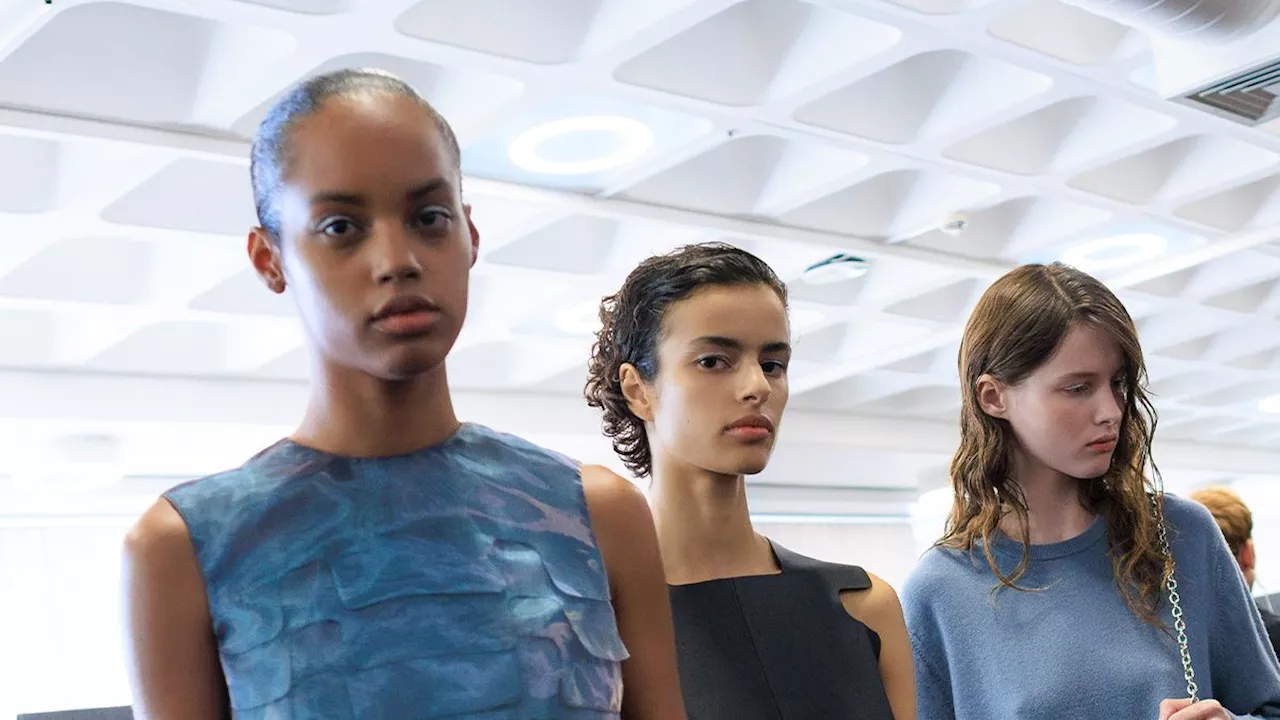
London Fashion Week’s Spring/Summer 2027 season signaled a strategic shift toward commercial viability and increased political visibility. The week featured a mix of high-profile celebrity appearances and a renewed focus on sellable, wearable designs intended to please global buyers.
The £67 billion economic engine and the political front row
The British fashion industry contributes a staggering £67 billion to the UK economy, according to the British Fashion Council (BFC). This economic weight was a central theme during the week, as industry leaders sought to solidify fashion's role as a vital cultural and financial pillar for the country.
Political engagement reached a high point this season, with figures like London Mayor Sadiq Khan and Victoria Starmer appearing at major shows.. As the report notes, Sadiq Khan attended the Alexander McQueen show, while Victoria Starmer starred in an Edeline Lee presentation. This move toward ingratiating fashion with policymakers suggests an industry effort to secure long-term stability and support from the government.
A pivot toward denim and lingerie-inspired dressing
Designers are increasingly prioritizing wearability to satisfy the demands of international retail powerhouses. Chioma Nnadi, the BFC’s head of editorial content, observed a trend toward "strong pant silhouettes" and a heavy emphasis on denim from brands such as Aaron Esh and Petra Fagerström. This shift suggests that the era of purely avant-garde, unwearable runway pieces may be giving way to a more pragmatic approach to design.
Lingerie-inspired aesthetics are also making a significant impact on the London circuit. Brigitte Chartrand, the chief buying and merchandising officer at Net-a-Porter, highlighted a penchant for "nightgown dressing" that has migrated from New York to London. This commercial focus is being echoed by major retailers like Selfridges, where buying director Bosse Myhr noted a growing interest in tailoring and day-to-night wardrobes.
How Maximilian Raynor and Ahluwalia are embracing corporate sponsors
Transparency regarding financial backing has become a notable trend among emerging designers. Maximilian Raynor, for example, has adopted a policy of total transparency, even using a loudspeaker in his studio to demystify sponsorship calls for his interns. his approach highlights a growing reliance on corporate partners to sustain creative output in a volatile market.
Other brands are also leaning heavily into non-traditional partnerships to fund their collections. The label Ahluwalia dedicated four pages of show notes to sponsors including Puma, Poppi , and Rosewood London, while the brand Chopova Lowena even utilized Lloyds Bank pet insurance as a playful branding moment. These collaborations demonstrate how designers are navigating the economic realities of the modern fashion landscape.
The tension between NewGen funding and the lack of tax-free shopping
While the UK government’s Department for Culture, Media and Sport (DCMS) has pledged £3 millioon for the next three rounds of the NewGen support program, significant economic questions remain. The report highlights a point of contention: despite industry calls, the DCMS does not plan to introduce a tax-free shopping scheme in the UK, a move that could imapct the city's ability to attract international luxury shoppers.
It remains to be seen whether the BFC’s four-year plan and the government's targeted support for emerging talent will be enough to offset the lack of broader fiscal incentives . Furthermore , the industry has not yet addressed how this shift toward commerciality might affect London's reputation as a hub for the wildly avant-garde.
Comments 0