
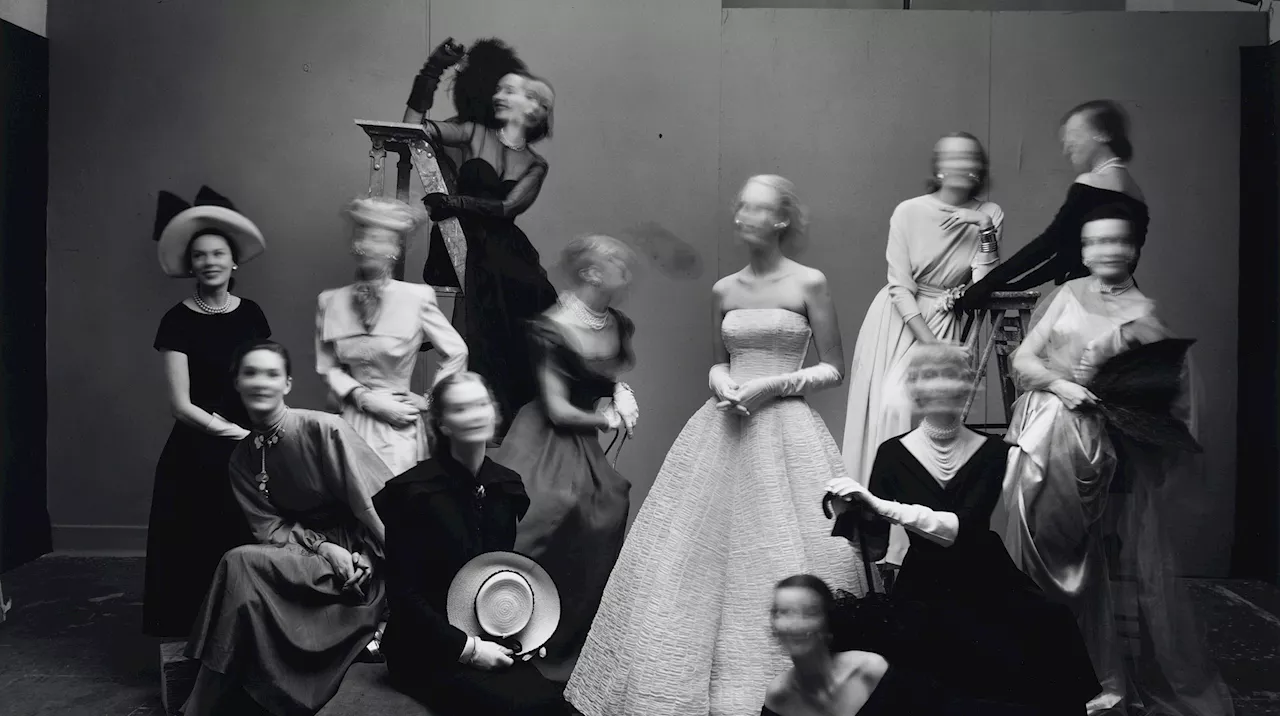
The Maison Européenne de la Photographie in Paris is currently hosting "Penn & Fashion," a retrospective of Irving Penn's work. The exhibition, which runs until January 17, 2027, traces the photographer's influence on the visual identity of haute couture.
From Lisa Fonssagrives to the 1950s Haute Couture Era
The exhibition begins by grounding visitors in the 1950s, a decade where Irving Penn helped solidify the imagery of mid-century luxury. As reported by WWD, the show opens chronologically, highlighting Penn's work with icons like Jean Patchett and Lisa Fonssagrives, the latter of whom became his wife in 1950. These early images captured the structured brilliance of Christian Dior and Cristóbal Balenciaga, turning garments into architectural studies.
By focusing on the intersection of form and fabric, Irving Penn did more than document clothes; he created a visual shorthand for sophistication. This period established the stark, clean backgrounds that would become a hallmark of his style, stripping away distraction to let the craftsmanship of the designers speak for itself.
Capturing the Reign of Yves Saint Laurent and Karl Lagerfeld
As the retrospective moves into the 1970s and 1980s,the focus shifts toward the bold transitions of the fashion world.. According to WWD, the exhibition explores Penn's work with designers such as Courrèges and Ungaro before diving into the era dominated by Yves Saint Laurent and Karl Lagerfeld. This transition reflects a broader shift in fashion from the rigid structures of the 50s to the more fluid and provocative styles of the late 20th century.
Irving Penn's ability to adapt his lens to these changing silhouettes is a testament to his longevity. his collaboration with Vogue spanned more than six decades, allowing him to witness and shape the evolution of the fashion image from the Golden Age of couture to the era of the global super-designer.
The 13-Year Sculptural Partnership with Issey Miyake
One of the most significant highlights of the show is the deep dive into the 13-year collaboration between Irving Penn and Issey Miyake. The exhibition showcases how Miyake's sculptural,avant-garde creations paired perfectly with Penn's preference for elegant simplicity. this partnership represents a peak in the fusion of photography and textile art, where the clothing is treated as a three-dimensional sculpture rather than mere apparel.
The later stages of the exhibition also feature the opulence of Christian Lacroix, the dramatic feathered designs of Chanel, and the sumptuous gowns of John Galliano.. These works, alongside striking beauty images from Vogue in the 1990s and 2000s, demonstrate that even as fashion became more theatrical, Irving Penn maintained a disciplined, refined approach to the frame.
How Penn's 60-Year Vogue Legacy Shapes Today's Digital Aesthetic
The influence of Irving Penn extends far beyond the walls of the Maison Européenne de la Photographie. his commitment to minimalism and the use of neutral space is a direct ancestor to the "clean girl" aesthetic and the high-contrast, minimalist grids seen across modern Instagram fashion accounts. In an age of over-saturated filters, the clarity and precision of Penn's work offer a blueprint for timelessness.
For the modern reader, this exhibition is a reminder that the most impactful images are often those that remove the noise. The way Irving Penn framed a Dior gown in 1950 is not fundamentally different from how today's top luxury brands approach their digital campaigns: by elevating the product to an object of art through strategic simplicity.
Which Pieces from the Nicola Erni Collection are on Display?
While the exhibition draws heavily from the MEP and Nicola Erni collections, as well as loans from The Irving Penn Foundation and the Miyake Issey Foundation, the specific curtion of the Nicola Erni pieces remains a point of curiosity. The report does not specify which rare prints or previously unseen works from the Erni collection have been selected for the show.
Furthermore, it remains unclear if the exhibition includes any interactive elements or archival notes from Irving Penn himself regarding his process. While the chronological layout provides a clear narrative, the internal dialogue between the photographer and the designers—specifically the details of the 13-year Miyake partnership—is something visitors will have to discover through the visual evidence alone.
Comments 0