
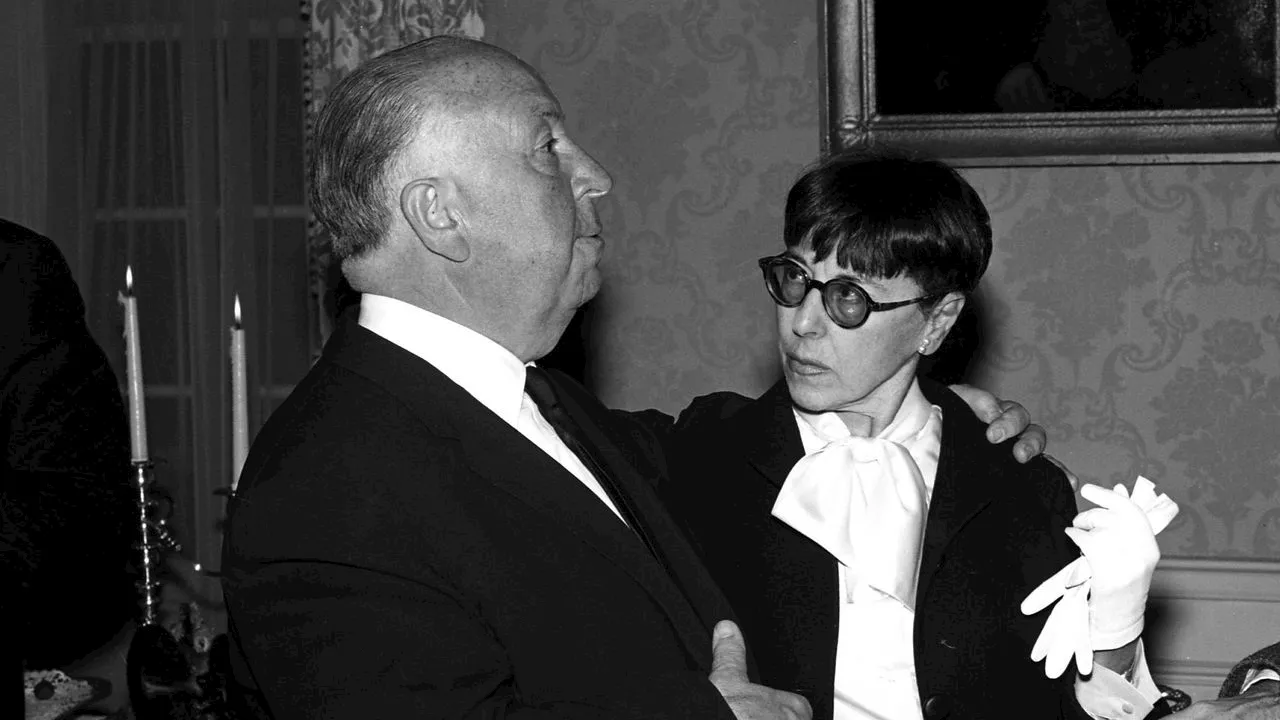
The 1946 film Notorious marked the first time director Alfred Hitchcock worked with legendary costume designer Edith Head. Starring Ingrid Bergman and Cary Grant, the movie used wardrobe to weave a complex narrative of romance and espionage.
From 1946's Notorious to Jonathan Anderson’s Dior Cruise 2027
The visual language established in mid-century cinema continues to influence the highest tiers of modern luxury fashion. As the report notes, Ingrid Bergman’s character,Alicia Huberman, served as a primary moodboard for designer Jonathan Anderson during his debut Dior Cruise 2027 show. The imagery of a stylish, reckless Bergman driving a convertible remains a potent symbol of cinematic cool.
This connection highlights how the "master of suspense" and his costume collaborator created archetypes that transcend their original era. While Hitchcock’s films are often remembered for their Nazi spy plots and uranium-filled wine bottles, the aesthetic legay of his heroines remains a cornerstone for contemporary designers looking to evoke a sense of dangerous elegance.
The zebra-print top that signaled Alicia Huberman’s "bad girl" reputation
Edith Head used specific patterns to communicate a character's moral standing without a single line of dialogue. In one of the film's most arresting scenes, Bergman wears a shimmering zebra-print top that reveals her midriff, a look designed to signal a "bad girl" persona in the social context of the 1940s. According to the source, Head utilized the stark contrast of black and white stripes to ensure the eye was immediately drawn to the character in a monochromatic film.
Beyond mere fashion, these animalistic patterns served a deeper narrative purpose. The stripes were intended to symbolize Alicia’s eventual entrapment as she was recruited to seduce a Nazi collaborator. This use of clothing as a psychological tool is a hallmark of the Head-Hitchcock collaboration, where garments act as extensions of the character's internal struggle.
How white gowns and plunging necklines tracked a spy’s descent
The wardrobe in Notorious functions as a visual map of a character's transformation from a hedonistic socialite to a sacrificial figure. Early in the film, Alicia appears in a dazzling white gown and fur wrap, a look the report compares to a "reborn Snow White" that adheres to traditional feminine rules. This costume represents her entry into a world of deceptive respectability.
As the tension escalates, the clothing becomes increasingly dramatic and eventually restrictive. a long black gown with a plunging neckline is used during one of the film's most suspenseful scenes in a wine cellar. following the revelation of her identity as a spy, the character's wardrobe shifts again, replacing glamour with a procession of restrictive collars, buttoned-up coats, and bar-like necklaces that mirror her physical and social imprisonment.
Why David O. Selznick almost chose Mainbocher over Edith Head
The iconic partnership between Hitchcock and Head was not an inevitability, but rather the result of specific casting and production shifts. The film was originally slated for production by David O. Selznick, who eventually sold the project to RKO due to script dissatisfaction. the source reveals that Selznick was considering either Travis Banton—who had previously been Head's boss at Paramount—or the renowned couturier Mainbocher to design Bergman's wardrobe.
Ultimately, it was Ingrid Bergman herself who helped secure Head's involvement. Bergman,who was famously protective of her natural appearance and refused to undergo Hollywood "makeovers," advocated for Head to ensure the costumes would satisfy Hitchcock's exacting standards. This collaboration would eventually lead to a permanent reunion in 1953 when Hitchcock signed a multi-picture deal with Paramount Pictures.
Comments 0