

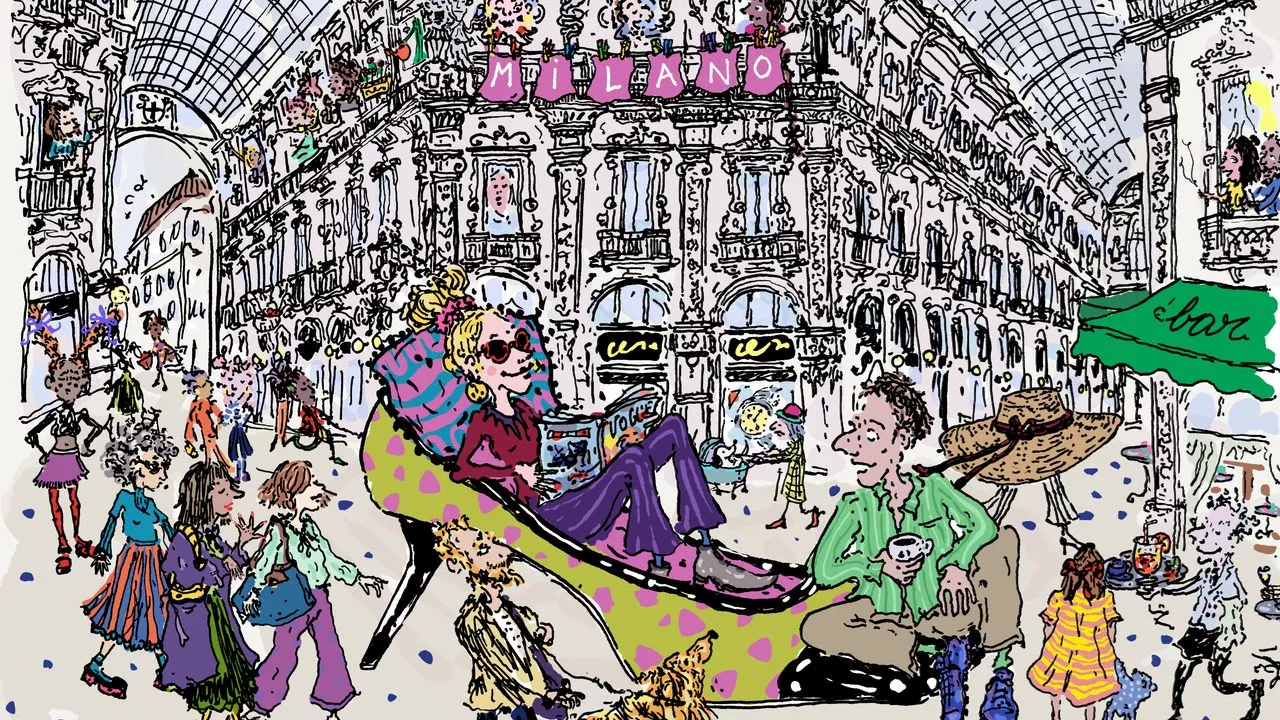
Vogue World 2026 is set to take place within Milan's iconic Galleria Vittorio Emanuele II, a landmark that has served as the city's cultural heart since 1877. The event will explore the intersection of artisanal heritage and emerging technologies like artificial intelligence against the backdrop of this historic shopping arcade.
From Giuseppe Mengoni’s 1877 iron-and-glass vaults to the 2026 Vogue World stage
The Galleria Vittorio Emanuele II has functioned as a prototype for the modern shopping mall, shaping Milan’s cultural identity for nearly a century and a half. Designed by architect Giuseppe Mengoni, the landmark features a soaring iron-and-glass cruciform vault that connects the Piazza del Duomo to the Piazza della Scala. This architectural marvel has survived everything from the industrialization of Europe to the aerial bombings of the Second World War.
As the report notes, the arcade has long been considered "Milan’s drawing room," a place where music, art, and civic life converge. This historical weight provides a profound backdrop for Vogue World 2026, an event that seeks to examine how human craftsmanship endures in an era of rapid innovation. By hosting the event here, organizers are placing modern fashion within a continuous timeline of European history.
The legacy of Maria Callas at Savini’s Table 7 and Marchesi’s mint-green salons
The Galleria is home to several establishments that have hosted the world's most influential figures for generations. For instance, the legendary singer Maria Callas was a regular at Savini, a cultural epicenter established in 1867, where she famously held court at "Table 7" during the 1950s. The café,which has been steered by the Gatto family, remains a sanctuary for those seeking refined Milanese gastronomy.
Similarly, the Marchesi family’s confectionery, which traces its history back to 1824, offers a pastel-hued mezzanine that has long been a favorite of fashion icon Miuccia Prada. according to the source, the salon features mint-green marmorino plaster and floral jacquard silk, maintaining a sense of old-world luxury that complements the high-fashion energy of the upcoming Vogue World event. These spaces represent the "lifestyle" element of the Galleria, where social status and culinary ritual meet.
Where Balenciaga’s minimalism meets Bottega Veneta’s green Saint Denis marble
Modern luxury houses have integrated themselves into the Galleria’s historic fabric by blending contemporary design with the arcade's neoclassical scale. Balenciaga, for example, has opened a boutique that emphasizes architectural reduction and structural precision to match the historic volume of the space. This approach ensures that the brand's modern aesthetic does not clash with the surrounding 19th-century grandeur.
Bottega Veneta has also established a significant presence with its 2024 boutique, which utilizes local Italian walnut panelling and green Saint Denis marble. This design choice mirrors the sweeping curved glass elements of the Galleria's exterior. Other luxury players, including Chanel, Dior, and Rimowa, continue to occupy prime real estate within the arcade, ensuring that the Galleria remains a global epicenter for high-end retail and visual storytelling .
How will the 2026 event reconcile AI innovation with 160 years of millinery heritage?
While the source outlines the incredible history of the Galleria, it leaves several questions regarding the specific execution of Vogue World 2026. Most notably, it remains unclear how the event will physically manifest the tension between artificial intelligence and artisanal craftsmanship. Will the technology be used to augment the physical space, or will it be a conceptual theme presented through digital installations?
Furthermore, the report does not specify how the event will involve the Galleria's oldest, most traditional tenants, such as the Piedmontese hatter that has been a fixture since the late 19th century. It is unknown whether these heritage brands will be active participants in the Vogue World programming or if the focus will remain primarily on the major global fashion houses like Balenciaga and Dior.
Comments 0