
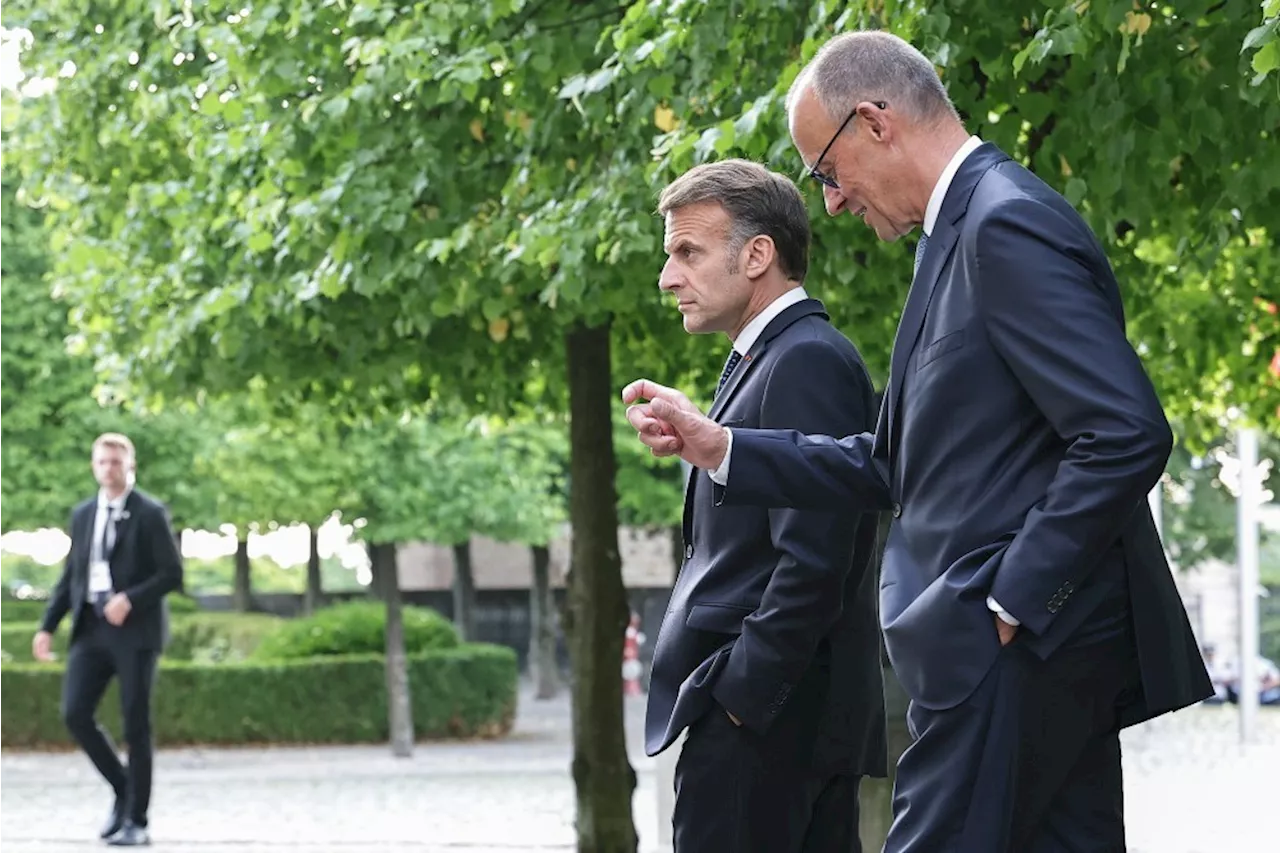
French President Emmanuel Macron and German Chancellor Friedrich Merz are calling for a faster way to protect European markets. In a letter to European Commission President Ursula von der Leyen, the leaders proposed new legal tools to combat unfair trade practices.
A European response to America's Section 301 duties
The current global trade landscape is shifting as European leaders look toward the United States for tactical inspiration. According to the report,the proposal from Paris and Berlin seeks to emulate the rapid-response capabilities seen in America’s Section 301 duties. These specific U.S. measures have been utilized by both the Trump and Biden administrations to curb the flow of Chinese products into critical American sectors .
By modeling their approach on the American system, Macron and Merz hope to address the "deluge" of imports that has begun to impact domestic producers. as reported by Reuters, the U.S. has successfully used these tariffs to slow the influx of certain goods, and European leaders now believe the EU needs similar "trade cudgels" to protect its own economic interests.
The push for a "lean and non-bureaucratic" rapid-response mechanism
French President Emmanuel Macron and German Chancellor Friedrich Merz are advocating for a new legislative "toolbox" to protect the European Union's economy from systemic market-distortion practices. In their joint communication to Ursula von der Leyen, the two leaders argued that the current EU process is far too slow to be effective in a fast-moving global market.
Currently, a months-long investigation must take place before any trade action can be approved, and the majority of EU governments must vote in favor of the plan. The new proposal would erect safeguards against these potential vetoes, imbuing the European Commission with the authority to act quickly against "economic coercion" without being stalled by political deadlock. The goal is to create a framework that is both "lean" and capable of responding to market imbalances in real-time.
Will Beijing respond to Maroš Šefčovič’s upcoming visit?
While the legislative fight intensifies in Europe, diplomatic efforts are simultaneously unfolding on the ground. European Trade Commissioner Maroš Šefčovič is scheduled to travel to Beijing this Thursday to carry out the final round of trade rebalancing negotiations. These discussions have been ongoing for four months as the EU attempts to address concerns regarding unfair competition.
However, several critical questions remain unanswered. It is currently unclear if the upcoming talks in Beijing will result in any concrete concessions from Chinese officials, or if the EU will be forced to rely solely on the legislative crackdown proposed by Macron and Merz. Additionally, the source does not specify the exact steps the Commission will take to ensure Europe successfully diversifies its supply chains to reduce its heavy reliance on China.
Protecting the 27-member bloc from market-distortion practices
The economic stakes for the 27-member trade bloc are incredibly high, as domestic manufacturing sectors face increasing pressure from global dumping and government subsidies.. The report notes that Ursula von der Leyen has herself highlighted these issues as being detrimental to the stability of the European economy .
The outcome of these high-stakes tensions will be a central focus at the upcoming summit of European leaders in Brussels, scheduled for October 15-16. As the U.S. trade deficit hits record highs and Washington considers even steeper tariffs, the EU finds itself at a crossroads between traditional diplomatic negotiation and a new era of aggressive economic defense.
Comments 0