

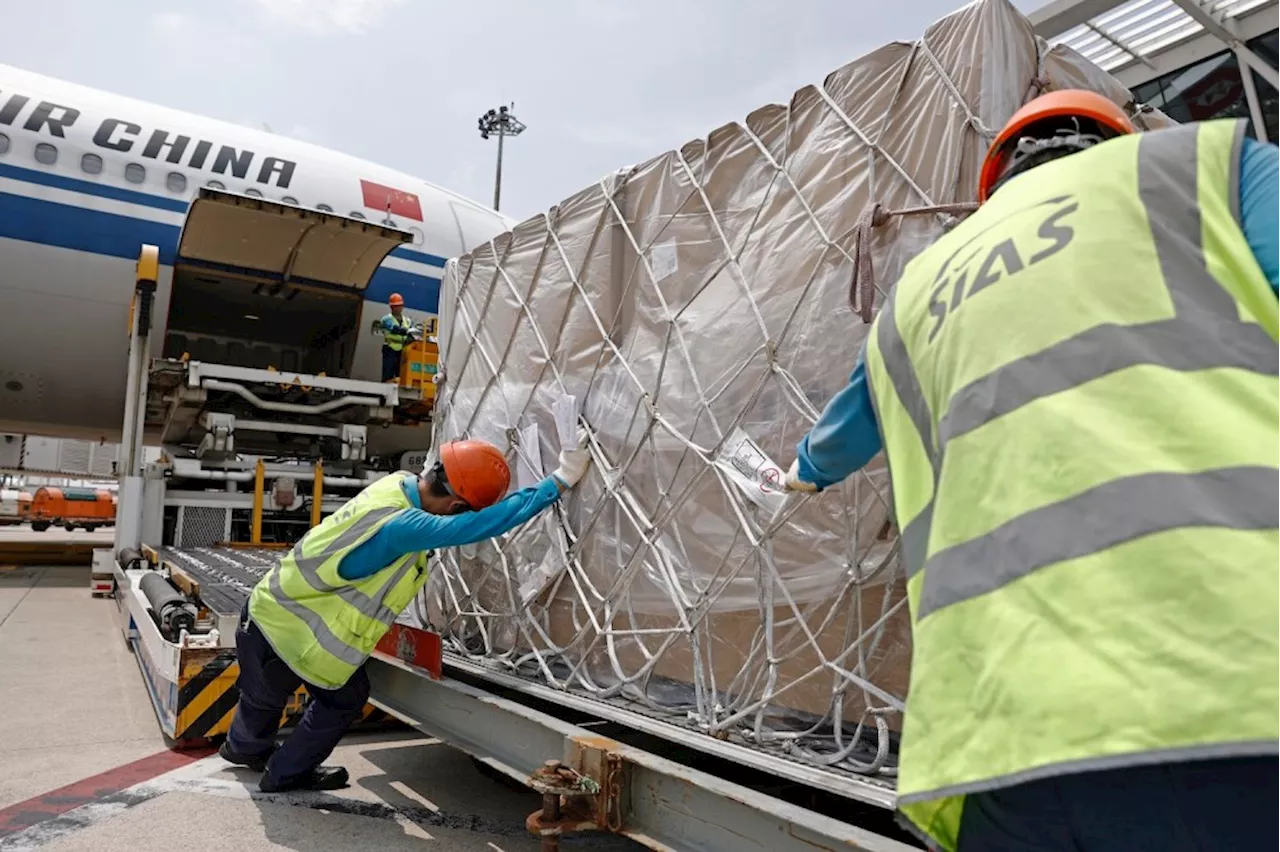
Trans-Pacific air cargo demand rose by 9.2% in July, driven by a significant increase in dedicated freighter traffic. This growth comes as companies move goods ahead of potential tariff changes, marking a sixth consecutive month of expansion for the Asia-to-North America route.
Dedicated freighters jump 13.9% as passenger belly-hold capacity falls
The shipping industry is seeing a massive pivot toward specialized aircraft. According to data from IATA, dedicated freighter traffic expanded by 13.9% year-over-year in July, marking the strongest increase for this category in over five years.. This growth comes at a time when "belly-hold" capacity—the cargo space located within passenger planes—fell by 7%, representing its first contraction.
Marie Owens Thomsen, IATA’s senior vice president of sustainability and chief economist, noted that freighters are gaining market share because they offer more operational flexibility and are better suited for larger or more specialized shipments.. This trend is supported by recent investments from major players like DHL and FedEx, who are leaning into the continued growth of the trans-Pacific trade lane.
North American carriers lead with a 7.1% increase in demand
While all regions recorded growth, North American carriers led the charge with a 7.1% increase, followed by Asia Pacific at 5.2% and Europe at 4.6%, according to IATA. This surge is particularly notable because North American cargo demand increased by 4.8% even as capacity actually declined by 1.5%.
This imbalance points to tighter utilization across the market, where shippers are increasingly relying on available space at higher costs. The shift suggests that despite fluctuations in passenger travel, the heavy lifting of global commerce is moving to dedicated wings to meet rising demand.
Tariff-related front-loading drives a 9.2% demand spike
A significant driver behind the 9.2% rise in trans-Pacific cargo demand is the strategic movement of goods to get ahead of potential trade barriers. The IATA report indicates that this strength is consistent with "tariff-related front-loading" observed throughout the summer.
This pattern echoes previous disruptions seen during the Trump administration, when country-specific tariffs and changes to the duty-free de minimis provision for goods exiting China significantly altered trade routes. for consumers, this means the items we see online are often moving in massive, preemptive waves to avoid the rising costs of international trade policy.
Spot rates reach $3.36 per kilogram amid fuel price shifts
The cost of moving goods is also on the rise, even as capacity remains relatively restrained. According to data from the market intelligence platform WorldACD, spot rates have increased 28% year-over-year,reaching $3.36 per kilogram as of late August.
While jet fuel prices have dropped from a peak of $209 per barrel in April, they remain a significant factor in logistics costs. The average global jet fuel price for the week ending August 28 was $156.85 per barrel. While this is down from the April peak, the industry must still contend with the volatility of energy markets and ongoing geopolitical tensions.
The looming November 9 expiration of punitive port fees
The stability of trans-Pacific shipping routes may face a major test this autumn. The one-year suspension of punitive port fees on vessels from China and the U.S. is set to expire on November 9.
If these fees are rienstated, it could trigger a massive shakeup in trans-Pacific networks and potentially result in billions of dollars in new charges. Industry experts are watching to see if this will force another wave of front-loading or if it will simply slow the current momentum of the Asia-to-North America corridor.
Comments 0