

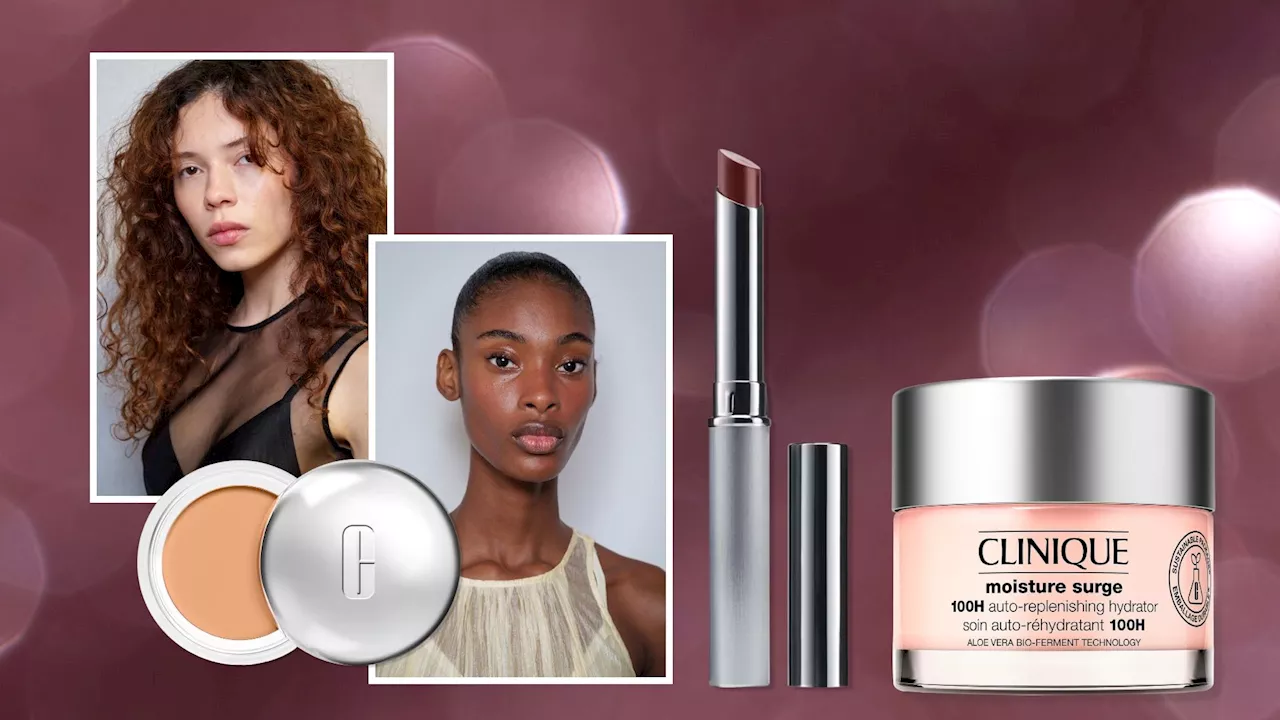
Marie Claire editors have shared their top Clinique product recommendations,ranging from nostalgic lip colors to advanced skincare. The report highlights how the brand is balancing its heritage with new, high-performance formulas designed for modern concerns.
The "Emo-Chic" allure of the Black Honey collection
For many millennials, Clinique is more than just a skincare brand; it is a vessel for nostalgia. As Marie Claire's Hannah Baxter noted, the brand's iconic Black Honey lipstick taps into a specific "Emo-chic" vibe that has remained popular for decades. This moody, mauve shade offers a sheer finish that provides a stain-like effect, a trend that was popular long before the current explosion of lip tints and stains on social media.
The brand has leaned into this legacy by expanding the line with new shades like Pink Honey and Really Rich. This strategy allows the brand to capture the "creature of habit" consumer while still offering enough variety to feel fresh. By maintaining the creamy, easy-to-blend textures that made the original products famous, Clinique is successfully bridging the gap between childhood beauty memories and adult makeup routines.
The $40 Moisture Surge 100h Gel for rosacea-prone skin
As the beauty industry shifts toward "skinimalism" and barrier-focused care, Clinique has updated its offerings to meet the needs of sensitive-skin users . According to a report from Marie Claire, the Moisture Surge 100h Auto-Replenishing Hydrator Gel Moisturizer is a standout for those with irritation-prone complexions. priced under $40, the formula utilizes aloe bioferment—a fermented version of the aloe vera plant—to help skin retain moisture without the use of common irritants like parabens or drying alcohols.
This focus on gentle, effective hydration reflects a broader trend in skincare where consumers prioritize soothing ingredients over harsh actives. Senior Beauty Editor Samantha Holender noted that the gel texture provides immediate calming effects, making it a reliable option for those dealing with conditions like rosacea. This evolution from basic moisturizers to technologically advanced, bioferment-infused gels shows how legacy brands are adapting to the sophisticated demands of modern skincare enthusiasts.
Is the eight-shade range of the Even Better Makeup Balm inclusive enough?
While Clinique's newer formulations are receiving praise, the Even Better Clinical Proantioxidant Makeup Balm has raised questions regarding its shade diversity. Beauty Editor Siena Gagliano tested the formula and found that while the sheer coverage is excellent for calming redness and feeling lightweight, the selection is limited. The balm currently comes in only eight "flexible" shades, which may not provide enough depth for a diverse range of skin tones.
Gagliano specifically noted that the lineup might struggle to stretch far enough at the deeper end of the spectrum. additionally, she warned consumers that the foundation colors can appear significantly darker in person than they do in packaging. This highlights a common tension for heritage brands: the struggle to balance a streamlined, efficient product line with the modern necessity for deep inclusivity.
Can the Even Better Clinical serum provide long-term brightening?
The brand's push into high-performance clinical skincare is best exemplified by its Even Better Clinical serum, but its long-term efficacy remains to be seen. The product, which retails for $65, leverages a proprietary brightening molecule to target dark spots. While Samantha Holender reported an immediate "glow" and noted that the fragrance-free formula is gentle on her sensitive skin, she admitted that she cannot yet speak to the long-term results.
This leaves a few questions for consumers: will the brightening effects hold up over months of use, and how does the proprietary molecule perform compared to traditional Vitamin C? While the immediate aesthetic results are promising, the true test for Clinique's clinical evolution will be the sustained, long-term performance of these more expensive, advanced formulas.
Comments 0