

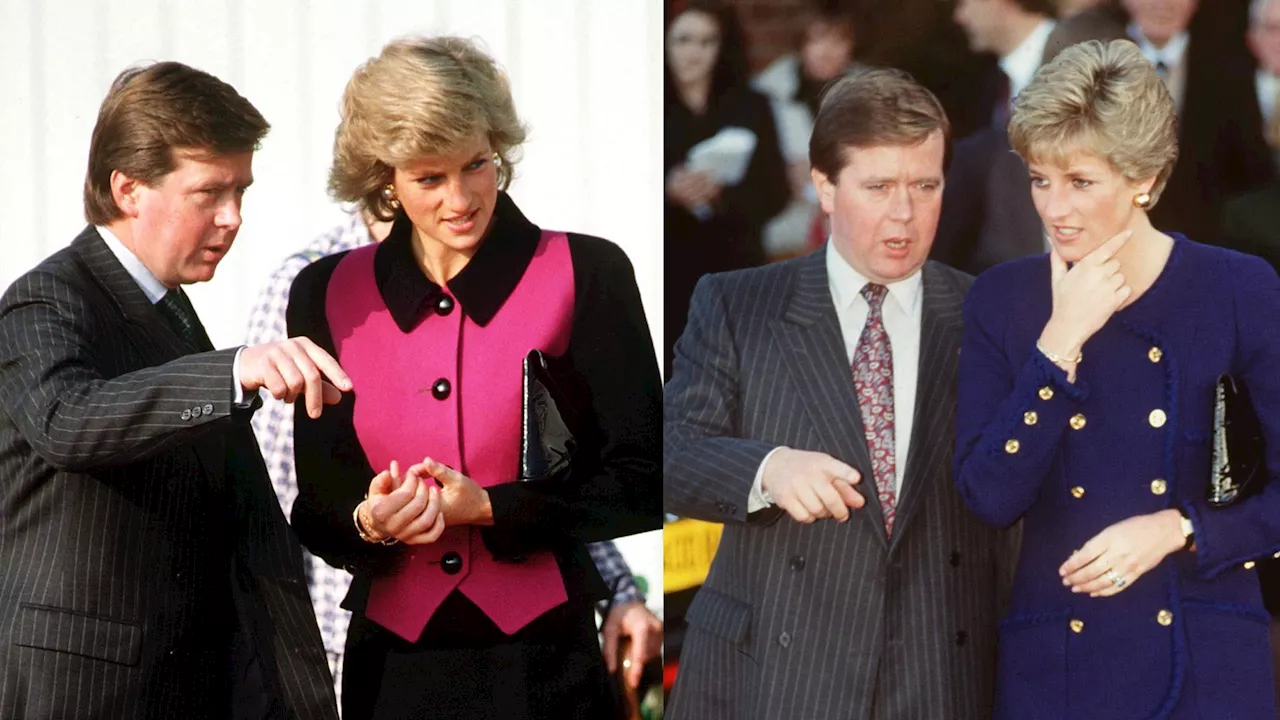
Ken Wharfe, a former royal protection officer, has shared new details regarding the complex professional boundaries maintained while guarding Princess Diana. He described how the late Princess's warmth often made it difficult for security staff to remain strictly detached from her private life.
Why Princess Diana's jokes made security boundaries disappear
Princess Diana’s dseire to live "in the real world" often meant she treated her security detail as more than just staff.. As reported by Marie Claire, Wharfe noted that Diana frequently drew her protectors into private gatherings and family occasions. This was largely due to her personality; she loved telling jokes and, according to Wharfe, "the riskier the joke,the better."
Princess Diana's tendency to bridge the gap between the monarchy and her employees created a unique environment for her protection team. Wharfe explained that Diana’s warmth made it "quite difficult to remove yourself" from what had become a personal and private occasion. This humanizing approach was a hallmark of her character, even if it complicated the rigid protocols of royal security.
The tactical advantage of being "part of the party"
While traditional security often relies on distance, Wharfe argued that being integrated into Diana's inner circle actually improved his ability to protect her. He noted that while some officers are often positioned on street corners at a distance, he found that being "in the mix" was more effective for her safety.
Princess Diana frequently invited her security staff to participate in her personal life, such as joining her for meals or conversations. Wharfe recalled instances where Diana would explicitly invite him, saying things like, "Come and eat with us, Ken," or "Come and sit in here and join the conversation." According to the report, being accepted as part of that environment placed the protection officer in the best possible position to provide effective security.
How the 1997 Paris accident was fueled by security gaps
The security dynamics changed significantly during the period leading up to the tragic 1997 accident in Paris. Wharfe believes that the lack of professional coordination and communication during that time was a major factor in the outcome. He suggested that the security measures in place were "unprofessional" and lacked the necessary planning.
Diana's distrust of her security team influenced her decision to rely on private protection during that era.. Fearing that her team members were leaking information to the Royal Family, she began to rely on private security rather than official police protection. Wharfe noted that this shift in reliance contributed to the lack of coordination that ultimately failed her in Paris.
Who was actually leaking information to the Royal Family?
Despite Wharfe's insights, several specific details regarding the security failures in Paris remain unverified. The source does not clarify:
- Which specific team members Diana suspected of leaking information to the Royal Family.
- The exact nature of the alleged leaks that caused her to distrust her staff.
- How much of the communication breakdown was due to the shift toward private security versus local police coordination.
Comments 0