

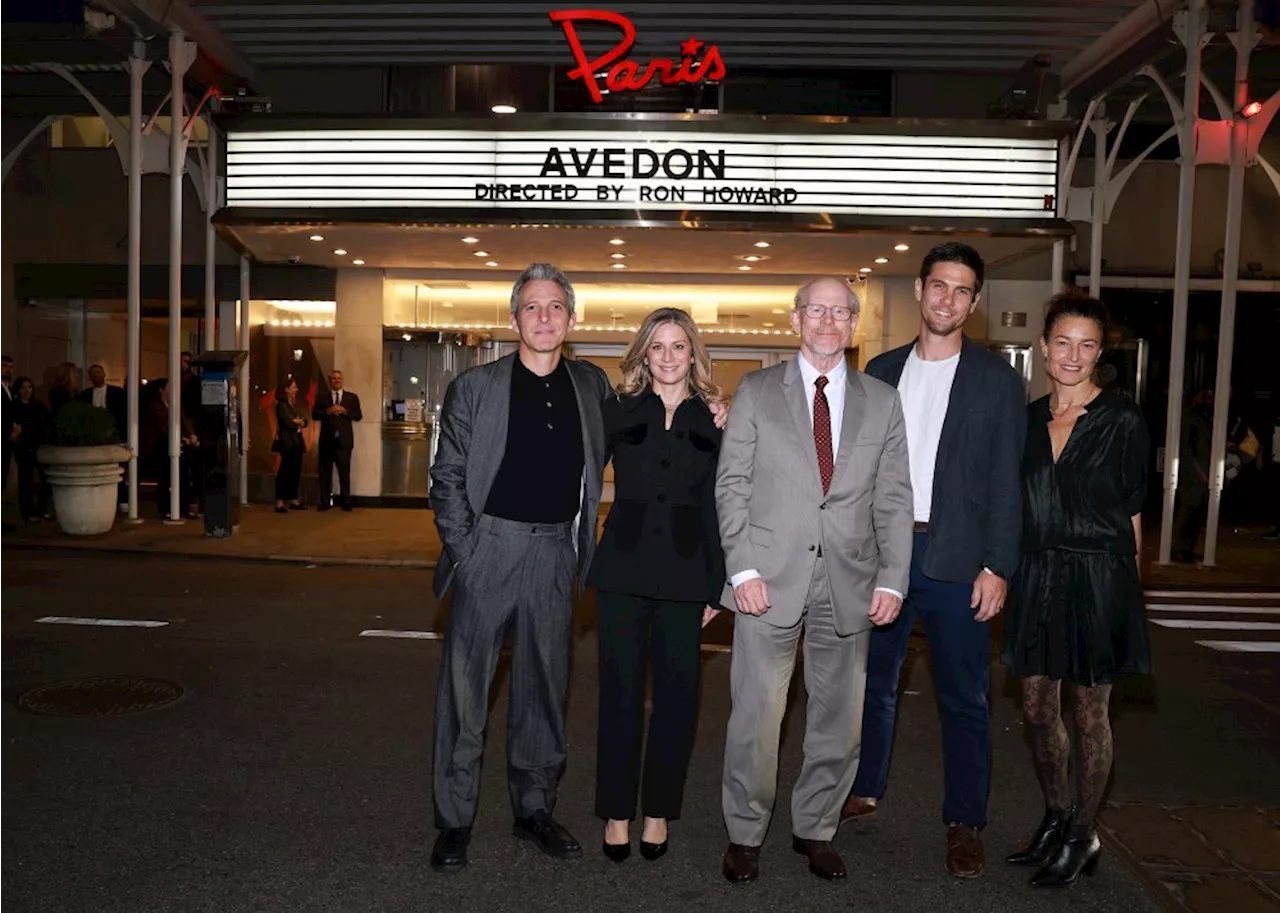
Ron Howard’s documentary "Avedon" premiered Tuesday at New York City’s Paris Theater before its Wednesday launch on Netflix. The film examines the legacy of photographer Richard Avedon through a lens of high fashion and social commentary.
The 1947 Dior archives that anchored Ron Howard's first fashion project
The production of "Avedon" relied heavily on a partnership with 22 Montaigne Entertainment, which provided Ron Howard and his team with exclusive access to the Dior archives. according to WWD, this access allowed the filmmakers to explore the duality of Richard Avedon's work, specifically the tension between high-society glamour and raw human truth. This relationship is rooted in history, as Richard Avedon began photographing the house of Dior's early postwar collections in Paris as far back as 1947.
For director Ron Howard, the project marked a significant departure from his usual subject matter, serving as his first professional venture directly involving the fashion world. The influence of the house was evident even at the premiere, where Ron Howard appeared clad in Dior for the screening and the subsequent after-party reception held at Bergdorf Goodman.
Why Richard Avedon risked his commercial status for the civil rights movement
While Richard Avedon is often remembered for his luxury brand imagery, Ron Howard highlighted the photographer's willingness to pivot toward social activism. During a panel with The New Yorker’s Adam Gopnik, Ron Howard described Richard Avedon as a "Spielbergian wunderkind" who dominated the commercial world before choosing to engage with the civil rights movement and other pressing social issues.
This shift was not without consequence . As reported by WWD, Ron Howard noted that this commitment to social commentary often cost Richard Avedon money and posed a significant risk to his career . Despite the fact that critics were not always supportive of this direction, Richard Avedon continued to straddle the worlds of commercial success and political commentary, a balance that Ron Howard suggested modern creators should strive to emulate.
The 'scripted narrative' techniques Ron Howard applied to the Avedon documentary
Ron Howard used the making of "Avedon" to experiment with the boundaries between documentary and scripted filmmaking. He explained that while documentary audiences are driven primarily by curiosity, scripted narratives are designed to transport the viewer on a "ride." By blending these two approaches, Ron Howard aimed to dispense factual information about Richard Avedon in a way that sustains narrative interest without sacrificing the flow of the story.
This cross-pollination of styles suggests a broader trend in high-end documentaries, where the "talking head" format is being replaced by more cinematic, narrative-driven structures. Ron Howard noted that his experience with scripted fiction has fundamentally changed how he approaches documentary work, and vice versa,creating a more fluid storytelling style for the Netflix release.
The missing voices among the critics who challenged Richard Avedon
Despite the celebratory tone of the Paris Theater premiere, the source material leaves several questions unanswered regarding the opposition Richard Avedon faced. While Ron Howard mentions that critics were "not always supportive" of Avedon's social work, the specific identities of these critics and the nature of their objections remain unverified in the report.
Furthermore, the report focuses heavily on the perspectives of the filmmakers and the luxury partners like Dior and Bergdorf Goodman. It remains unclear how the documentary addresses the potential contradictions between Avedon's work for the ultra-wealthy and his documentation of marginalized communities, or if the film includes perspectives from the subjects of his civil rights photography.
Comments 0