

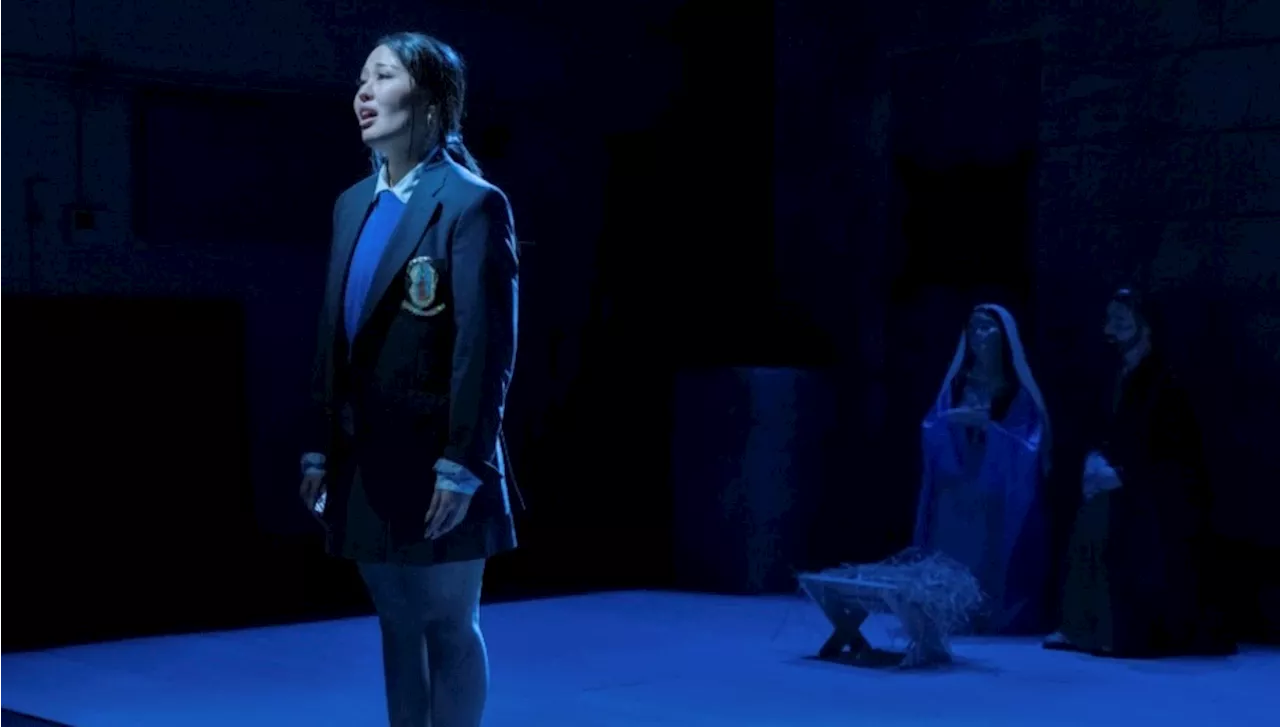
Katie Cappiello’s Off-Broadway production, The Body of Mary, explores the complexities of female autonomy through three different women named Mary . the play moves through different centuries to examine how religious and social structures impact reproductive choices.
A 13-year-old Mary in white high-top Converse
The first segment of the play reimagines the Virgin Mary not as a serene icon, but as a terrified 13-year-old girl.. According to the report, this version of Mary wears a red ribbon in her hair and white high-top Converse, grounding the biblical figure in a relatable, modern reality. Ben Cook plays the role of Gabriel, delivering a performance that the source describes as "hilarious" even as the scene shifts toward a sense of betrayal.
This portrayal challenges the traditional, peaceful depiction of the Annunciation. Instead of a holy moment of grace, the play presents a scene where a young girl is railroaded by her parents and a smug Gabriel, highlighting the vulnerability of women within historical religious narratives.
Cardinal O’Malley’s push for IVF implantation in NYC
The second act moves to a modern New York City setting where Tracy Sallows portrays Mother Mary Joseph, a 59-year-old nun. In this segment , a character named Cardinal O’Malley, played by David Hull, attempts to pressure the nun into being implanted with abandoned IVF embryos. The report notes that this act highlights the "subtle menace" of men in positions of religious authority who push past a woman's refusal.
This storyline mirrors broader societal tensions regarding the intersection of religious authority and medical autonomy.. By using an "absurdist" lens, Cappiello connects the historical betrayal of the first Mary to the modern-day pressures faced by women navigating institutionalized healthcare and religious mandates.
A Dairy Queen shift and a baby found in a dumpster
The final act features Gracie Conn as a modern-day Mary working a late-night shift at a Dairy Queen.. While alone on stage, she finds a newborn baby in a dumpster and relies on her friend Nevaeh, played by Annalisa D’Aguilar, to help her navigate the crisis. This section emphasizes female solidarity and the instinct to protect both the baby and the mother from a system that might use their DNA against them.
This depiction of teenage empathy serves as a counterpoint to the institutional control seen in the previous acts. It reflects current political debates surrounding "pro-life" legislation and the importance of reproductive freedom, suggesting that true compassion often comes from grassroots solidarity rather than top-down authority .
The missing perspective from religious institutions on the play
While the play draws clear parallels to modern reproductive laws and the feminist work of Jennifer Baumgardner, several aspects of the production's impact remain unaddressed. It is currently unknown how specific religious organizations have responded to the play's provocative themes, or if the production has secured an extended run in New York City. Additionally, the source does not clarify if the play's critique is intended to be a universal commentary on religion or a specific indictment of modern institutional practices.
Comments 0