
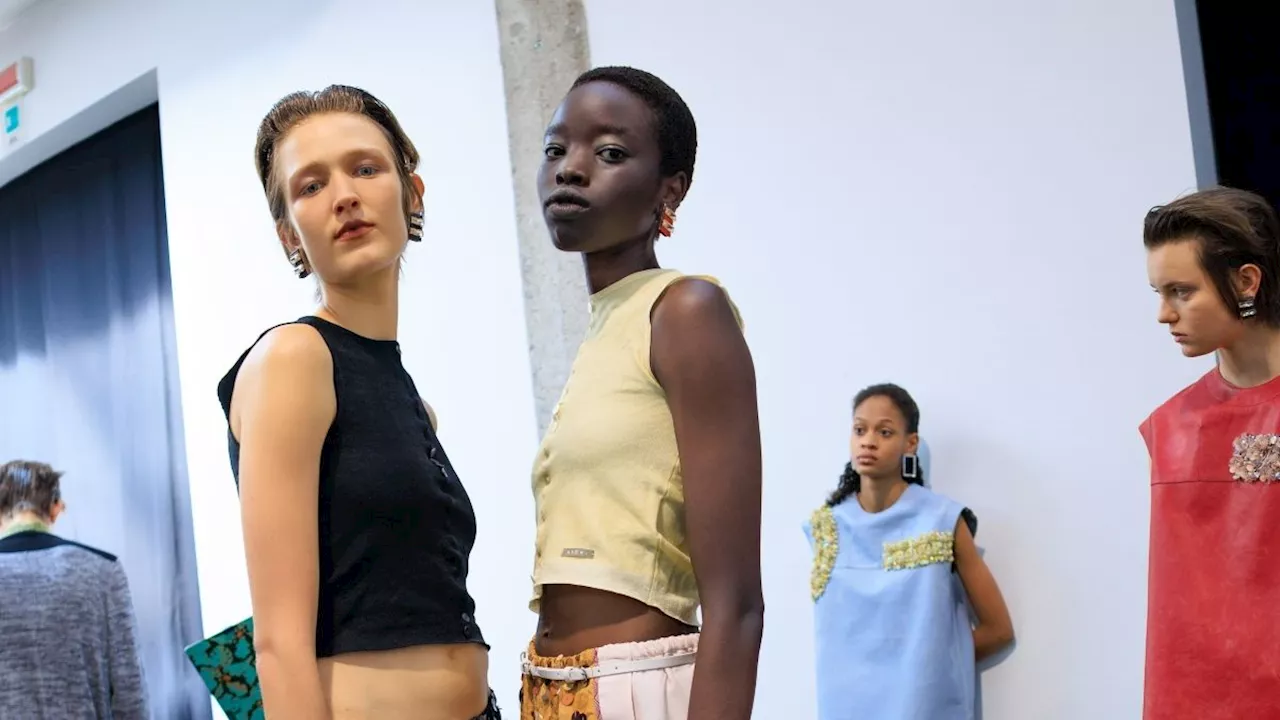
The Spring/Summer 2027 Milan Fashion Week season delivered a mix of political heavyweights and bold, experimental design. Amidst a period of economic transition, major houses like Prada and Gucci showcased collections that move away from minimalist trends.
Giorgia Meloni and the €100 million push for "Made in Italy"
Italian Prime Minister Giorgia Meloni made a historic appearance at a Milan Fashion Week gala, marking the first time in a decade that a sitting Italian leader has attended the event. Her presence at the Palazzo Reale, alongside Milan Mayor Giuseppe Sala, signaled a high-level political commitment to a sector that is currently navigating a difficult recovery. According to the report, Italian fashion revenues have declined 8% since 2023, falling to €91.4 billion for 2026.
To combat this downturn, the Meloni government has pledged €100 million to incentivize investment within the industry. this funding aims to support small and medium-sized enterprises while focusing on education and human capital . As the industry seeks to return to growth, this dialogue between state institutions and fashion houses like those represented by the Camera della Moda Italiana is seen as a crucial turning point for the "Made in Italy" brand.
Prada’s 63 skirts and the end of "quiet luxury"
The era of beige, algorithmic minimalism appears to be fading, replaced by what fashion experts call a more "idiosyncratic" style. Prada’s SS27 collection, led by co-creative directors Miuccia Prada and Raf Simons, served as a definitive statement against the "quiet luxury" trend. The show centered on a deep study of the skirt, featuring 63 distinct variations ranging from mini to midi lengths, complete with neon Velcro panels and crinoline layers.
This shift toward bolder, more embellished silhouettes suggests a desire for clothing that feels more alive and less formulaic. Industry insiders , including Nordstrom's fashion director Brooke Bobb, suggest that the industry is moving toward a season where style is more experimental in proportion and silhouette. The Prada collection emphasized the skirt as a flexible, contemporary object that invites contradiction and personal reinvention.
Demna’s attempt to stabilize Gucci’s €1.41 billion sales
Gucci is currently in a period of slow recovery under the creative direction of Demna, who is working to make the house feel more relatable to a broad luxury customer. The brand's recent performance shows signs of stabilization; as the source notes,Gucci's sales fell 2% to €1.41 billion for Q2 2026, which was a better result than the 4.7% drop many analysts had expected. This follows a much steeper 8% decline in the previous quarter.
To communicate this new direction, Demna utilized an immersive retail concept, reconstructing a Gucci store within a convention center to tease upcoming designs. This strategy, according to Mytheresa's Tiffany Hsu, successfully invited viewers into the world of the "glamorous Gucci customer" by making the retail experience a central part of the brand's storytelling. The collection balanced high-concept tailoring with a sense of commercial relevance.
The "real-life" runway experiment at Moschino
Moschino’s debut collection utilized a unique staging concept to ground its high fashion in everyday reality. During the show, regular people dressed in their own clothes walked in one direction down the street, while Moschino models moved in the opposite direction. This technique was designed to contextualize the brand's new creative direction within the flow of actual city life.
This "real-life" theme echoed the energy of the Vogue World event, which used characters like tourists and students to imagine a typical day in Milan. By placing models alongside the mundane movements of a busy city, Moschino attempted to bridge the gap between the fantasy of the runway and the pragmatism of the modern consumer.
Who will lead Diesel after Glenn Martens’ experimental farewell?
The season also marked a significant transition for Diesel, as Glenn Martens prepared to depart the brand following a highly experimental tenure. His final show featured an unexpected "orgy flash mob" with actors planted among the guests, a move that reflected the experimental spirit he brought to the company. while the show was a celebration of his six years of growth, it leaves several questions unanswered for the brand's future.
Industry observers are now looking to see who will be named Martens' successor and whether the brand can maintain its newfound consistency. Additionally, while the Italian government's €100 million pledge is a significant gesture, it remains to be seen if such political intervention can fully offset the broader economic shifts affecting the manufacturing networks of the Italian fashion industry.
Comments 0