

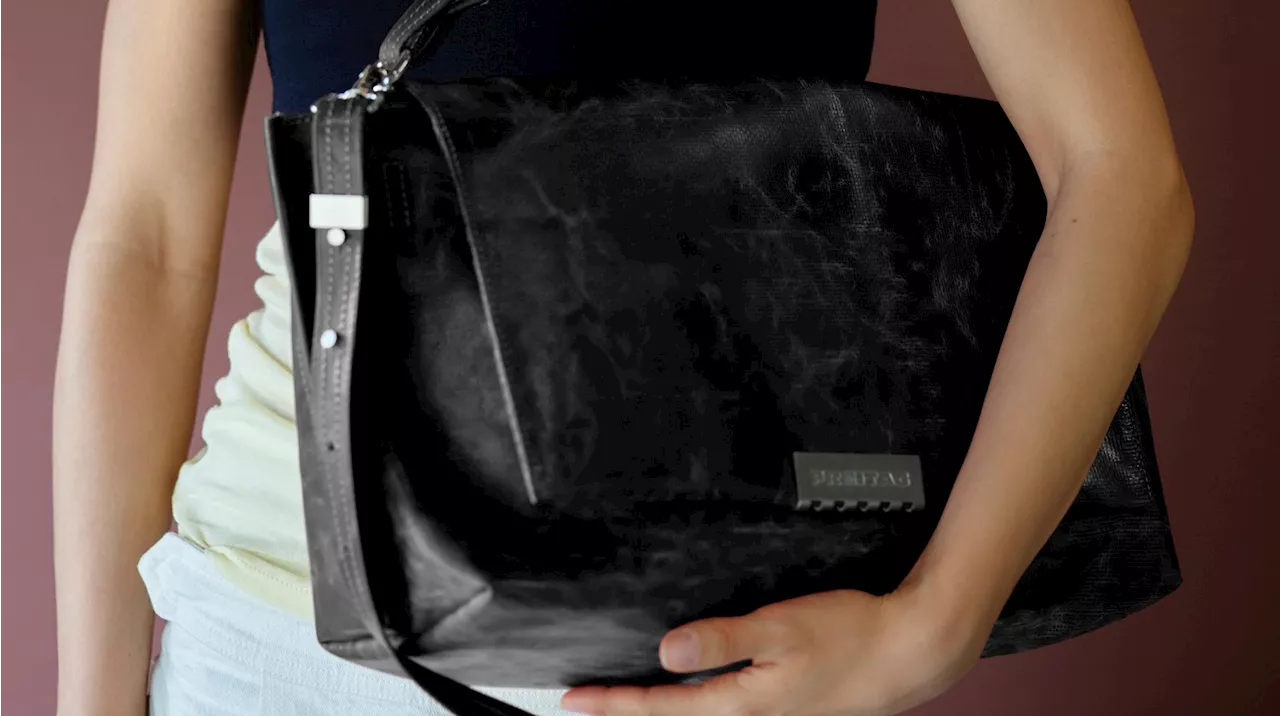
Swiss bag-maker Freitag is introducing the Reference line, a collection of four minimalist handbags crafted from monochrome truck tarpaulins. This new direction aims to merge the brand's long-standing upcycling ethos with a high-end, refined aesthetic.
The 4-bag Reference line and the pivot to monochrome minimalism
The new Reference line represents a strategic shift for Freitag, moving away from the colorful, utilitarian look that defined the brand since its founding in 1993 by brothers Markus and Daniel Freitag. According to the report, these four new bags are designed to attract a premium audience that values "quiet quality" and versatility over the brand's traditional industrial aesthetic.
This move aligns with the broader "quiet luxury" trend currently dominating social media and high fashion, where status is signaled through understated design rather than loud logos. By using hand-selected, monochrome tarps, Freitag is attempting to prove that upcycled materials can compete with classic luxury leather. CEO Janine Weiz-Bühler notes that the goal is to demonstrate that sustainable design belongs in every market segment, not just the niche eco-conscious space.
Why upcycling truck tarps costs three times more than new materials
Operating a circular business model is significantly more expensive than traditional manufacturing. Markus Freitag explains that sourcing, quality-testing, hand-disassembling, and washing used truck tarps across Europe costs roughly three times as much as purchasing virgin materials. This creates a natural tension between ecological responsibility and profit margins.
To combat this, Freitag employs a "profit for purpose" philosophy, where financial success serves as an engine for innovation rather than the ultimate goal. As the report says, the company is intentionally avoiding volume-driven growth, which Markus Freitag argues clashes with planetary limits.. Instead, the brand focuses on creating a deep personal connection with customers through the unique, individual character of each hand-made bag.
From 19 shipping containers to a 2025 Repair Kiosk in Zurich
The brand's physical presence in Zurich serves as a blueprint for its circular ambitions. The flagship store, a tower of 19 decommissioned freight containers, has evolved from a temporary 2006 installation into a permanent hub for sustainability. The addition of a Repair Kiosk in 2025 further transforms the site from a simple retail point into a service center for product longevity.
This infrastructure is mirrored globally, with Freitag operating 30 stores across Europe and Asia and partnering with approximately 200 retail outlets. These locations are increasingly used for rental, resale, and swapping events , moving the brand closer to a model where the company manages the entire lifecycle of the product rather than just the initial sale.
Can the "circular tarp" prototype solve fashion's recycling crisis?
While upcycling is a strong start, Freitag is now pushing toward genuine material circularity. The company has developed the "Mono" backpack, made from a single recyclable material that can be shredded back into polyamide-nylon granules. Furthermore, the brand is road-testing protoypes for a "circular tarp" created with industry partners, designed to be fully recycled at the end of its life.
However, several critical questions remain regarding the scalability of these innovations. The report does not name the specific industry partners helping develop the circular tarp, nor does it explain how Freitag intends to overcome the lack of specialized recycling infrastructure that currently exists at scale. While the Reference line includes a detachable repair kit to extend product life, it remains unclear if these labor-intensive services can ever move beyond "cost-neutrality" to become a primary driver of the business.
Comments 0