

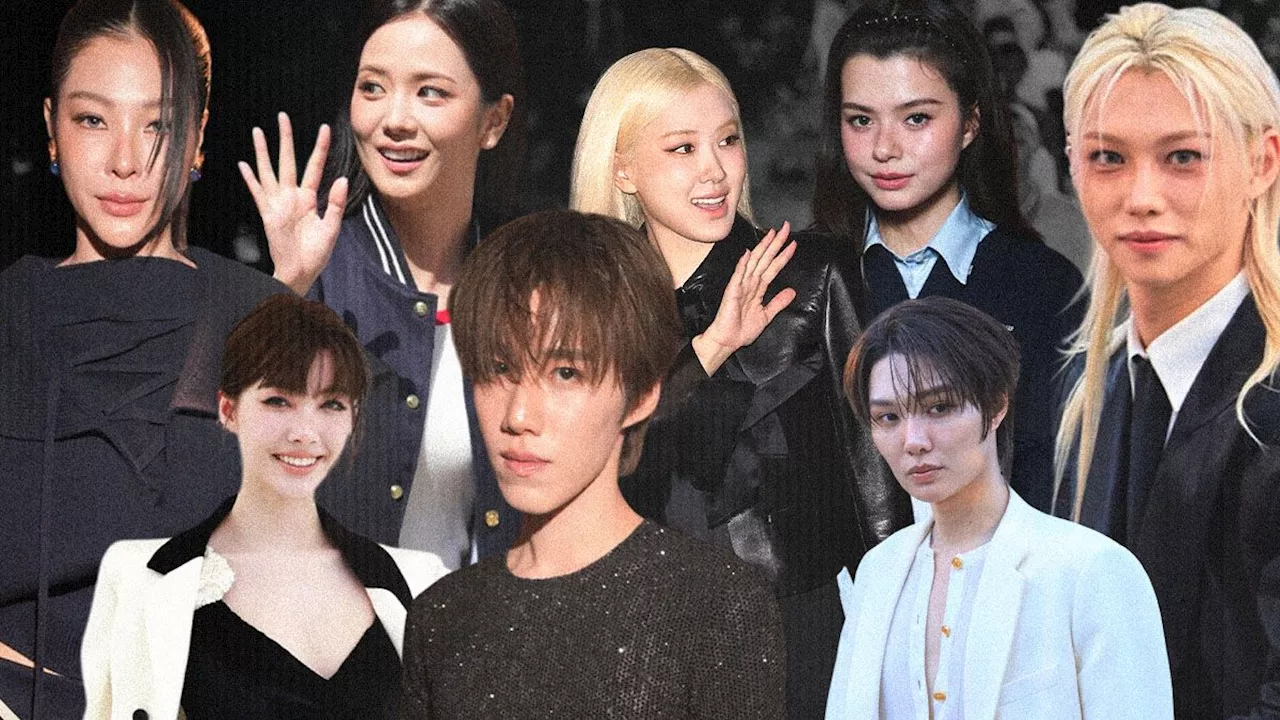
The Spring/Summer 2027 fashion season saw a massive surge in social media engagement, reaching a total of $1.24 billion in earned media value (EMV). While luxury houses have long relied on K-pop idols to drive digital conversation, this season saw Thai drama stars take center stage to dominate the rankings.
Thai drama stars capture $412 million in engagement
Thai talent has officially disrupted the traditional celebrity hierarchy in the luxury sector. According to the influencer marketing platform Lefty, Thai drama stars eclipsed K-pop idols in Instagram rankings for the Paris shows, with all five top spots going to Thai talents. together, these actors generated $412.2 million in EMV—a figure that exceeds the entire Paris Fashion Week season from the previous year.
Dior benefited significantly from this regional shift, with actress Kornnaphat Sethratanapong generating $112 million in EMV through just 20 posts. The influence of these stars extends beyond the actors themselves to their entire professional circles;for instance, Sethratanapong’s makeup artist, Surapre Achirakul, ranked eighth in Paris EMV at $12.4 million. This phenomenon highlights how highly engaged fan bases drive massive, concentrated digital value.
Dior leads Paris with $360 million in earned media
Paris remans the undisputed capital of social media reach for the global fashion industry. The city generated $795.6 million in EMV, accounting for 64% of the season's total. As reported by Lefty, Dior topped the global Instagram rankings, seeing a 309% year-on-year increase to reach $360 million in EMV.
Other brands experienced even more explosive, albeit smaller-scale, growth through strategic casting. Schiaparelli saw a 974% surge in EMV, led by Thai actors Napatsakorn Pingmuang and Harit Buayoi. Meanwhile, Matières Fécales saw a standout 795% increase in EMV, bolstered by a surprise appearance by Rihanna.
Streamers like Kai Cenat and Marlon Lundgren Garcia enter the front row
Digital-first creators are increasingly being integrated into the luxury ecosystem to reach younger, gaming-adjacent demographics. Twitch streamer Kai Cenat brought his label, Vivet, to New York Fashion Week, helping the brand rank eighth in EMV with $2.3 million. in London, Swedish content creator Marlon Lundgren Garcia accumulated $1 million in EMV for Burberry and H&M combined.
This move toward niche communities is also visible in the way brands are selecting non-celebrity guests. Acne Studios, for example, filled its front row with Japanese ceramic artist Takuro Kuwata and photographer Peter Schlesinger. This strategy reflects a broader cultural shift where "offline" experiences are being marketed as a form of luxury, moving away from the constant need for viral stunts.
Will the shift toward established ambassadors stifle fashion week surprises?
The industry is now grappling with whether a heavy reliance on long-term ambassadors limits the "unexpectedness" that once defined fashion weeks. While Miu Miu continues to feature unexpected cameos like Olivia Colman and Emma Corrin, many other houses appeared to be playing it safe. Andrew Lister, executive vice president at Purple PR, noted that many front rows felt like a gathering of "the usual suspects," such as Jennifer Lopez at Dolce & Gabbana.
It remains to be seen if brands can maintain the tension between brand coherence and the viral, unpredictable energy that drives cultural conversation. While some brands are doubling down on the consistency of their muses, others are still finding magic in the unexpected, such as Chanel’s decision to feature Nigerian model and creator Rachel Ojuromi on the runway.
Comments 0