

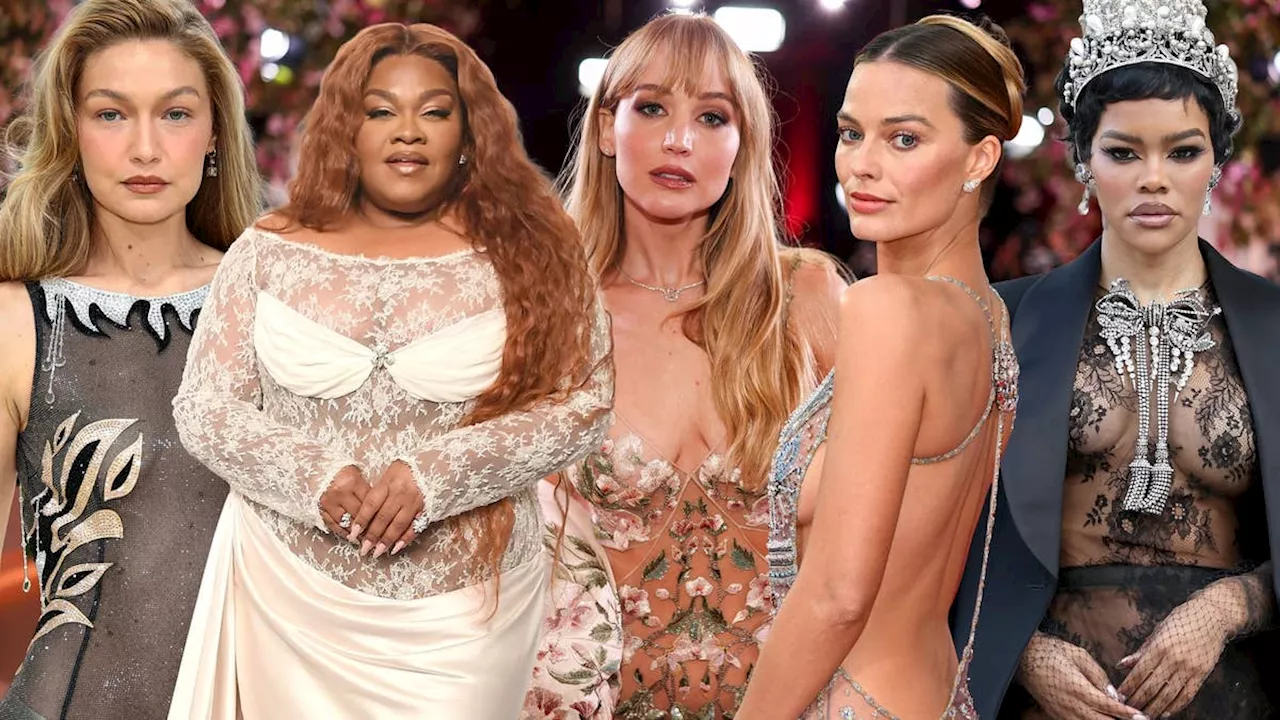
The "naked dress" trend, which gained significant momentum in 1993 with Kate Moss, is seeing a massive resurgence among modern Hollywood stars. From Margot Robbie’s glitering Armani gown to Kylie Jenner’s pearl-encrusted Schiaparelli, the look has evolved from accidental transparency into a highly engineered form of high-fashion maximalism.
The 1993 Liza Bruce dress that changed fashion
The sheer trend traces its origins back to a 1993 London party, where supermodel Kate Moss wore a famously translucent slip dress by Liza Bruce. As the HELLO! report notes, Moss later reflected that she didn't realize quite how see-through the garment was at the time. This moment, whether intentional or not, fundamentally altered the 90s zeitgeist and established a blueprint for the daring red-carpet looks we see today.
Kylie Jenner’s 10,000 pearls and the art of maximalist nudity
Modern versions of the "naked dress" often rely on extreme, labor-intensive craftsmanship rather than simple transparency. At the Met Gala, Kylie Jenner wore a custom Schiaparelli Haute Couture gown designed by Daniel Roseberry that utlized a nude illusion corset. The garment was a feat of engineering, featuring over 10,000 natural baroque pearls, 2,000 satin stitch balls, and more than 7,000 painted pearlescent fish scales.
This shift suggests that "nakedness" in high fashion is now as much about intricate texture and heavy embellishment as it is about skin. The sheer scale of the detailing on pieces like Jenner's Schiaparelli gown moves the trend away from minimalism and into the realm of wearable art .
Florence Pugh and Cara Delevingne's push for body autonomy
For many celebrities, wearing sheer fabrics is a political act tied to the "Free the Nipple" movement. Florence Pugh has been a consistent advocate for this cause, famously wearing a sheer Simone Rocha gown to the Vanity Fair Oscars Party. Pugh has openly questioned the societal discomfort with female anatomy, stating she isn't scared of what lies beneath the fabric.
Similarly, Cara Delevingne used a Dior suit at the Met Gala to embrace her psoriasis, opting for a topless look with a gold-spraypainted torso to challenge traditional beauty standards. These moments highlight how the "naked dress" can serve as a platform for body positivity and gender equality, moving the conversation beyond mere aesthetics.
Margot Robbie and the modern red carpet's sheer aesthetic
The trend continues to dominate major film premieres, such as Margot Robbie’s appearance in London for A Big Bold Beautiful Journey. Robbie wore a glittering Armani gown that made headlines for its provocative silhouette. Other stars, including Teyana Taylor and Dua Lipa, have also embraced the look; Taylor appeared in a full lace sheer gown for Schiaparelli in Paris, while Lipa opted for a silver fishnet Bottega gown for the Barbie premiere in 2023.
Will the trend move beyond the high-fashion red carpet?
While the current wave of sheer fashioon is driven by A-listers and couture houses like Givenchy and Dior, it remains unclear if this trend will successfully transition to mainstream retail. The report highlights how these looks are often custom-made masterpieces, such as Teyana Taylor's Givenchy gown designed by Sarah Burton. This raises the question of whether the "naked" aesthetic can be democratized for the average consumer without losing its high-fashion edge or its political weight.
Comments 0