

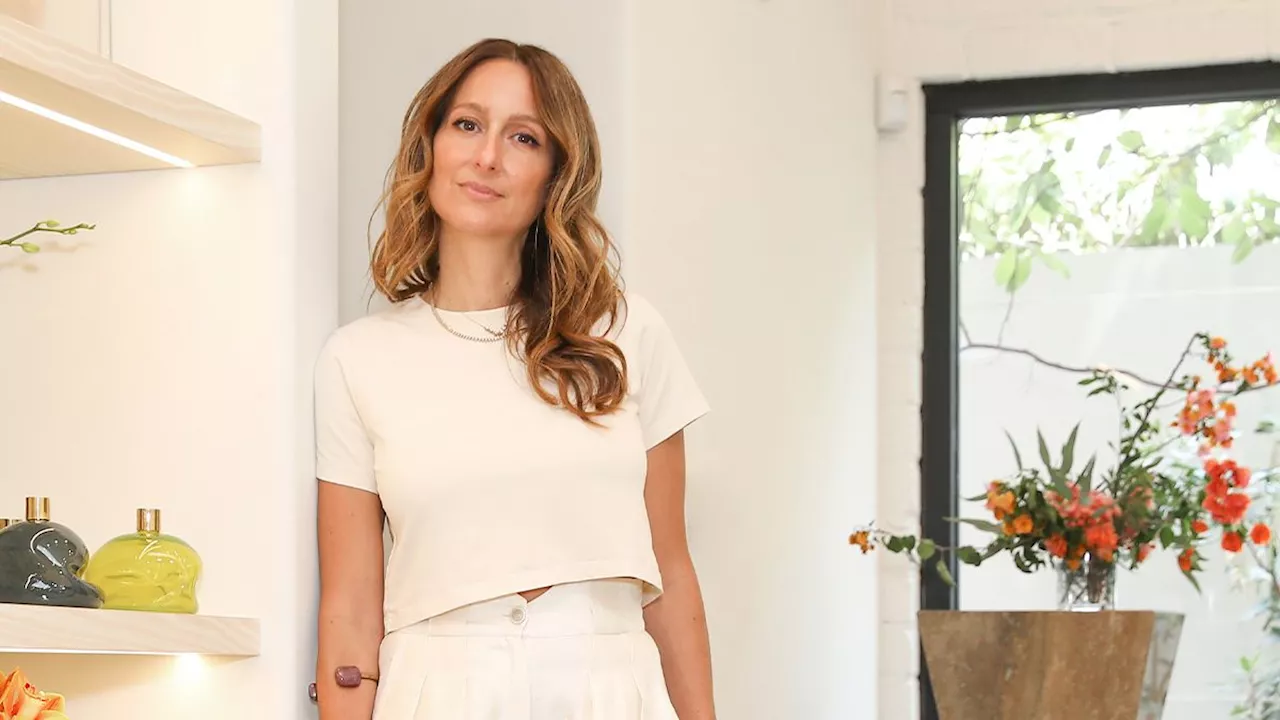
Desiree Kohan, the founder of the Los Angeles booutique Des Kohan, is returning to New York Fashion Week this September. After 21 years of cultivating a curated, "anti-trend" sanctuary in LA, Kohan has emerged as a critical lifeline for independent designers navigating a volatile luxury market.
The 21-year streak of zero markdowns at Des Kohan
In a retail landscape defined by seasonal clearances and aggressive discounting, the Des Kohan boutique has famously never held a sale in its entire 21-year history. According to the report, this discipline is mirrored in the store's growth, with gross sales increasing by 20% annually over the last five years. This success suggests a growing appetite among high-net-worth consumers for pieces that maintain their value because they cannot be easily found elsewhere .
While most modern brands prioritize digital reach, Desiree Kohan has kept her business intentionally grounded in the physical world. E-commerce accounts for only 15% of total sales, proving that for a specific tier of luxury, the one-to-one selling experience remains the primary driver of loyalty and revenue.
How 80 VIPs and 23 Saudi royals drive 55% of revenue
The economic engine of the Des Kohan boutique is built on deep, personal relationships rather than broad marketing. A core group of approximately 80 VIP clients—who often receive merchandise before it ever hits the shop floor—now accounts for 55% of the business's revenue. This hyper-personalized approach extends to a WhatsApp concierge service that assists top clients with everything from beauty appointments to restaurant bookings.
The reach of Desiree Kohan's influence extends globally, as she personally shops for 23 members of the Saudi royal family. As reported,Kohan manages these relationships by pre-buying pieces and photographing them on models who reflect the clients' specific body types, ensuring the merchandise is sold before it ever enters the public retail space.
The 5,000-square-foot bet on Fairfax Avenue
While many independent boutiques shuttered during the digital pivot, Desiree Kohan doubled down on bricks-and-mortar. In 2021, she moved her operation from an 850-square-foot Mid-Wilshire home to a 5,000-square-foot mid-century building on Fairfax Avenue. The new space includes a 1,300-square-foot retail area designed to feel like a salon, featuring 1940s Frank Lloyd Wright plywood chairs and a vintage Roche Bobois table.
This physical expansion was not just about size, but about maintaining a sense of discovery. by staying "off the beaten path" by design, the Fairfax Avenue location functions more like an art gallery than a store, where the narrative of the designer's fabric sourcing and pattern-making is as important as the garment itself.
Why Ashlyn and High Sport are pivoting away from Saks
The shift in power from giant department stores like Saks Fifth Avenue and Neiman Marcus toward independent boutiques is reshaping the fashion front row. For brands like Ashlyn and High Sport, boutiques are now critical for survival; in the case of Ashlyn,roughly 80% of sales now come from independently owned stores . This shift allows designers to take risks on silhouettes and colors that a corporate buyer might reject .
Desiree Kohan acts as more than a buyer; she functions as a product developer. She frequently co-designs pieces with labels, such as collaborating with Alissa Zachary of High Sport on pants featuring a tulip-like mini skirt overlay. This level of integration ensures that the clothing is tailored to the specific needs of the West Coast climate and the tastes of the Los Angeles elite.
Can the 'boutique lifeline' model scale beyond a few power players?
The emergence of a new class of retail power players—includding Brian Bolke of Dallas’s The Conservatory, Lisa Cancelli of Boston’s Viola Lovely, and Kaelen Haworth of Toronto’s Absolutely Fabrics—raises questions about the future of luxury distribution. While these figures provide a vital safety net for independent designers, it remains unclear if this fragmented, relationship-based model can provide the same scale as the old department store hegemony.
Furthermore, the source focuses primarily on the success of those already within Desiree Kohan's influential circle, such as Tracee Ellis Ross and Chriselle Lim. It remains to be seen how emerging designers without an existing connection to these specific "power players" can break into a system that relies so heavily on closed-door VIP networks and personal introductions.
Comments 0