

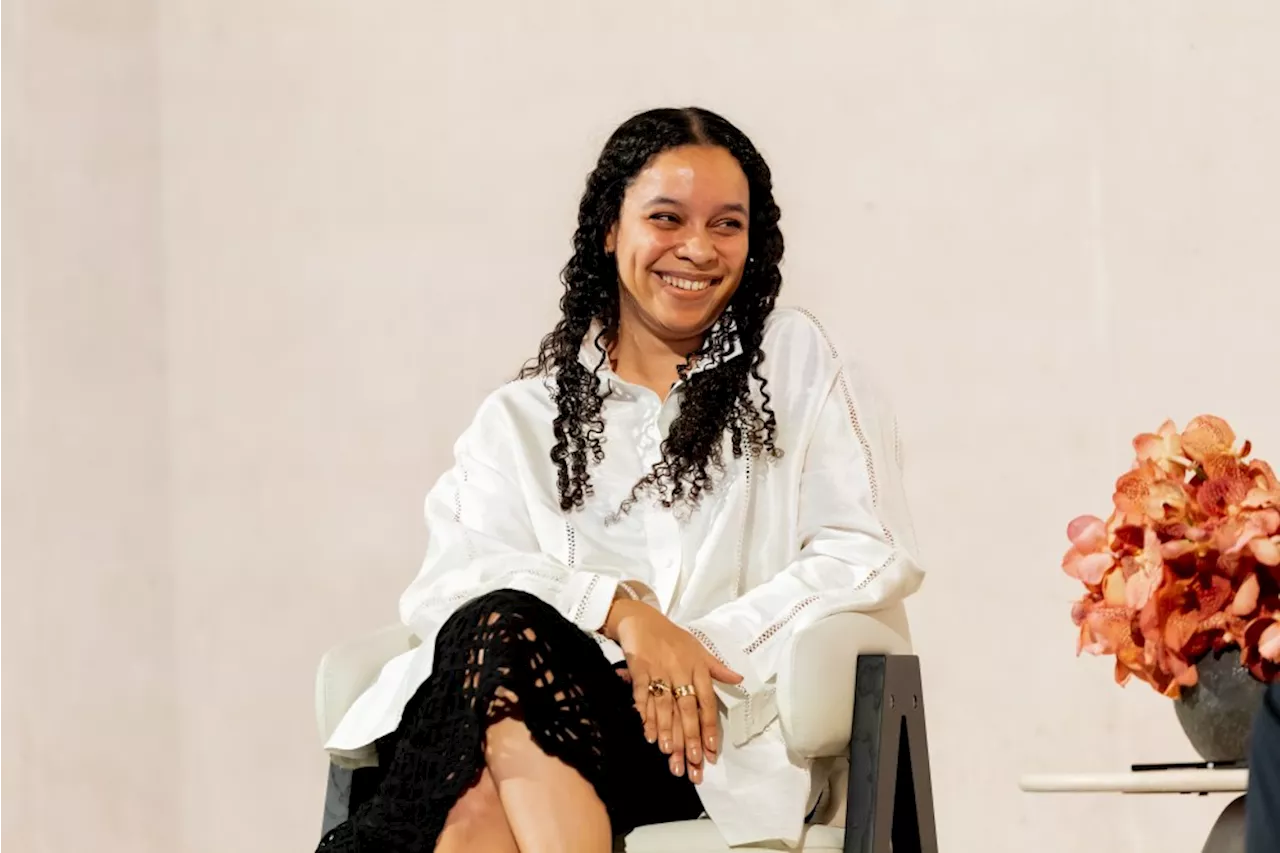
Rachel Scott, the visionary behind Diotima, was recently honored as the American Womenswear Designer of the Year for the second time. Speaking at the 2026 WWD Apparel & Retail CEO Summit in New York, Scott detailed her dual leadership roles and her commitment to high-level artisanal craft.
The PS1 handbag and the transition from interim to Creative Director at Proenza Schouler
Rachel Scott's ascent to the leadership of Proenza Schouler began unexpectedly in January 2025, following the departure of founders Jack McCollough and Lazaro Hernandez to join Loewe. as reported by WWD , Scott was initially brought in by CEO Shira Suveyke Snyder to design an interim collection with few expectations, but the collaboration evolved into a permanent appointment as Creative Director within a month.
To modernize the brand while respecting its nearly 25-year history, Rachel Scott has focused on specific "codes," including the signature use of the color blue and the brand's approach to tailoring. A central part of this revival involves the PS1 handbag; Scott worked directly with Reed Krakoff to iterate on the iconic accessory, blending the brand's heritage with new innovations in knitwear.
This transition reflects a broader trend in the luxury sector where heritage American brands are seeking a "rebellion" to stay relevant against centuries-old European houses. By focusing on the "intellectual woman" of New York, Rachel Scott is attempting to bridge the gap between the founders' original philosophy and the needs of a global, modern audience.
Why 60 percent of Diotima's collections are crafted by hand
While Proenza Schouler represents a corporate legacy, Rachel Scott's own label,Diotima, serves as a personal manifesto rooed in the history of the Caribbean. According to WWD, over 60 percent of the Diotima collection is made by hand, utilizing couture-level techniques to express a radical and sensual femininity.
The commitment to craftsmanship extends to social impact, as seen in a black Diotima gown worn by Whitney Peak for the sixth annual Academy Museum Gala. Scott noted that the crochet elements of that specific dress were produced in New York by the Women of Refugee Atelier, a group supporting artisan refugees. This focus on handmade quality has attracted high-profile wearers including former First Lady Michelle Obama and Kaia Gerber.
However, the source leaves some operational details unclear. While Scott emphasizes the "beauty" of the garments over trends, it remains to be seen how Diotima will scale these labor-intensive, handmade processes as the brand grows beyond its current niche status.
How New York's history of female-led brands shaped Rachel Scott's career
Rachel Scott attributes her success to the unique ecosystem of New York City, which she claims has a stronger tradition of women owning and leading their own fashion businesses than other major fashion capitals. This support system helped her secure the CFDA’s Emerging Designer of the Year award in 2023 and the American Womenswear Designer of the Year title in both 2024 and 2026.
Scott argues that because the fashion industry primarily services women, female creative directors bring a necessary nuance and a "truer understanding" to the design process. This perspective positions her not as a disruptor, but as part of a lineage of New York women who have historically maintained control over their creative and commercial output.
The shift toward DTC sales and the influence of Wilfredo Lam on Fall 2026
Looking toward the future of Diotima, Rachel Scott is planning a strategic pivot from a primarily wholesale business model to a direct-to-consumer (DTC) approach to better serve clients who reach out to the brand directly. This commercial growth is happening alongside a deep dive into Afro-Cuban symbolism for her Fall 2026 lineup.
The upcoming Fall 2026 collection is inspired by the art of Wilfredo Lam, whose work blends Caribbean spirituality with European modernism. By integrating Lam's political and cultural consciousness into her designs, Rachel Scott continues to use Diotima as a vehicle for exploring the complexities of the Caribbean identity on a global stage.
Comments 0