

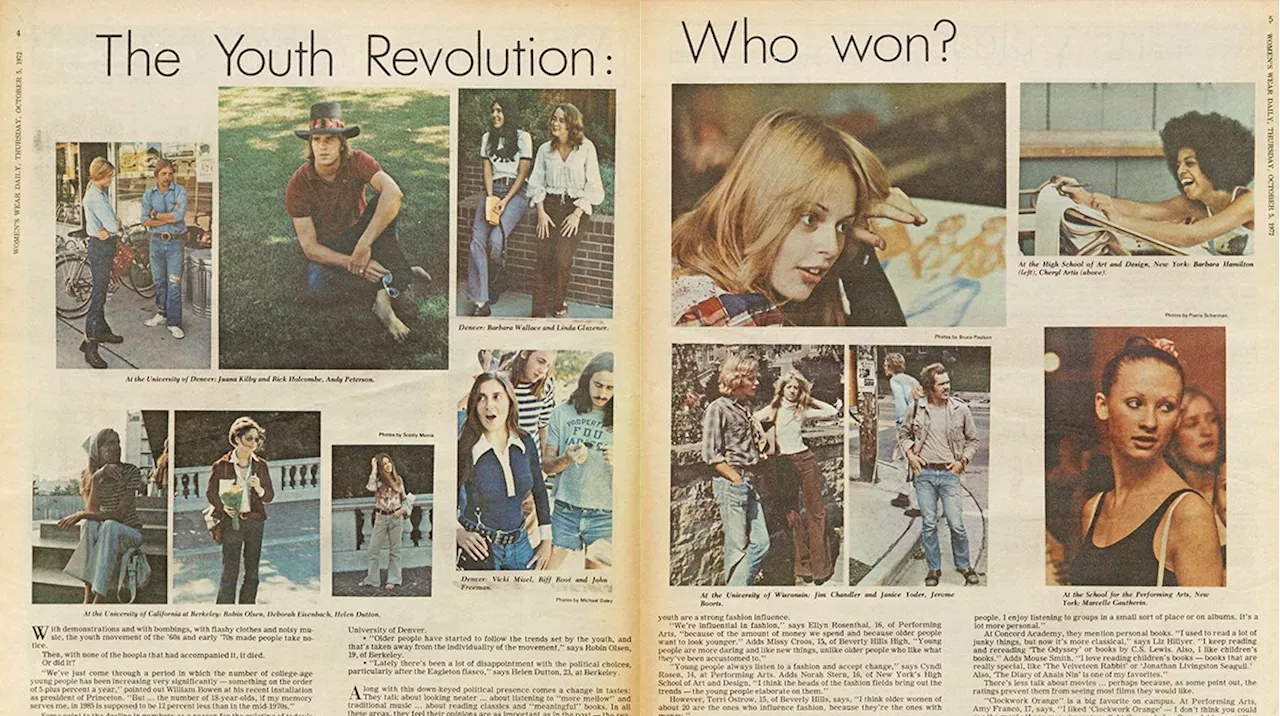
In the early 1970s, student-led movements across the globe acted as catalysts for massive social and political shifts. According to a retrospective from Women's Wear Daily, this era of unrest eventually led to landmark changes, such as lowering the voting age from 20 to 18.
The legal victory that lowered the voting age to 18
The 1960s and early 1970s were defined by intense student-led boycotts and sit-ins that challenged the existing social order. These protests were more than just temporary disruptions; they were concerted attempts to reshape the very foundations of political society. One of the most tangible results of this momentum was the adjustment of voting eligibility, which shifted from 20 down to 18.
This change fundamentally altered the landscape of democratic participation, allowing a younger , more radicalized cohort to have a direct say in the nation's leadership. By bringing 18-year-olds into the fold, the movement ensured that the generation most affected by social upheaval had a formal mechanism to influence the government.
WWD's deep dive into the 18-to-25-year-old demographic
As the first presidential election involving 18-year-old voters approached, Women's Wear Daily published a seminal article titled “The Youth Revolution: Who Won?” The report sought the perspectives of young Baby Boomers , specifically targeting high school and college students between the ages of 18 and 25.
By centering the voices of those on the front lines of the movement, the publication attempted to gauge whether the energy of the streets was successfully translating into the halls of power. the article aimed to validate the experiences of these young adults while questioning the ultimate efficacy of their collective action.
The tension between institutional reform and cultural style
A central question raised in the archive is whether these movements achieved deep-seated institutional change or if their impact was primarily felt in "culture, style and public discourse." This historical tension feels incredibly modern. Today, we see a similar friction in how digital-native generations engage with activism—often through "aesthetic" movements on platforms like TikTok that can feel more like a lifestyle choice than a political campaign.
The WWD report suggests that even if the laws didn't change overnight, the way society talked about identity, gender, and power had been irrevocably altered.. For many, the revolution was as much about a change in the way people dressed and spoke as it was about the policies they demanded.
The debate over whether the revolution won the zeitgeist or the legislature
While the archive notes that the views of young people were validated, several critical points remain unverified. The source does not explicitly state whether the cultural shifts were viewed as a victory or a distraction from the harder work of political reform. It leaves the reader to wonder if the movement's success was measured by the ballot box or the runway.
Furthermore, it is unclear from the text if the "style" changes mentioned were a byproduct of the movement or a deliberate strategy used to gain visibility. We are left with the unanswered question of whether the activism of the 1970s truly reshaped the institutions of power, or if it simply changed the conversation around them.
Comments 0