
Skims is currently issuing refunds after customers slammed its recent holday calendar for containing "junk" like bobby pins and keychains. in response to the social media uproar, WWD has curated a list of higher-value alternatives for the 2026 season to help shoppers avoid similar letdowns.
The Skims 'Junk' Backlash and the Rise of the Refund
The controversy surrounding Skims began after the brand's calendar, released in October, was unboxed by netizens who found the contents underwhelming. Rather than the luxury experience expected from the brand,buyers discovered an assortment of branded hair ties and accessories, which led to a wave of online criticism.. As WWD reported, the brand has since offered refunds to appease disappointed customers, even though the product had already sold out.
This incident highlights a growing tension in internet culture: the gap between the "aesthetic" of a luxury brand and the actual utility of its promotional products. For the modern consumer, the unboxing experience is a social currency; when a brand like Skims fails to deliver a "wow" factor, the backlash is instantaneous and viral. We are seeing a shift where the perceived value of a countdown is no longer just about the items, but about whether the brand respects the customer's investment.
Revolve's $89 Calendar and the $409 Retail Value Promise
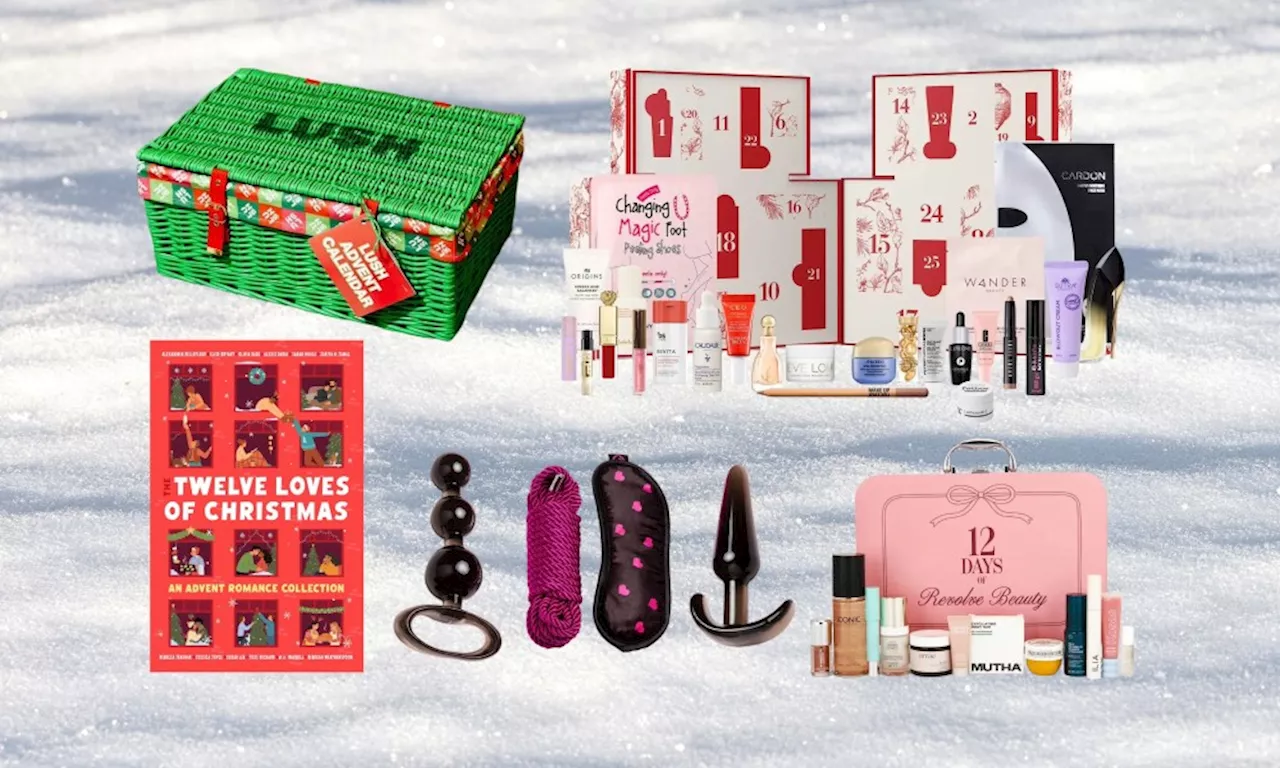
For those seeking a more tangible return on investment, the Revolve Advent calendar has emerged as a top contender.. According to WWD, this $89 collection boasts a total retail value exceeding $409, featuring a mix of skincare, makeup, and wellness products. The set includes six full-size items from highly coveted brands such as Kosas, Ilia, and Sweed.
The market appetite for this specific bundle is evident in its commercial performance. The Revolve calendar has already ranked as the number one new product on Amazon and has sold more than 5,000 units at Target within the last month alone. This suggests that shoppers are gravitating toward "multi-brand" curators who can guarantee a high variety of high-end samples.
From Lily Allen's $129 Intimacy Kit to Alexandria Bellefleur's Sapphic Stories
The 2026 season also marks a pivot toward more niche, lifestyle-oriented countdowns that move beyond traditional beauty samples. One such example is a $129 collection curated by Lily Allen, which focuses on self-care essentials, games, and intimate toys. This reflects a broader trend of "adult" advent calendars that prioritize wellness and relationship exploration over cosmetic miniatures.
Similarly, the literary world has entered the fray with a calendar created by sapphic romance novelist Alexandria Bellefleur. Known for works like "Written in the Stars" and "The Fiancée Farce," Bellefleur's project offers 12 sealed romance stories by 12 different authors. This shift toward experiential and intellectual gifts suggests that the "countdown" format is being decoupled from physical product bundles and rebranded as a curated journey.
M·A·C's $565 Retail Value and the Allure of Ruby Woo
At the high end of the splurge spectrum, M·A·C has released a 24-Day Icons Advent Calendar. As WWD reported, this set carries an impressive retail value of $565, combining full-size favorites with mini surprises... The collection leans heavily on the brand's heritage , featuring iconic shades like Ruby Woo and Candy Yum Yum across its lipsticks and glosses.
While the M·A·C offering targets the devoted brand loyalist, other options like the $55 Nespresso Vertuo calendar provide a more practical approach, offering 24 days of coffee capsules, two biscuits, and a flask. Whether it is a high-fashion makeup haul or a daily caffeine fix, the 2026 market is clearly bifurcating between "practical luxury" and "collector's items."
Who determines the 'retail value' of the Revolve and M·A·C sets?
Despite the allure of these high numbers, a significant question remains: how exactly are these "retail values" calculated? The source does not specify if these figures are based on the cost of full-size equivalents or a curated estimate of the miniatures provided. Furthermore, while the Skims failure is well-documented, it remains unclear why the brand opted for low-cost fillers like bobby pins in a luxury-positioned product .
Comments 0