
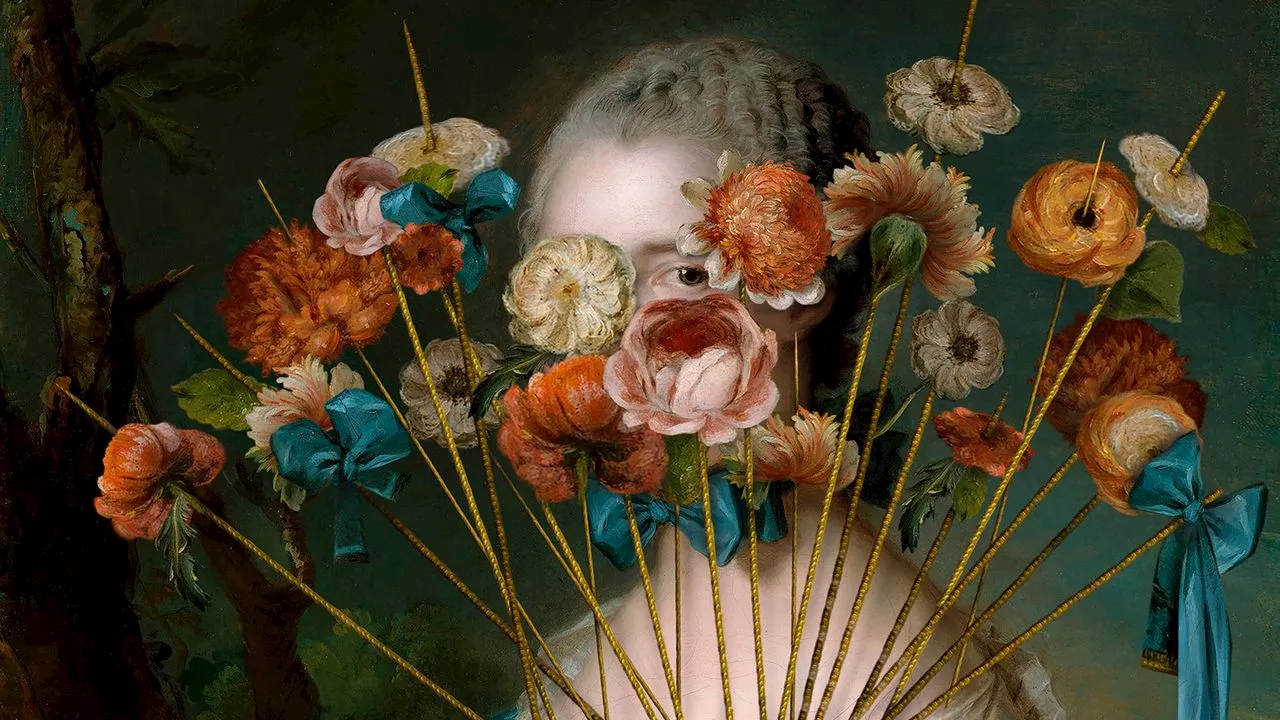
German artist Volker Hermes has debuted his first solo exhibition in New York, showcasing a unique method of digital image manipulation. By reworking archival portraits, Hermes aims to challenge how we perceive historical wealth and the restrictive roles of women in the past.
Why Volker Hermes rejects traditional painting for digital image-editing
The artist's technique relies on digital image-editing rather than traditional brushwork to create archival pigment prints. A former philosophy student at the Kunstakademie Düsseldorf,Hermes began developing this specific method around 2007. As the report notes, his approach is often a subject of controversy among those who believe digital intervention might ruin the sanctity of classical art.
Hermes argues that his work is a tribute to historical art rather than an attempt to mimic it. He has stated that he does not want to simply repaint works in the style of Rembrandt, noting that "nostalgia doesn't have a future." Instead, he uses technology to make these historical images feel alive and relevant to a modern audience.
Wrapping pearl necklaces around women to highlight a lack of rights
Hermes uses visual symbols to critique the social hierarchies of the past, specifically targeting the "top 1%" of historical societies. One of his most striking interventions involves extending pearl necklaces around the necks of the women in his portraits. While pearls are a timeless symbol of wealth and beauty , Hermes uses them to draw attention to the fact that these women often lived under extreme social restrictions and lacked fundamental rights.
The artist's interventions often aim to disrupt the viewer's tendency to focus only on a beautiful face. By adding elements like sharp stakes or heavy jewelry, he forces a confrontation with the darker realities hidden behind enchanting surfaces. According to the source, these changes are intended to make viewers realize that the historical status represented in these portraits often came at a high personal cost to the women depicted.
Using ribbons to turn two-dimensional portraits into three-dimensional worlds
Ribbons serve as a primary tool for Hermes to create a sense of depth and movement within his two-dimensional works. By letting ribbons float around a subject or even lead them out of the frame, he gives the viewer the impression that there is a real,breathing body behind the clothing. This technique is designed to add rhythm and life to the static imagery of the past.
The exhibition at Loie DeVore's gallery utilizes this sense of texture and movement to engage the viewer. Working alongside textile expert Cora Ginsberg, the gallerist has arranged the space like a salon, placing Hermes's prints alongside Old Master paintings, laces, and jacquards. This curation emphasizes the interplay between the artist's digital interventions and the physical history of textiles.
Navigating the "pornography of information" in an AI-driven world
Hermes's work offers a lesson in visual literacy for an era defined by digital overload. He references Jean Baudrillard’s concept of a "pornography of information and communication" to describe the modern landscape of endless scrolling and networks. His art encourages viewers to look closely and exercise judgment in a world where the line between reality and fabrication is increasingly blurred.
The artist suggests that while society cannot prevent AI from entering our lives, we must learn to distinguish between what is real and what is "made up." By manipulating historical images,Hermes trains the eye to question the authenticity of what it sees, a skill he deems essential in the age of artificial intelligence.
What remains unsaid about the specific portraits Hermes selects
While the artist's philosophy is clearly defined, several details regarding his creative process remain unaddressed in the report. It is not specified what criteria he uses to select the specific online portraits that become his subjects, nor is it clear how he navigates the potential copyright complexities of using archival images. Additionally, the report does not clarify if his digital iterations are intended to represent specific historical figures or if they are purely archetypal studies of class and gender.
Comments 0