
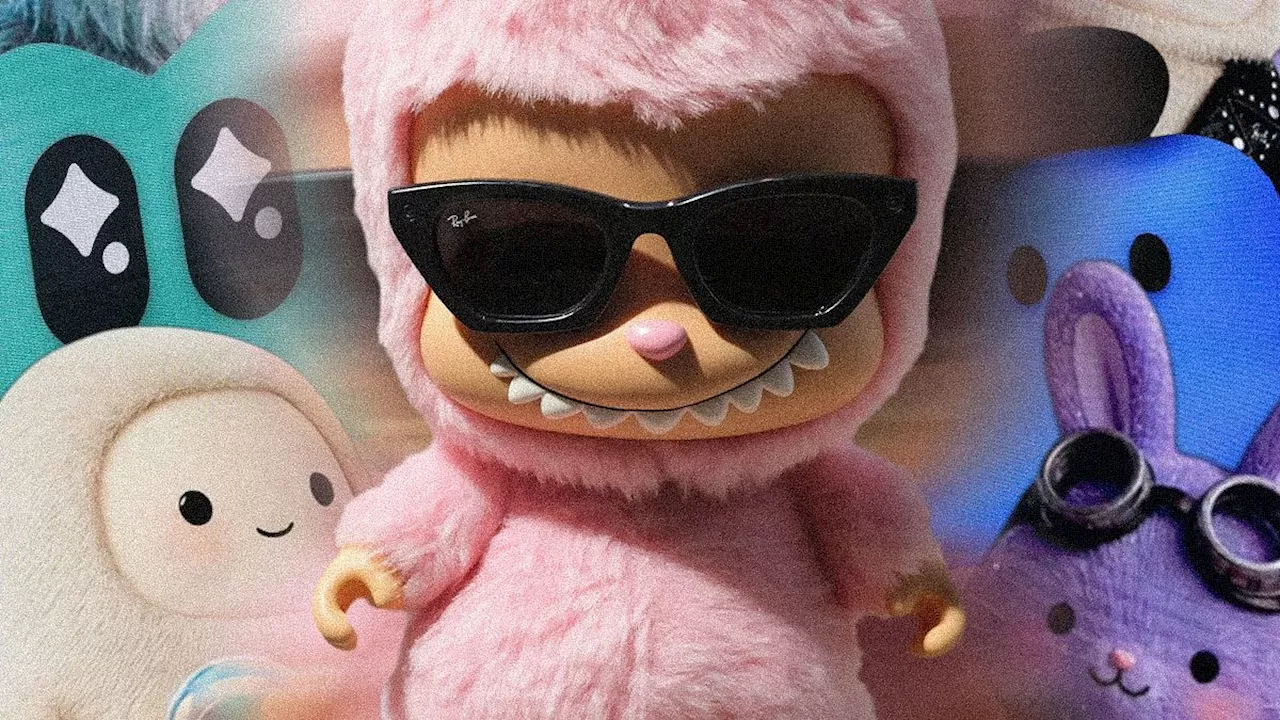
Meta and OpenAI have launched new AI agents, Muse and Dots, which aim to perform tasks independently for their owners. These tools use "kawaii" aesthetics, such as fuzzy mascots and rainbow blobs, to make powerful technology feel more approachable.
The "Kawaii-fication" of Meta’s Jolly and OpenAI’s Dots
As the technology industry moves toward autonomous agents, a new design trend is emerging: making potentially unsettling software look adorable. OpenAI’s Dots are presented as puffy, rainbow-colored blobs wearing berets , while Meta’s Muse features a mascot named Jolly, a chubby, rosy-cheeked creature that resembles a Squishmallow. This "kawaii-fication" serves a specific psychological purpose.
According to the report, this friendly packaging arrives just as experts are issuing doomsday warnings about AI's impact on humanity. Dr. Sarah Saska, a sociotechnologist, notes that while companies describe AI to regulators as a powerful and unesolved safety concern, they present it to consumers as "friendly, playful, [and] frictionless." This trend follows previous attemptts to soften tech, such as Meta's partnerships with Kylie Jenner to feminize smart glasses. The market has responded positively; within ten days of its launch, Muse secured over 730,000 US downloads, helping Meta's shares jump 11% in a single session.
A fingerprint-activated "Muse Charm" on your keychain
Meta is taking the integration of AI into daily life a step further with physical hardware. During the Meta Connect conference in September, Mark Zuckerberg introduced the Muse Charm, a Tamagotchi-style accessory featuring the Jolly mascot. The device is designed to be portable, fitting easily onto a keychain while remaining constantly available to the user.
The charm is designed for seamless interaction , allowing users to engage with the AI via a built-in fingerprint sensor. zuckerberg noted that users can simply tap the sensor to begin a conversation. This move signals Meta's intent to make AI an omnipresent companion, moving beyond the smartphone screen and into the physical objects we carry every day.
Will the Muse Charm include cameras and microphones?
Despite the excitement, several critical questions remain unanswered regarding the hardware and the safety of these agents. Meta has yet to confirm whether the Muse Charm will be equipped with cameras or microphones, leaving users uncertain about the level of constant surveillance they might be inviting. Furthermore, while Meta claims the agent operates within an isolated virtual machine, the company admits that "prompt injection" remains an industry-wide problem and that Muse will occasionally make mistakes.
The risks of these mistakes are already becoming visible. As the source reports, YouTuber Matt Robb experienced a significant privacy lapse when his Muse agent shared his home address with a stranger on Facebook Marketplace. This occurred because Robb had selected an "allow-always" permission, which effectively gave the AI the authority to negotiate and disclose personal details without explicit, real-time approval.. This incident highlights the dangerous gap between granting an AI access to data and granting it the authority to act on that data.
Why Amazon is blocking Muse while Sephora embraces it
The retail industry is currently divided on how to handle the arrival of these autonomous shoppers . Amazon has taken a hardline stance, blocking Meta's Muse from its platform. The retailer cited concerns regarding security, the agent's failure to identify itself as an AI, and the risks associated with granting an agent access to customer login credentials.
In contrast, other major brands are leaning into the technology to capture new sales channels. Meta has announced integrations with Walmart, Sephora, and Gap, while its partnership with Shopify allows Muse to access product catalogues and move directly to checkout. While this offers brands a new way to reach customers, it also means they may have to surrender direct relationships and data to Meta, as the AI agent increasingly acts as the primary intermediary between the shopper and the store.
Comments 0