
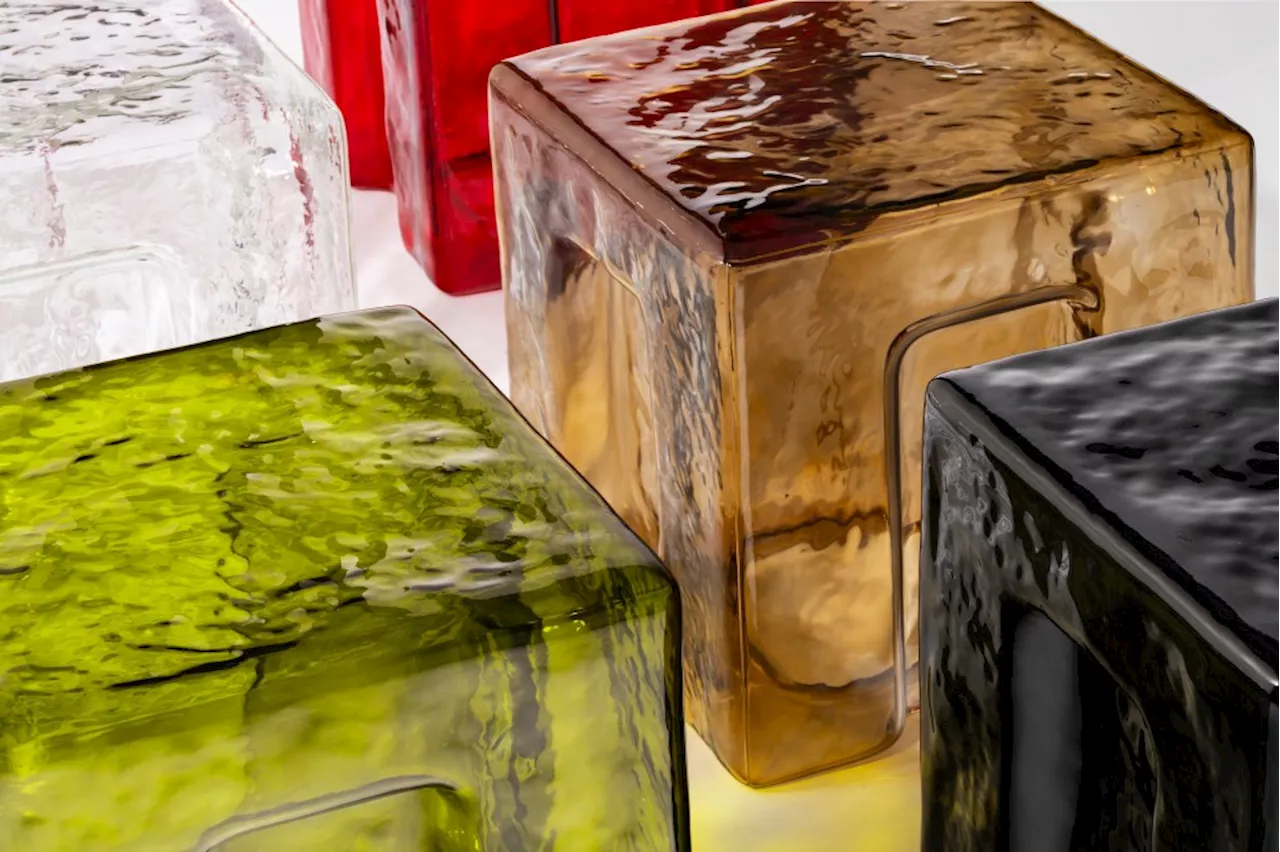
Venice Glass Week is currently showcasing a massive shift in the Murano glassmaking scene, blending centuries-old techniques with modern global design. International architects and studios are now collaborating with traditional Venetian workshops to push the material's limits.
From 3000 BC origins to the global spotlight on Murano
The history of glassmaking is ancient, with roots stretching back to Mesopotamia and Egypt as far as 3000 BC. While the role of the fiolario, or glassmaker, was first documented in the 10th century, the craft has long been a strictly protected Venetian heritage. As the report notes, this "heavily guarded Venetian patrimony" is currently undergoing a transformation as heritage brands like Barovier&Toso and Venini gain massive international popularity.
This global interest has turned the island of Murano into a focal point for a new kind of creative exchange. Rather than remaining closed off, the island's workshops are opening their doors to an international wave of designers who are looking to marry historical prestige with contemporary aesthetics.
Norman Foster and Salviati’s "Hydra" reinterprets the Venetian chandelier
One of the most significant collaborations highlighted at the event involves the Italian firm Salviati and glass maestro Franco Zane. Working alongside English architect Norman Foster and the Norman Foster Foundation, the team has created "Hydra," a site-specific glass installation. The project reinterprets the classic Venetian chandelier through a contemporary lens, using organic arms and blown-glass elements to explore glass as both a structural and expressive medium.
The installation also brings a spotlight to Italian artsit Michela Cattai, who works between her Milan gallery and a Venice furnace. Cattai’s work, specifically her exhibit "Frequent della Forma," uses botanical forms and organic plants as blueprints to create sculptural expressions of light and movement.
Marco Zito’s "Massicci" basin brings molten glass to high-end bath design
The evolution of Murano glass is moving beyond decorative objects and into functional, high-end interior architecture. Venice-born designer Marco Zito is leading this charge with "Massicci," a new sink designed for the high-end bath firm Agape. According to the source, the basin is made from cast glass that is shaped through fire to reveal deep, expressive textures.
The production process for the Massicci basin involves pouring molten glass into a mold to create a monolithic volume . This method leaves a subtly faceted surface on the sink, which serves as a natural imprint of the cooling process, turning a functional bathroom fixture into a piece of sculptural art.
CNC molds and "granzioli" fragments define the new experimental era
Experimental technology is increasingly meeting ancient craft through brands like 6:AM, founded in 2018 by Edoardo Pandolfo and Francesco Palù. Their "Batch" collection utilizes cast-iron molds that are engraved using CNC technology, creating a subtractive geometry that mimics the look of marble carving. This approach marks a significant departure from purely hand-molded traditions.
Other rising stars are finding ways to manipulate the material's physical properties through texture. The daughters of artist Massimo Micheluzzi have introduced the "Ghiaccio" collection, which uses granzioli—small fragments of glass that resemble crushed ice—applied to the glass while it is still incandescent. Similarly, the Swedish design studio Claesson Koivisto Rune has collaborated with a Venetian family-run company to create the "Podio" vase family, utilizing the corteccia technique to generate dynamic reflections and lenses.
Can the "heavily guarded Venetian patrimony" survive an international wave of designers?
While the influx of international talent seems to be revitalizing the industry, the report does not address how these collaborations affect the traditional , closed-door nature of Murano's workshops. It remains to be seen whether this openness will dilute the specific, guarded techniques of the local fiolari or if it is the necessary evolution required to keep the craft commercially viable in a globalized market. The source focuses primarily on the successes of these new partnerships, leaving the potential tension between tradition and modernization largely unexamined.
Comments 0