
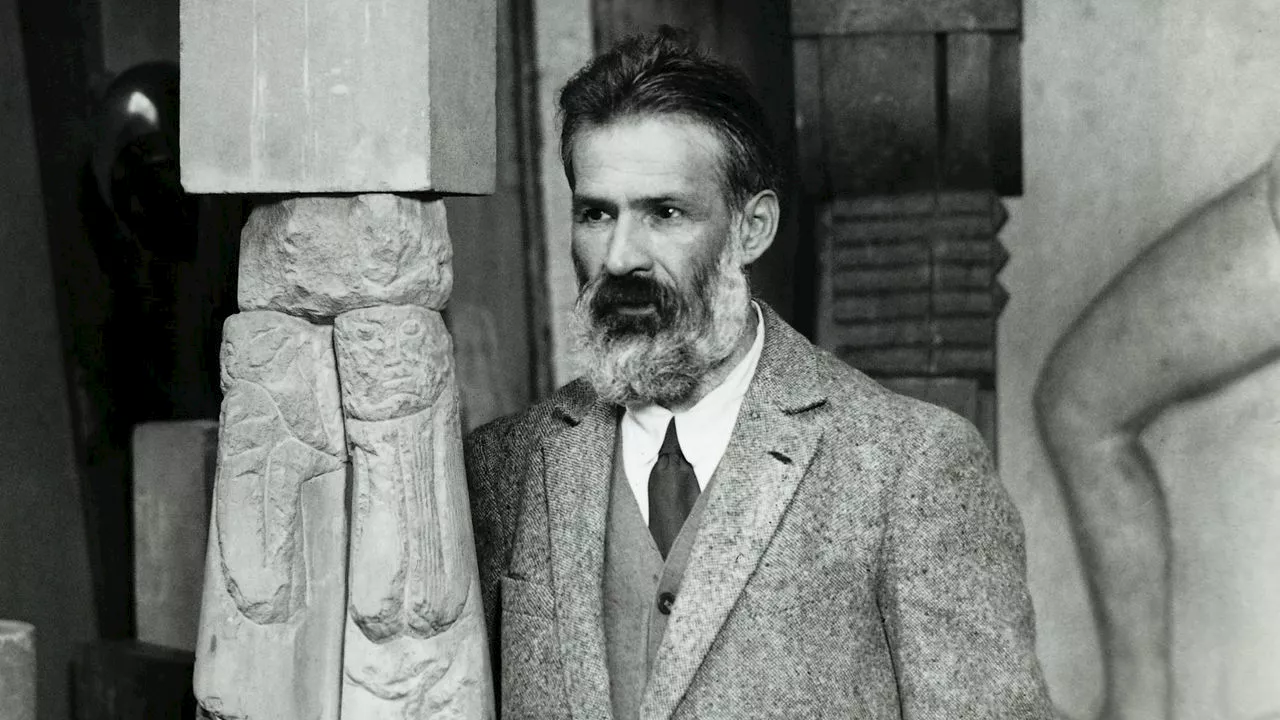
In 1904, Constantin Brancusi and Pablo Picasso both moved to Paris to join the city's artistic avant-garde. While Picasso became famous for his rapidly changing styles, Brancusi focused on creating sculptures that felt eternal and unmoving.
The divide between Picasso’s shock and Brancusi’s fusion
According to a retrospective analysis in Vogue, the artistic paths of Pablo Picasso and Constantin Brancusi represent two opposing ways of experiencing the 20th century. While Picasso used his art to mirror the violence and rapid shifts of his time, Brancusi sought a reality that existed beyond politics and history. The report describes Picasso as a "poet of shock" whose work embraced the convulsiveness of modern life, whereas Brancusi acted as a "poet of fusion," seeking to connect humanity through simplified, universal forms.
This distinction is evident in their approach to time. Picasso’s work often suggests that time is a destabilizing force that moves relentlessly ahead, reflected in his constantly evolving imagery. In contrast, Brancusi’s work—such as his many variations on the motif of the egg or embryo—suggests a seamless, recurring moment where the past and future coexist. For Brancusi, newness was not about constant change, but about discovering a timeless truth through distillation.
The sacred precision of 11 Impasse Ronsin
Brancusi spent much of his life in the Montparnasse district of Paris, eventually settling at 11 Impasse Ronsin. As the Vogue report notes, he treated his workspace as a sacred, self-contained temple. He was known to be incredibly meticulous about his environment, acting as both a "prophet and priest" within his own studio walls.
This devotion to order extended to the very placement of his art. The report highlights that by the end of his life, Brancusi assigned every single object in his studio a specific location, sometimes down to the centimeter. He was so protective of the spatial and spiritual integrity of his work that whenever he sold a sculpture, he would often create a bronze or pllaster cast to fill the "spiritual void" that the departure of the piece would create.
A creative lineage from Modigliani to Isamu Noguchi
Brancusi’s influence on the trajectory of modern art is vast, touching everything from organic abstraction to the Minimalist movement. He was a central figure in the Parisian art scene, admired by heavyweights like Henri Matisse and even Picasso himself. His role as a mentor was equally significant;he taught Amedeo Modigliani the fundamentals of carving and employed the legendry Isamu Noguchi as an assistant.
The report also traces his impact on later generations of artists. His streamlined, luminous forms provided a foundation for Minimalists like Carl Andre and Dan Flavin, while his focus on the vitality of shape can be seen in the works of Henry Moore and Jean Arp. Even contemporary sculptors like Martin Puryear continue to navigate the distilled, economical shapes that Brancusi pioneered.
Can Brancusi’s simplicity survive the postmodern critique?
Despite his massive legacy, Brancusi’s pursuit of "timelessness" has faced significant pushback from later art movements. Some postmodernists argue that his focus on pure, beautiful form was a way to escape the trauma and crises of the mid-20th century, rather than engaging with them. This perspective suggests that his approach was a form of self-protection or an attempt to maintain "good taste" in the face of a broken world.
This tension leaves several questions for the modern art world. critics have dismissed some of his works as mere commodities for the wealthy, raising the question of whether his aesthetic can still provoke genuine wonder. We are left to wonder: can Brancusi’s optimism and yearning for synthesis still inspire a new way of seeing, or has his work become too settled in its own perfection to surprise us again?
Comments 0