

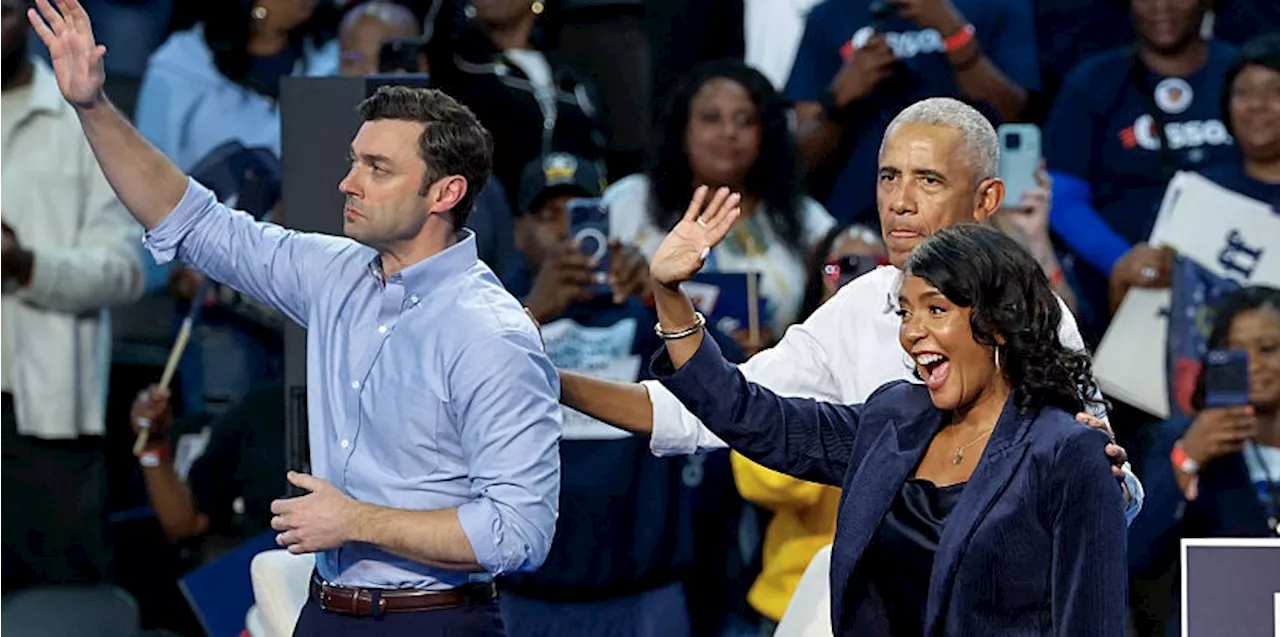
The 2026 midterm elections feature several high-stakes races that could result in historic firsts for women. From potential Black woman governors in Georgia to Native American leadership in New Mexico, the ballot is packed with groundbreaking possibilities.
From Georgia to New Mexico: The historic firsts on the 2026 ballot
The 2026 midterms are shaping up to be a landmark moment for female leadership across the United States. In Georgia, Keisha Lance Bottoms is running for governor, a win that would make her the first Black woman to hold the office in the nation's 250-year history. Meanwhile, in New Mexico, former Secretary of the Interior Deb Haaland is poised to potentially become the first Native American woman governor.
Even Minnesota is set for a historic showdown, as Democratic Senator Amy Klobuchar and Republican Lisa Demuth face off in the state's first all-woman major party race. Other notable figures include Maine's Hannah Pingree, who made history as the youngest woman state house speaker, and Tennessee's Marsha Blackburn, who is favored to become that state's first female governor.
A $11.6 billion election cycle still favors male incumbents
Despite these high-profile races, the structural reality of American politics remains heavily skewed toward men. according to RepresentWomen, the national parity score for the U.S. sits at a "C" grade of 28.2, showing that women's representation has largely stagnated. The report highlights a massive incumbency advantage: men currently hold roughly seven out of every ten seats in Congress.
This advantage is bolstered by massive spending; for example, a health insurance industry PAC reportedly directed 97 percent of its $4.2 million in contributions toward incumbents, leaving only a tiny fraction for challengers. With total election spending expected to reach $11.6 billion, the financial barrier to entry remains a significant hurdle for women attempting to unseat established male politicians.
The widening gap between Democratic and Republican women candidates
While many women are running, the distribution of candidates varies wildly by party affiliation. As reported by the Center for American Women and Politics (CAWP), Democratic women make up 45.5 percent of House nominees, while Republican women account for only 17.6 percent. This disparity suggests that while women are making strides within one party, the broader movement toward parity is uneven.
The data also suggests a potential decline for Republican women, as CAWP's forecasts indicate that while Democratic women could set a new record in the House, a record for Republican women is unlikely. This underscores the reality that women are not a political monolith, and progress in one party does not guarantee progress for all.
How New Mexico’s $68,000 salary proposal could reshape leadership
One way to combat the socioeconomic barriers to entry is through legislative reform. In New Mexico, Amendment 4 proposes paying state legislators a salary equal to the state's median household income, which is approximately $68,000. Currently, New Mexico is the only state that does not pay its legislature a salary, often requiring officials to hold second jobs to survive.
Proponents argue this change could allow more women from working-class backgrounds to run for office without financial hardship. By providing a stable income, the amendment has the potential to diversify the electorate and make elections more competitive by allowing more people to challenge incumbents.
Will ranked-choice voting in Alaska and Maine break the winner-take-all cycle?
While the potential for historic wins is high, significant questions remain about whether these victories will lead to lasting structural change. Can shifts like ranked-choice voting—already in use in Alaska and Maine—prevent the "winner-take-all" outcomes that Cynthia Richie Terrell of RepresentWomen says cause women's progress to rise and fall with each cycle?
It remains to be seen if these new voting methods can truly level the playing field for women in highly competitive races,such as the Ohio gubernatorial battle between Dr. Amy Acton and Vivek Ramaswamy. Without fundamental changes to how elections are designed, the historic milestones of 2026 may remain exceptions rather than the new norm.
Comments 0