
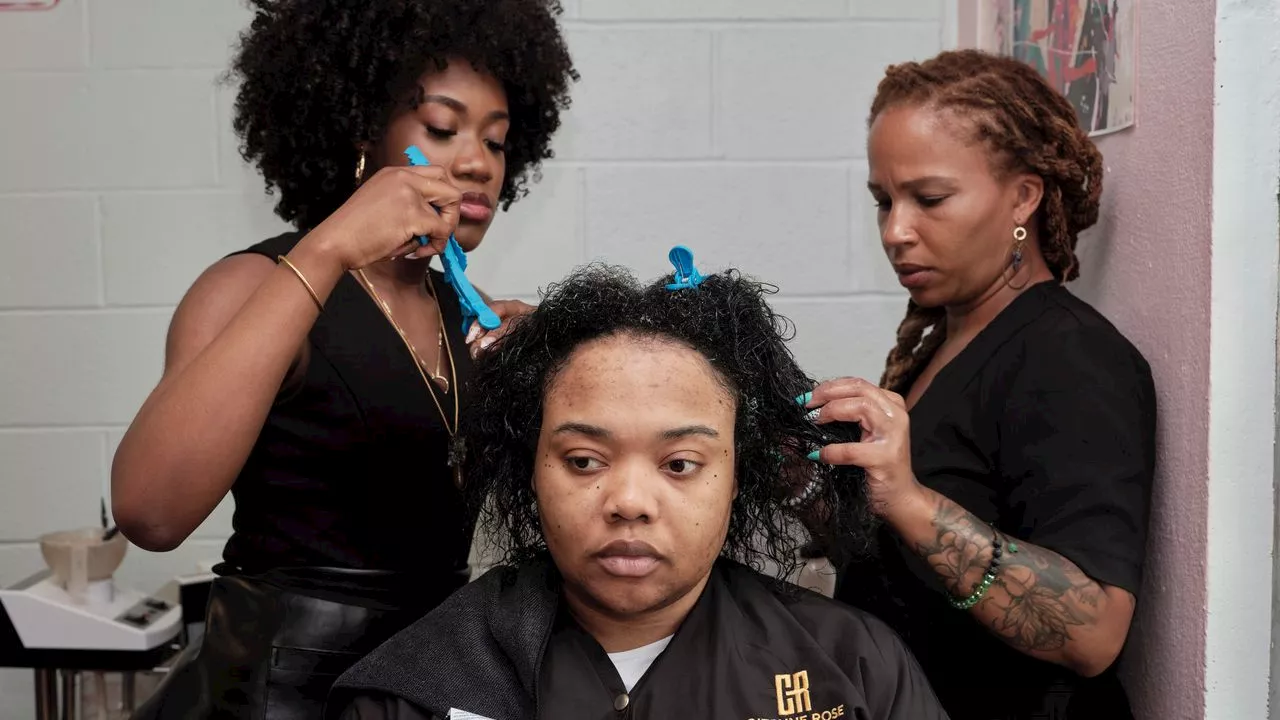
A pilot program by the nonprofit Beauty Beyond Bars recently brought professional hairstylists and makeup artists to the Rose M. Singer Center on Rikers Island. The initiative aims to provide hair transformations for women who are nearing their release from the Bronx jail complex.
Polycarbonate mirrors and TSA-style security at Rosie’s
The salon experience at the Rose M. Singer Center is far from a typical Manhattan hair appointment. According to the report, visitors must pass through a trailer at the Francis R. Buono Memorial Bridge and navigate three separate security checkpoints before reaching the recreation area. Even the mirrors are different; they are made of polycarbonate plastic rather than glass to prevent inmates from using shards as weapons.
While the women sit in salon chairs eating pizza and chatting, the atmosphere remains heavily guarded. Armed officers are stationed right outside the door, and the entire process requires strict monitoring of all beauty products to ensure nothing goes missing during the session.
Lea Nepomuceno’s mission to bring Manhattan glamour to the Bronx
Beauty Beyond Bars, a nonprofit founded by 21-year-old advocate Lea Nepomuceno, partnered with hairstylist Julie Dastine to facilitate these transformations. The program focuses on women with impending release dates, such as 31-year-old Daesha Holloman, who is set to be released in November.. Dastine and her team provide services like silk presses and trims to help women feel prepared for their return to society.
The timing of such interventions is critical, especially considering that as of June 2026, approximately 84% of Rikers Island inmates are unconvicted and awaiting trial or bail.. For women like 28-year-old Adia Charles and 47-year-old Lizette Lugo, these professional services provide a rare moment of self-care in a facility known for high rates of disorder.
From deodorant eyeshadow to $11 foundation: The reality of jail beauty
Incarcerated women often have to "hack" the system to maintain their appearance due to limited access to hygiene products. The report notes that some inmates use deodorant against magazine pages to create eyeshadow or melt down Corcraft bars to create a gel-like substance for edge control. These makeshift solutions are a response to the lack of specialized products like hair oils or high-quality sponges.
Access to standard beauty items is also a matter of cost and scrcity. Lizette Lugo, who works as a suicide-prevention aide, noted that foundation costs around $11 at the commissary, and many women struggle with low-quality products or shampoos that irritate the scalp.. For many, a professional makeover is a luxury that allows them to feel like themselves again.
Will the Beauty Beyond Bars pilot become a permanent fixture?
While the current session provided a "new start" for women like Lugo,several questions remain regarding the program's longevity. It is currently unclear if the NYC Department of Correction will provide permanent funding or dedicated space for such vocational beauty programs. Additionally,while the nonprofit intends to share the women's stories on social media to advocate for reform, the long-term impact of these sessions on successful re-entry remains to be seen.
Comments 0