
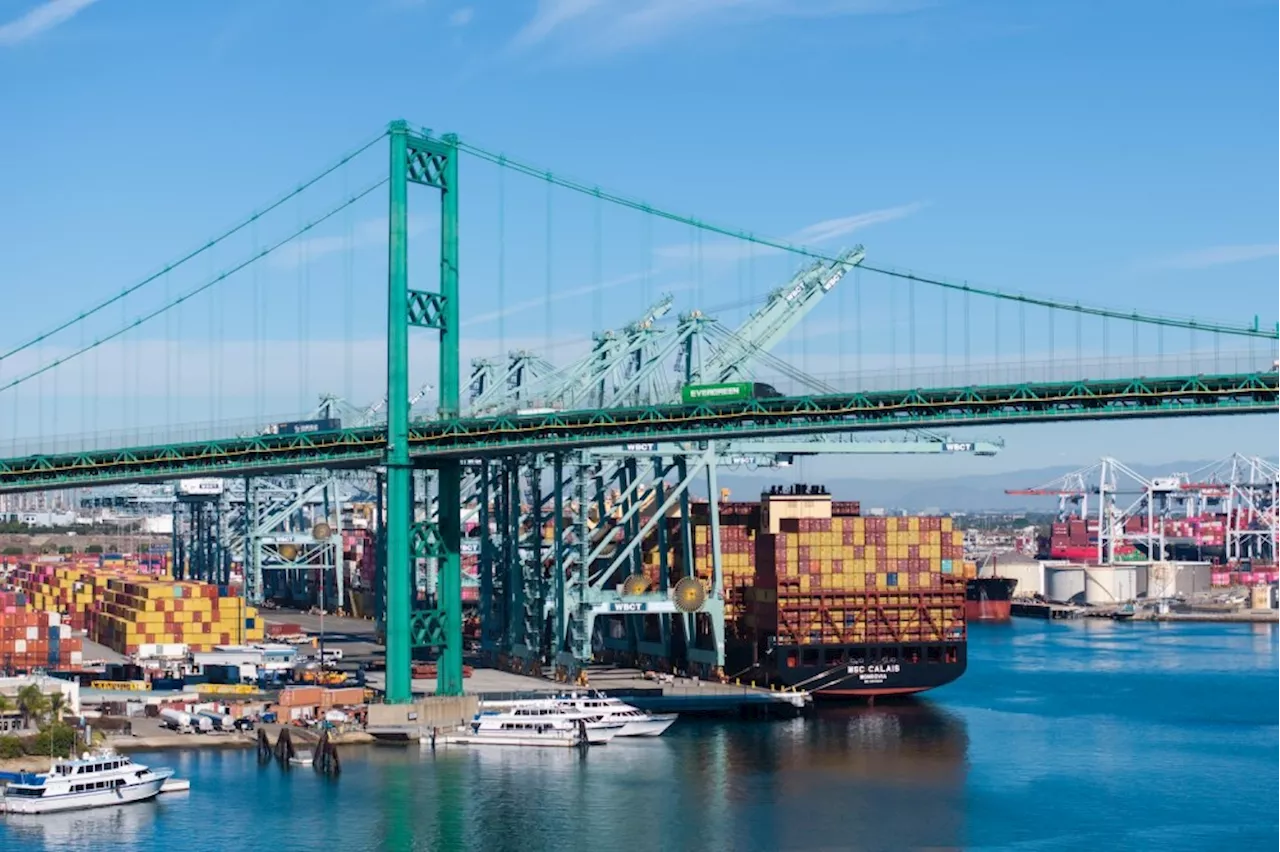
The United States and China have agreed to delay reciprocal port fees until early January. This decision, announced on Monday, prevents an immediate economic diruption that was scheduled to occur this month.
The $6.4 million toll paid by Matson
The financial impact of these fees was felt immediately when they were briefly enacted, with the shipping line Matson paying $6.4 million to dock in China. According to the report, other major players like Cosco Shipping and its subsidiary Orient Overseas Container Line (OOCL) also faced significant costs during the brief period the penalties were active.
This recent extension , which was filed on Monday morning and is set for publication in the Federal Register on Tuesday, aims to prevent a "cliff" that would have hit on November 10 . The USTR indicated in its notice that the underlying circumstances that required the initial suspension still exist, meaning the tension between the two nations remains unresolved.
Why the AAFA and NRF are pushing for a longer-term fix
While the pause offers temporary relief, major industry groups are warning that a short-term fix is not enough to protect the economy. The American Apparel and Footwear Association (AAFA) has noted that without a long-term solution , seasonal production schedules and shipping contracts could be completely upended. Audrey Clark,a manager at the AAFA, urged the USTR to provide more certainty to prevent the return of disruptive measures.
The stakes for the retail sector are incredibly high. The trade association cited a potential 4 percent loss in employment and output for the U.S. fashion and apparel industry if these tensions continue. Similarly, the National Retail Federation (NRF) warned that the unpredictability of these fees, combined with capacity constraints, could lead to much more volatile costs for consumers and businesses alike.
A massive maritime imbalance: 15 U.S. ships versus 4,000 in China
The trade dispute is rooted in a massive structural gap in maritime power.. According to data from BRS Shipbrokers, the U.S. was building just 15 cargo ships as of July, while China’s output exceeded 4,000. This disparity is a central part of the Section 301 investigation, which ruled that China’s maritime practices were "unreasonable" and unfairly displaced foreign firms.
The Trump administration has been working to narrow this gap through strategies aimed at reducing reliance on foreign-built and foreign-flagged vessels. However, as the report notes, even with bipartisan legislation in Congress, U.S. shipbuilding output has barely moved. Of the 15 cargo ships currently in progress in the U.S., 12 are expected to be constructed primarily in South Korea.
Will the January 9 deadline resolve the Section 301 dispute?
Despite the extension, several critical questions remain unanswered. it is still uncler if the January 9 deadline will actually lead to a permanent resolution of the outstanding trade threats, or if it will simply result in another temporary pause. Additionally, while China has suspended an extra 24 percent tariff on U.S. goods through January 10, it remains to be seen if this suspension will be extended further.
Finally, there is the question of whether the U.S. can actually meet its stated goals. Jennifer Thornton, general counsel of the USTR’s office, stated that the U.S. intends to use this time to expand domestic shipbuilding capacity and build a resilient workforce, but whether these long-term industrial goals can be achieved in time to prevent future trade wars remains unverified.
Comments 0