
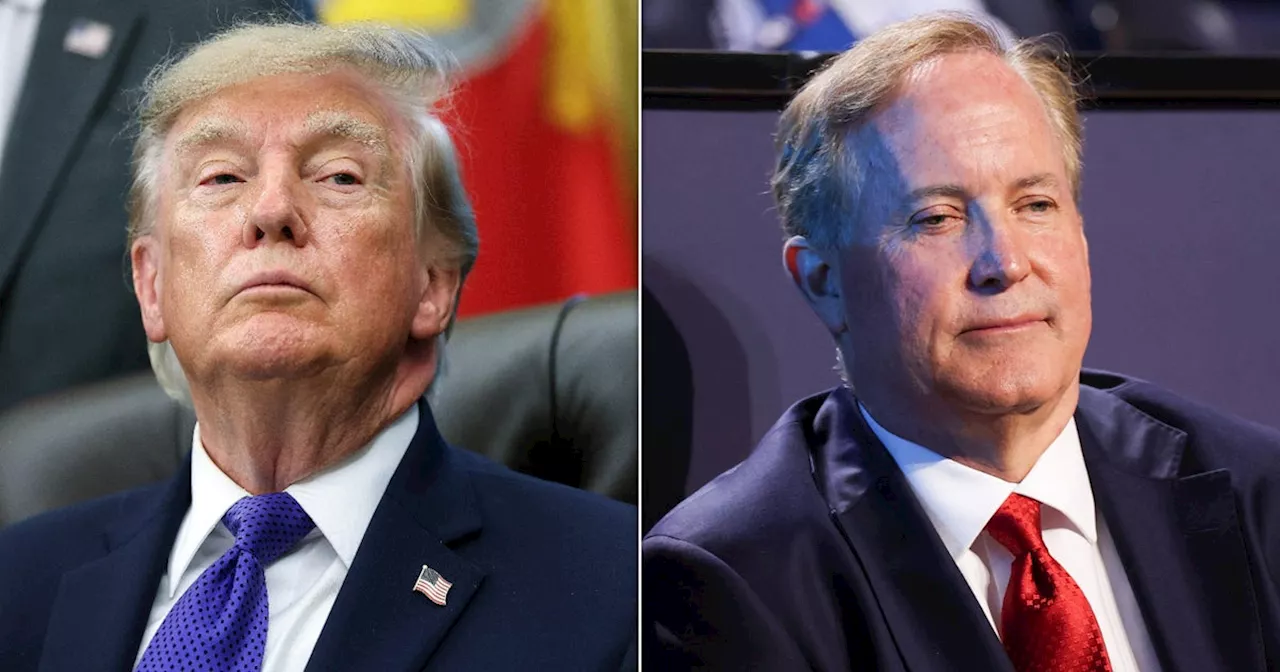
During a recent campaign trip to San Antonio and Denton , Texas, Donald Trump made several pointed remarks regarding the appearance and manner of speaking of Republican Senate nominee Ken Paxton. While the former president continues to endorse the candidate, his commentary on Paxton's personal style has sparked significant debate among political analysts.
How Trump's definition of a "winner" excludes Ken Paxton
Donald Trump often equates physical traits and traditional masculinity with effective political leadership. Dan Cassino, a politics professor at Fairleigh Dickinson University, suggests that the former president holds a very specific archetype of what a successful candidate should look like. According to Cassino, that ideal is a tall, attractive man who adheres to a specific standard of dress.
This rigid standard creates friction when Trump is required to campaign alongside candidates who do not fit this mold. As reported by HuffPost, Trump has explicitly told Paxton that he is unsure if he likes his "look," the way he dresses, or the way he talks. This pattern suggests that for Trump, a candidate's perceived lack of traditional masculinity can be interpreted as a lack of winning potential.
A defensive move against a potential Texas loss
The critiques may serve as a strategic way for Donald Trump to distance himself from a possible electoral defeat in Texas. Brandon Rottinghaus, a politics professor at the University of Houston, posits that by highlighting Paxton's perceived flaws now, Trump is essentially setting up a scapegoat. If the Republican nominee fails to secure the Senate seat, Trump can point to these personal shortcomings as the reason for the loss.
This tactic allows the former president to maintain his political standing regardless of the election outcome. By framing Paxton as someone who might not "dress right" or "talk perfectly," Trump ensures that he is not held responsible for any Republican setbacks in the state during the November midterms.
Using superficial flaws to mask serious legal allegations
Focusing on trivial matters like clothing or speech can act as a distraction from the more serious controversies surrounding Ken Paxton. Josh Blank, the research director of the Texas Politics Project at the University of Texas at Austin, suggests that these comments might actually help voters reconcile their support for the candidate. By giving voters a minor, superficial flaw to focus on, it becomes easier for them to forgive the candidate's larger issues.
Ken Paxton's political career has been shadowed by significant allegations,including securities fraud, corruption, bribery, and abuse of public office... while these legal challenges are substantial, the focus on his "look" provides a much less polarizing topic for the electorate to debate. This shift in focus may allow supporters to acknowledge his imperfections without feeling they are compromising their values.
Will Paxton's base ignore the critiques of his appearance?
It remains unverified whether these comments will actually impact Ken Paxton's standing with his core supporters or if they are merely a byproduct of Trump's extemporaneous speaking style. While some experts see a calculated strategy, others wonder if the remarks are simply a sign of Trump's frustration with the political position Paxton occupies. Furthermore, it is not yet clear how the Democratic opponent, James Talarico, will leverage these comments to influence the competitive Texas Senate race.
Comments 0