

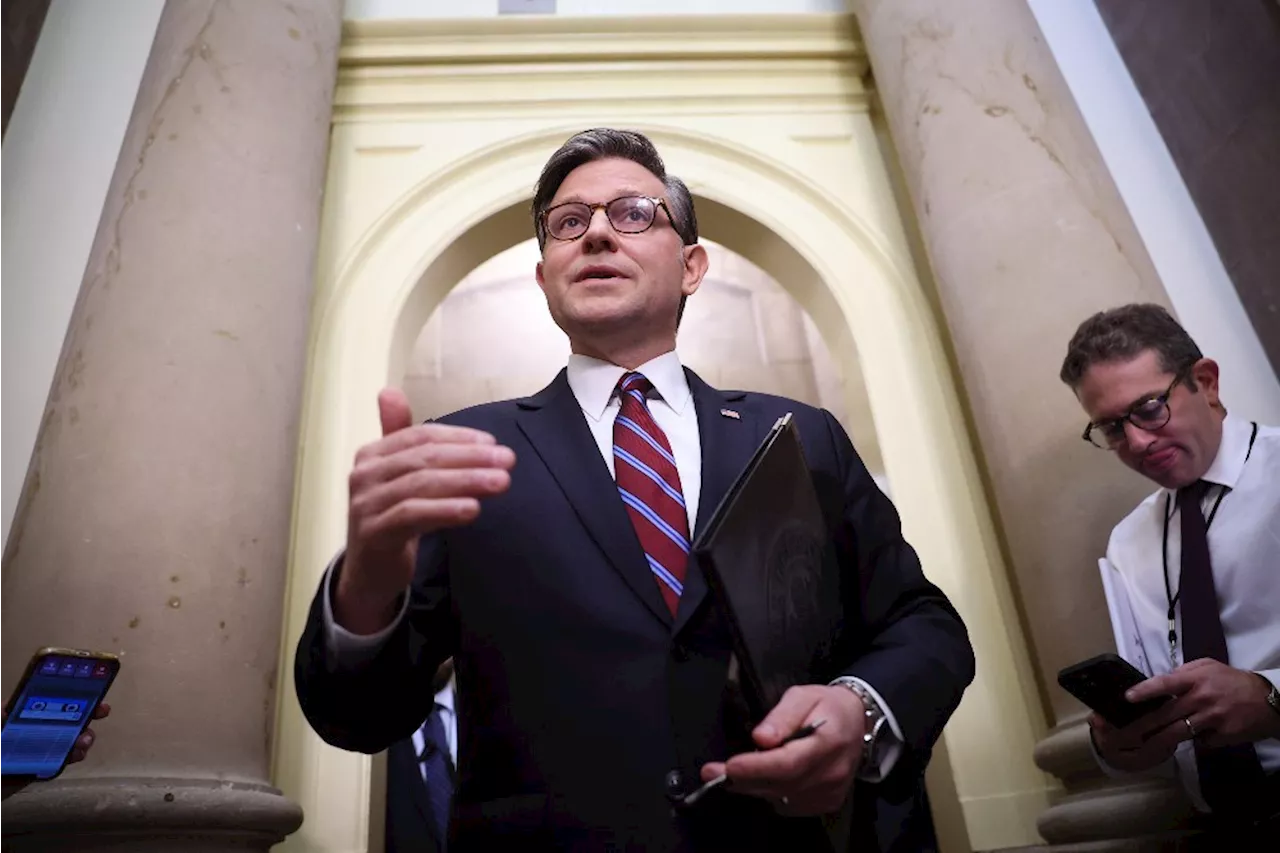
The US House of Representatives passed a bill on Wednesday that could impose tariffs of up to 100% on the top five purchasers of Russian energy. The 262-159 vote aims to cut off funding for the war in Ukraine by targeting major importers like China and India.
A 262-159 vote to target Russia's top five energy buyers
The legislation seeks to aggressively target foreign economies that continue to bankroll the Russian war effort through energy purchases. By authorizing duties as high as 100% on the five largest purchasers of Russian oil and energy products, the bill aims to make the cost of supporting Moscow's aggression economically unsustainable. Speaker of the House Mike Johnson (R-La.) applauded the move, stating that the era of countries "looking the other way" while Putin bankrolls the war must end.
The bill was a major priority for the late South Carolina Senator Lindsey Graham, who co-authored the legislation. According to the report, Ukrainian President Volodymyr Zelenskyy even traveled to the U.S. in July to attend Graham's funeral and make a final push for his colleagues to pass the measure. While the bill has garnered bipartisan support in the wake of Graham's death, the implementation of these massive tariffs remains a point of intense political friction.
Fears that President Trump will use 100% tariffs as an "economic cudgel"
Despite the goal of supporting Ukraine, several lawmakers have expressed deep concern regarding the level of power this bill grants to the executive branch. Critics argue that the legislation provides President Donald Trump with sweeping new authorities that could be used against U.S. allies rather than just adversaries. Congressman Gregory Meeks (D-N.Y.) noted that the President has a history of using tariffs against European allies, suggesting the new powers could be abused.
The debate highlights a growing tension between foreign policy objectives and domestic economic stability. Congressman Don Beyer (D-Va.) warned that while the bill allows lawmakers to claim they "stood with Ukraine," the long-term damage could be significant. as reported in the source, Beyer fears that if President Trump uses these powers to hit allies with new duties or waive sanctions on Russia,the resulting economic damage will become permanently embedded in U.S. law.
A high-stakes summit between Xi Jinping and Donald Trump next week
The passage of this bill comes at a moment of extreme geopolitical tension, specifically regarding the relationship between the United States and China. Chinese President Xi Jinping is scheduled to visit Washington next week to meet with President Trump, and the new tariff authorities are expected to be a primary topic of discussion. This meeting follows a recent summit in New Delhi, where an 11-nation bloc demonstrated its ability to leverage its 40% share of global GDP to counter Western trade dictates.
In preparation for this summit, Treasury Secretary Scott Bessent has schedued meetings with Chinese officials, including Vice Premier He Lifeng. These discussions will likely serve as a primer for the high-level negotiations between the two superpowers. The threat of 100% tariffs adds a heavy layer of complexity to what is already a fragile diplomatic landscape.
Will the 15% energy import exemption atcually protect key allies?
One of the most significant unanswered questions involves how the U.S. will define and enforce the "safe harbor" provisions within the bill. The legislation suggests that countries importing less than 15% of Russia's energy exports, or those actively working to curb their purchases, may be spared from the harshest penalties. However, it remains unclear how the U.S. will verify these claims or if the threshold will be subject to political negotiation.
Furthermore, the source does not specify which five countries currently sit at the top of the list for Russian energy purchases. Without knowing exactly which nations are in the crosshairs, it is difficult to predict which global markets will face immediate volatility. As American e-commerce companies prepare for the busiest selling season of the year, the potential for sudden, massive shifts in trade costs remains a significant unknown.
Comments 0