

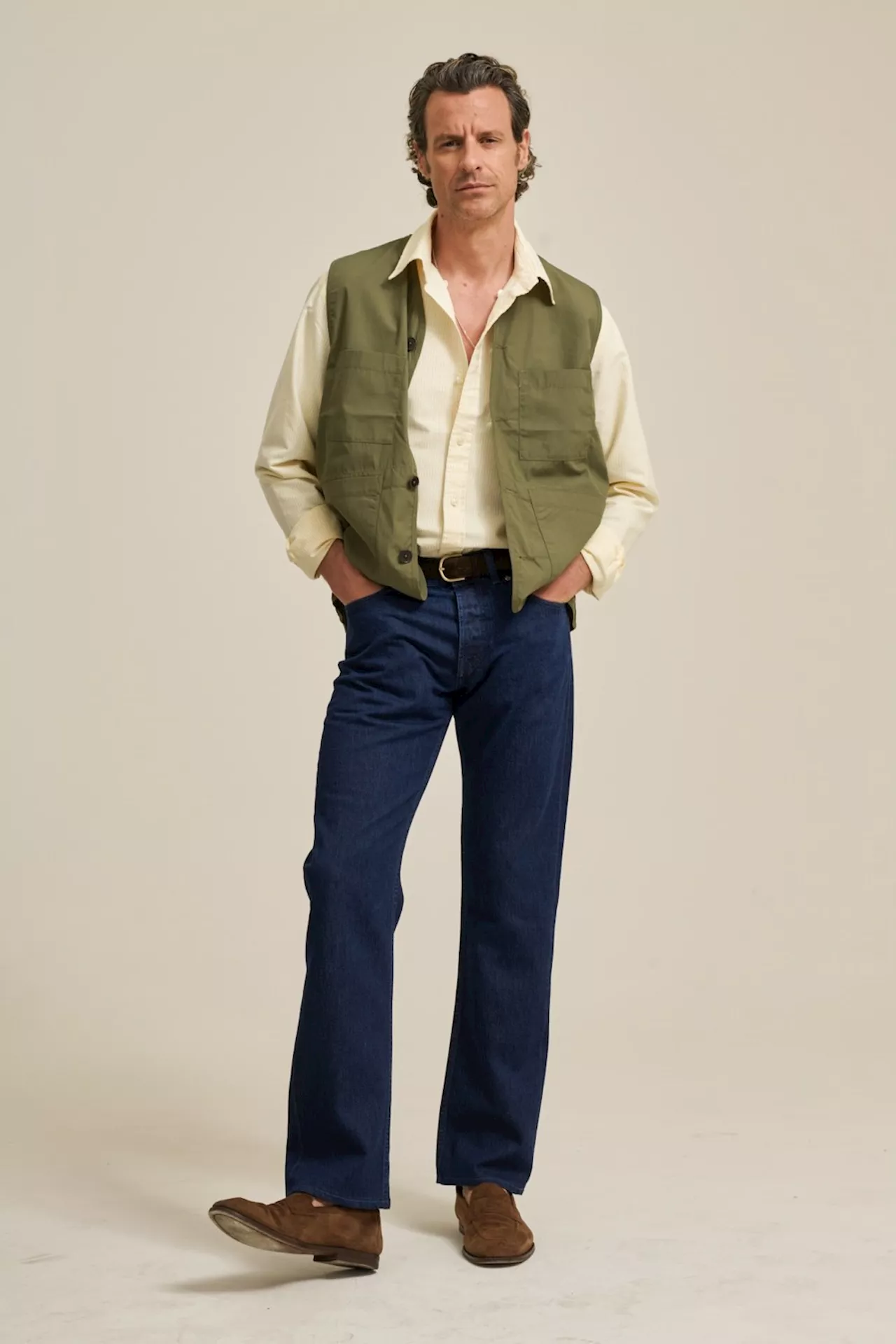
Denim manufacturers are preparing for a massive shift in color palettes for the Spring/Summer 2028 season. Moving away from traditional indigo, mills are experimenting with earth tones, layered washes, and hidden hues that only appear after laundering.
Naveena Denim Mills is introducing "hidden" green and smoky grey-brown layers
Naveena Denim Mills is moving away from standard blue with its new T39 and S6 fabric developments. According to Berke Aydemir, the senior general manager of R&D and technical sales, the T39 fabric features a brown-topped medium indigo that takes on a smoky grey-brown appearance. Once washed, it reveals subtle blue undertones.
The S6 development offers an even more dramatic transformation. This fabric utilizes a deep black top and an indigo core, but it is the green bottom that defines its character. Aydemir noted that after washing, the green becomes the primary color expression, a technique the mill uses alongside indigo coatings to create more controlled, premium-looking fades.
Candiani Denim and Calik are trading classic blue for sulphur-browns and "earth-infused" shades
The shift toward earth tones reflects a broader movement in fashion toward naturalism and grounding aesthetics. Candiani Denim owner Alberto Candiani noted that their new sulphur-based brown hues are designed to provide a "sophisticated touch," alongside a versatile sand color for a lighter look. The mill is also utilizing its innovative N-Denim technology, which uses nitrogen to slow oxidation and allow for deeper, more vibrant colors.
Similarly, Calik Denim is exploring how construction and color can work together to create depth. Eray Karaduman, the general manager at Calik Denim, stated that the "Colorama" group explores how surface and color create individual denim character. This includes the new "Blooming Shades" collection, which introduces colors infused with earth tones to expand the traditional language of indigo.
Zero-wastewater processes and nitrogen technology are redefining how denim ages
Innovation in dyeing is also driving significant environmental changes within the industry. Artistic Fabric Mills is offering pure indigo shades through zero-wastewater and zero-bleach processes, as reported by director Haya Iqbal Ahmed. these methods allow for very light washdowns while maintaining a lower environmental impact.
Other mills are prioritizing resource reduction through specialized chemical treatments. Iskur Denim is focusing on lower-impact dyes, such as Bio Indigo dyestuff, to achieve a rich character with fewer resources. sales manager Levent Bozgeyik explained that the goal is to achieve controlled, authentic-looking washes that avoid the aggressive effects of the past in favor of a naturally worn appearance.
Will consumers embrace the shift from "authentic indigo" to experimental tints?
While manufacturers are ready with "Emerald Blue," "Marsala ," and "Obsidian Blue," it remains to be seen if the average consumer is ready to move away from the safety of classic indigo. The report highlights a tension between technical innovation and market reality. For example, Bossa designer Jordan Nodarse is pushing for "authenticity without nostalgia becoming literal," yet the industry must still contend with consumer spending habits. While recent data suggests most shoppers aged 18-45 adjust their habits when prices rise, only 20 percent expect to actually cut spending, leaving an open question about whether these high-tech, multi-layered fabrics will be priced too high for the mainstream market.
Comments 0