
A series of autumn exhibitions across New York City are currently exploring the complex intersections of femininity, nostalgia, and creative expression. These shows highlight everything from the silent film era's costume design to the spiritual significance of Indigenous kachina dolls.
How the Wiener Werkstätte provided a creative loophole for women before the 1920s
For decades, the art world has suffered from a gendered divide where work created by women was dismissed as mere "craft" rather than fine art. As reported by the source, the Jewish Museum's exhibition "Modernity and Opulence: Women of the Wiener Werkstätte" illustrates how women used the decorative arts to bypass the restrictions of fine arts academies, which remained closed to them until the 1920s. By training at the Kunstgewerbeschule (School of Applied Arts), female artists found a vital entry point into the professional creative world.
The exhibition features more than 200 objects, including ceramics, jewelry, and block-printed textiles created by Jewish women artists. This movement echoes a broader historical trend where women's domesticity was weaponized to limit their ambitions, yet simultaneously provided the very tools they used to achieve commercial success. The show also highlights influential patrons like Adele Bloch-Bauer, reminding us that feminine influence in the arts has always existed, even when it was relegated to the sidelines of the official canon.
From 14th-century models to Monster High: The 170 objects in 'Doll Dressing'
The Museum at FIT is examining the doll not as a toy, but as a sophisticated transmitter of style. According to the report,the "Doll Dressing" exhibition showcases over 170 objects, tracing a lineage of miniature fashion models that dates back to 14th-century Europe. This historical perspective adds depth to our current obsession with "Barbiecore" and the hyper-feminine aesthetics domiinating TikTok and Instagram, framing them as part of a centuries-old dialogue about identity formation.
The exhibition blends high fashion with subversive play, featuring garments from luxury houses like Marc Jacobs , Loewe, and Moschino alongside Mattel’s Monster High line. By placing runway looks from designers such as Anna Sui and Jason Wu next to their miniature counterparts in the "Modes in Miniature" display, the Museum at FIT challenges the viewer to consider how the proportions of a doll influence our perception of beauty and style.
The transition from Henri Bendel to Hollywood studios in 'Goddesses in the Machine'
The evolution of the American film industry is often told through the lens of directors and actors, but the Museum at FIT's "Goddesses in the Machine" shifts the focus to the architects of the image. The exhibition tracks the progression of costume design from the late 19th century through the late 1920s, marking the pivotal shift from actors wearing their own wardrobes to the rise of professional New York designers like Lucile, Lady Duff-Gordon, and Henri Bendel.
As the industry migrated toward Hollywood studios, designers like Travis Banton and Clare West became essential to storytelling, using clothing to define character arcs... This shift mirrors the broader professionalization of fashion, where the "costume" became a tool for offscreen branding, effectively creating the first era of celebrity style influencers long before the advent of social media.
The 53 kachina dolls and 18th-century samplers redefining 'schoolgirl art'
While some exhibitions focus on the commercial, others explore the spiritual and educational. The Brooklyn Museum is presenting more than 120 artworks, including 53 kachina dolls crafted from cottonwood, which represent spirits that maintain world balance in Hopi traditions. These objects are not merely artistic; they are integral to milestones in a Hopi woman's life, such as marriages and baby-naming ceremonies .
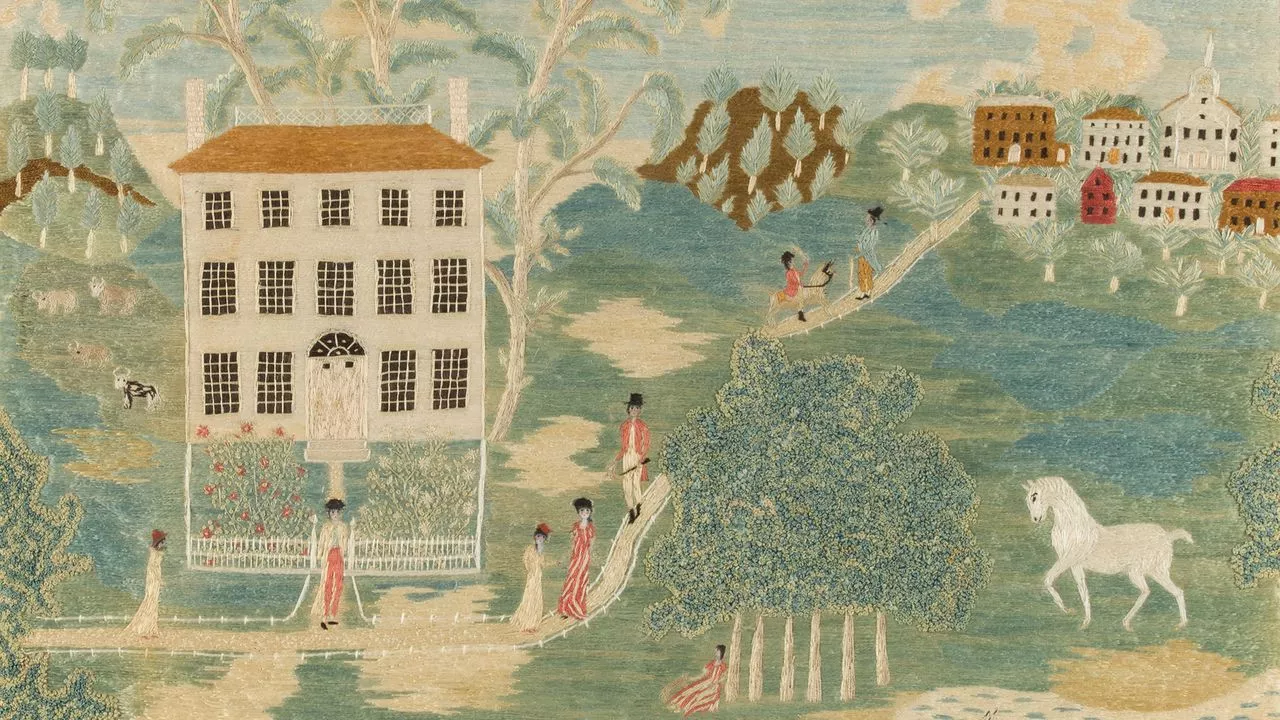
Simultaneously, the American Folk Art Museum's "Locating Girlhood" exhibition is challenging the devaluation of "schoolgirl art." Featuring nearly 100 works from the 18th and 19th centuries, the show argues that the samplers and watercolors created by young women were not just educational exercises, but complex reflections of their inner worlds and shifting social values.. This reclamation of needlework as a conceptual art form aligns with the modern "slow craft" movement, where Gen Z is rediscovering crochet and embroidery as acts of mindfulness and rebellion against fast fashion.
What the Hispanic Society's mantilla exhibit reveals about Spanish national identity
The Hispanic Society Museum & Library is currently hosting the first major museum exhibition dedicated to the mantilla, the iconic Spanish lace veil. Curator Carlos Usabiaga notes that the garment serves as a symbol of modesty and femininity, while also acting as a marker of national identity from the 18th century to the present day.
However, some details remain unexplored in the current reporting. While the exhibition includes contemporary designers who have reinterpreted the mantilla, the source does not name these specific creators or explain which particular political histories the garment illuminates. Furthermore, it remains unclear how the museum balances the mantilla's history as a symbol of modesty with its modern evolution as a high-fashion statement.
Comments 0