
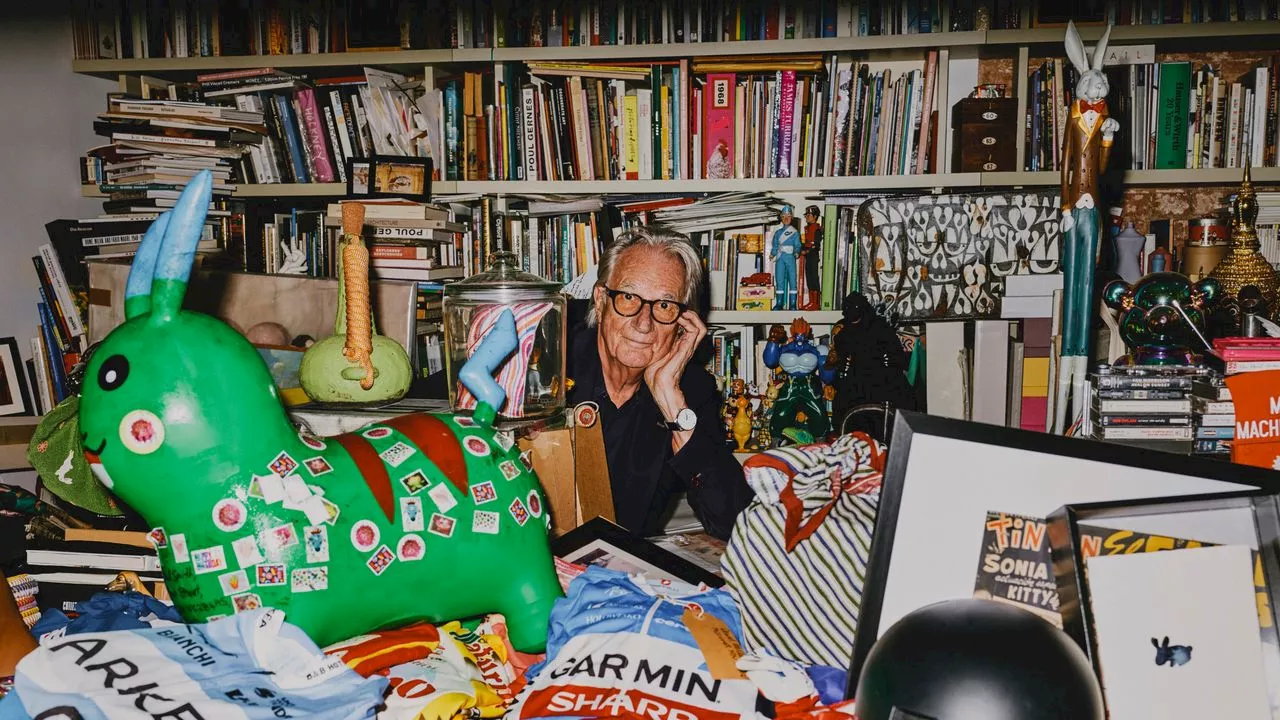
At 80 years old, British fashion designer Paul Smith has penned a reflective letter addressed to his younger self.. The piece traces his journey from a Nottingham childhood to becoming a global menswear powerhouse.
The "Paul's Garage" lesson in recycling and early Nottingham roots
The foundation of Paul Smith's unconventional approach can be traced back to his childhood in a Nottingham suburb. As the report details, his early years were marked by a sense of being an "afterthought" in a family with older siblings, often playing with hand-me-down toys. One specific example was a toy garage originally labeled "Brian's Garage"—belonging to his brother—which was later repurposed to say "Paul's Garage."
This early experience with second-hand items served as a precursor to a career defined by creativity and resourcefulness. Beyond the garage, Smith's childhood was shaped by two pivotal gifts at age 11: a proper camera and a racing bike. While a serious accident at age 17 ended his cycling ambitions, the period of recovery in a hospital ward taught him the value of using humor to connect with others.
How Pauline Denyer and the Royal College of Art shaped his standards
A significant turning point in Smith's professional life occurred when he met Pauline Denyer, an art college teacher from London. According to the text, Denyer's influence was profound; her education at the Royal College of Art brought a level of rigor to his work that would define his brand. She introduced him to the high standards of Parisian couture, including the works of Chanel, Balenciaga, and Yves Saint Laurent.
This partnership moved Smith from running the menswear department at the Nottingham boutique Birdcage to opening his own shop in a tiny room off an alleyway. In those early days, he only opened on Fridays and Saturdays, working as a freelance stylist the rest of the week to fund his vision. This period of grit eventually led to the opening of his first London shop in Covent Garden in 1979.
Building a 200-shop empire through Japanese values of politeness
While many British designers treat the Japanese market as a brief stop, Paul Smith built a massive presence there by committing to long-term relationships. He eventually expanded to more than 200 shops in Japan, often shipping mahogany fittings and oil paintings from England to ensure the right atmosphere . He credits his success to adopting local values such as politeness and punctuality.
This global expansion coincided with the rise of the "Big Bang" in the City of London, which fueled a demand for high-quality suits among young bankers. It was during this era of growth that Smith's brand became intertwined with cultural icons, including a friendship with David Bowie, who famously visited the Covent Garden shop.
From 17,000 Filofaxes to 700,000 pairs of colorful socks
The Paul Smith brand has been defined by an ability to spot trends and reinvent them. The designer successfully revived the popularity of the suit and even brought boxer shorts back into the mainstream by finding a specialized manufacturer in Manchester. His knack for accessories also led to massive commercial success, with his sock collections reaching sales of 700,000 pairs a year.
Even in the digital age, Smith's instincts for physical goods remained sharp.. He famously sold approximately 17,000 Filofax organizers before the advent of the smartphone made such personal planners obsolete. This pattern of identifying useful, stylish objects has remained a constant throughout his eight decades.
What lies inside the "inside of his head"?
Despite his massive success, several aspects of Smith's creative process and the future of his brand remain personal and unverified. While the report notes that his London headquarters is filled with a chaotic mix of art, toys, and historic cycling jerseys, it leaves us wondering how he maintains such a distinct, non-corporate identity in an increasingly homogenized global market. Is his "unconventional" spirit a sustainable business model, or is it a rare relic of a bygone era of independent design?
The designer's recent work in Los Angeles, specifically the bright pink, Luis Barragán-inspired shop at 8821 Melrose Avenue, suggests he is still leaning into the unexpected.. Whether his brand can continue to navigate challenges like Brexit and post-pandemic shifts while remaining true to his "pink shoebox" aesthetic is the question that remains for the next decade of his career.
Comments 0