
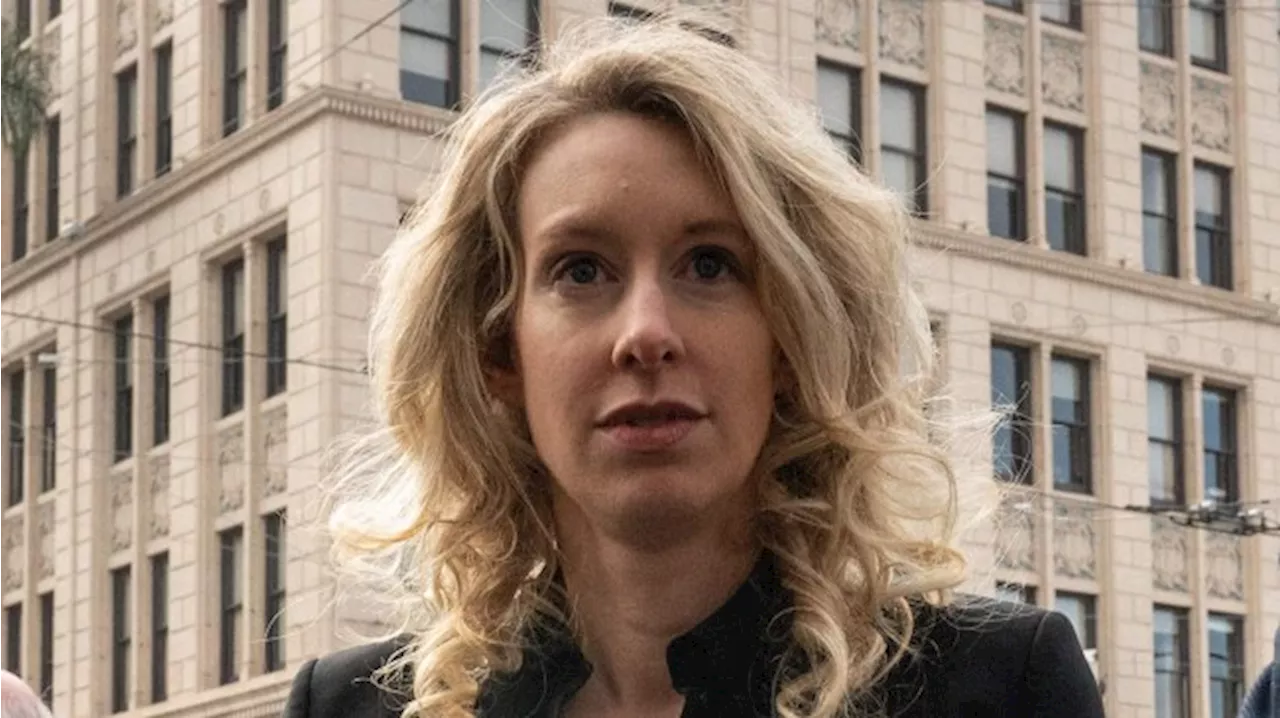
Elizabeth Holmes, the founder of Theranos, is scheduled to move to the Austin Transitional Center on August 23, 2027. This update comes amid renewed public interest following an A24 documentary that highlights Holmes' perspective on her own public image.
"They're playing a character I created": The A24 documentary revelation
A new A24 documentary has brought a startling admission from Elizabeth Holmes back into the spotlight. According to the report, reporter Amy Chozick recalled a moment where Holmes discussed her portrayal on screen, stating, "They’re not playing me. They’re playing a character I created." This quote, which Chozick had flagged as a critical moment in her notes , suggests a level of conscious curation in how the Theranos founder presented herself to the world.
This admission echoes a broader trend of "performance" in the tech world, where founders often craft a visionary persona to attract investors. For Holmes, the distance between her actual self and the "character" she projected became a central theme of her downfall,as she leveraged the credibility of a high-profile board to maintain a facade of success.
The transition to Austin Transitional Center on August 23, 2027
The legal timeline for Elizabeth Holmes is shifting as she nears the end of her incarceration. As the report says, Holmes is set to move into the Austin Transitional Center, a halfway house in Texas, on August 23, 2027. this move follows a period of confinement at the Federal Prison Camp Bryan in Texas, where she reported on May 30, 2023.
Her time behind bars has been slightly shortened. While she was originally sentenced to 11 years and three months on November 18, 2022, her sentence was reduced to 10 years and three months in March 2026. This reduction brings her one step closer to reintegrating into society, though the shadow of her convictions remains.
How a 19-year-old Stanford dropout built the Theranos myth
The rise of Elizabeth Holmes began in 2003 when she was just 19 years old. After dropping out of Stanford University, she launched Theranos—a name combining "therapy" and "diagnosis"—with the ambitious goal of transforming healthcare . The company clamed it could perform a wide array of medical tests using only a single prick of blood, eliminating the need for traditional needles and multiple vials.
However, the vision was built on deceit. On January 3, 2022, Elizabeth Holmes was found guilty of three counts of wire fraud and one count of conspiracy to commit wire fraud. Prosecutors argued that she chose deceit over candor, forging endorsements and preying on the hopes of investors to attain billions of dollars in wealth and global fame.
"I regret my failings with every cell": The conflict of the Holmes apology
Throughout her legal battles, Elizabeth Holmes has oscillated between deep remorse and a sense of victimhood. In a statement to the San Jose court, she claimed to be "devastated" by her failings and apologized to patients, investors, and employees, stating, "I regret my failings with every cell in my body."
Despite these apologies, Holmes has maintained a level of detachment. She told the outlet that people who have never met her believe things about her that are untrue, describing her experience as "hell and torture." By claiming she is "not the same person" she was during the Theranos era, Holmes continues to frame her life as a series of chapters rather than a continuous line of accountability.
The missing details on the $800 million restitution request
While the report details the length of her sentence,several critical financial questions remain unanswered. Federal prosecutors originally requested a payment of $800 million in restitution to compensate the victims of the Theranos fraud. It remains unclear exactly how much of this sum Elizabeth Holmes has paid or what her current financial plan is to satisfy these debts.
Furthermore, the source primarily focuses on the perspective of Amy Chozick and Elizabeth Holmes regarding the A24 documentary. It remains to be seen how the victims of the Theranos blood-testing failures—the patients who received inaccurate medical results—view Holmes' framing of her life as a "character" study.
Comments 0