
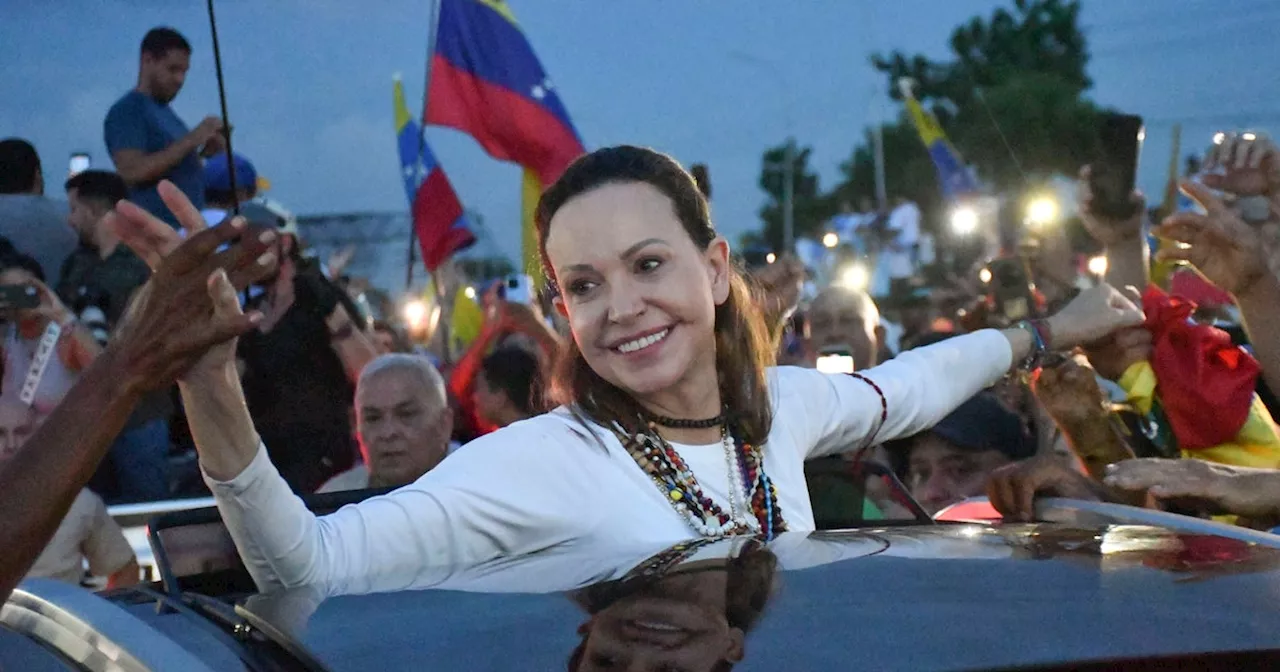
Maria Corina Machado, the Nobel Peace Prize-winning opposition leader, returned to Venezuela on Sunday after spending months in exile. Her arrival in Lara state marks a pivotal moment as the country navigates a fragile political transition following the removal of Nicolás Maduro.
The emotional return to Lara state after seven failed attempts
The scene in west-central Venezuela was one of high drama as Maria Corina Machado entered a church in Lara state,greeted by applause and tears from supporters. According to the report, the return follows a grueling period of exclusion; Machado and her team claim she made seven unsuccessful attempts to enter the country. These efforts included a charter boat trip that was canceled due to the vessel being deemed unfit and a flight to Curacao that was blocked by a denial of landing permits.
For the women and men waiting in Lara, the moment felt like a "miracle," with some pleading that the future of their children now rests in Machado's hands. However, the optics of the return contrast sharply with the clandestine nature of her previous escape from the country after being briefly detained in January 2025.
Donald Trump's 'nice woman' comment and the Nobel Prize gift
The geopolitical layer of this return is heavily tied to the United States. President Donald Trump characterized Maria Corina Machado as a "very nice woman," noting that she had given him her Nobel Prize. While Trump's comments were light, U.S. Secretary of State Marco Rubio provided a more strategic framing on X, stating that Machado's safe return is the "direct result of the U.S. supported reconciliation talks."
The U.S. government has signaled that it expects the freedoms of all political sectors in Venezuela to be respected.. However, a clear tension exists in Washington's strategy: while Machado demands immediate elections, U.S. officials have emphasized that economic stabilization and the rebuilding of institutions, such as the courts, must come first.
The 2024 election where Edmundo González won by a 2-to-1 margin
To understand why Machado's return is so volatile, one must look at the wreckage of the 2024 presidential cycle. Machado had won an opposition primary in October 2023, but the Venezuelan government barred her from running. Edmundo González stepped in as her proxy, and as the report notes, credible evidence showed González defeated Nicolás Maduro by more than a 2-to-1 margin.
Despite this , the ruling-party loyalists in the National Electoral Council declared Maduro the winner. This sparked a wave of government repression , including torture and the detention of over 2,000 people, including poll workers. This history of state violence makes the current "reconciliation" feel precarious to many observers.
The tension between Machado's demands and Rodríguez's 'right moment'
The current power structure in Caracas is led by an interim president, Rodríguez, who replaced Nicolás Maduro in January. The legal basis for this leadership is shaky; the highest court allowed Rodríguez to serve for 90 days, potentially extendable by another 90, but the ruling party-controlled assembly never actually voted to extend her term.
Maria Corina Machado and her allies are now demanding a firm date for a new presidential election to legitimize the government. However, Rodríguez has remained vague, telling the U.N. General Assembly in September that the Venezuelan people will determine the "right moment" for such a vote, leaving the opposition in a state of perpetual waiting.
Whether the US military's capture of Maduro in January 2025 changed the game
The most significant shift in the landscape occurred in January 2025, when the U.S. military captured Nicolás Maduro in Caracas and transported him to New York to face drug-related charges. This vacuum of power created the opening for the current interim government, but it also left several critical questions unanswered.
It remains unclear whether the Trump administration was involved in the previous efforts to stop Machado from returning, a claim made by opposition activists but denied by U.S. officials.. Furthermore, as noted by professor Brian Fonseca of Florida International University, it is still unknown how much actual latitude Machado will be given to operate or if her return is merely a symbolic gesture to appease international observers.
Comments 0