
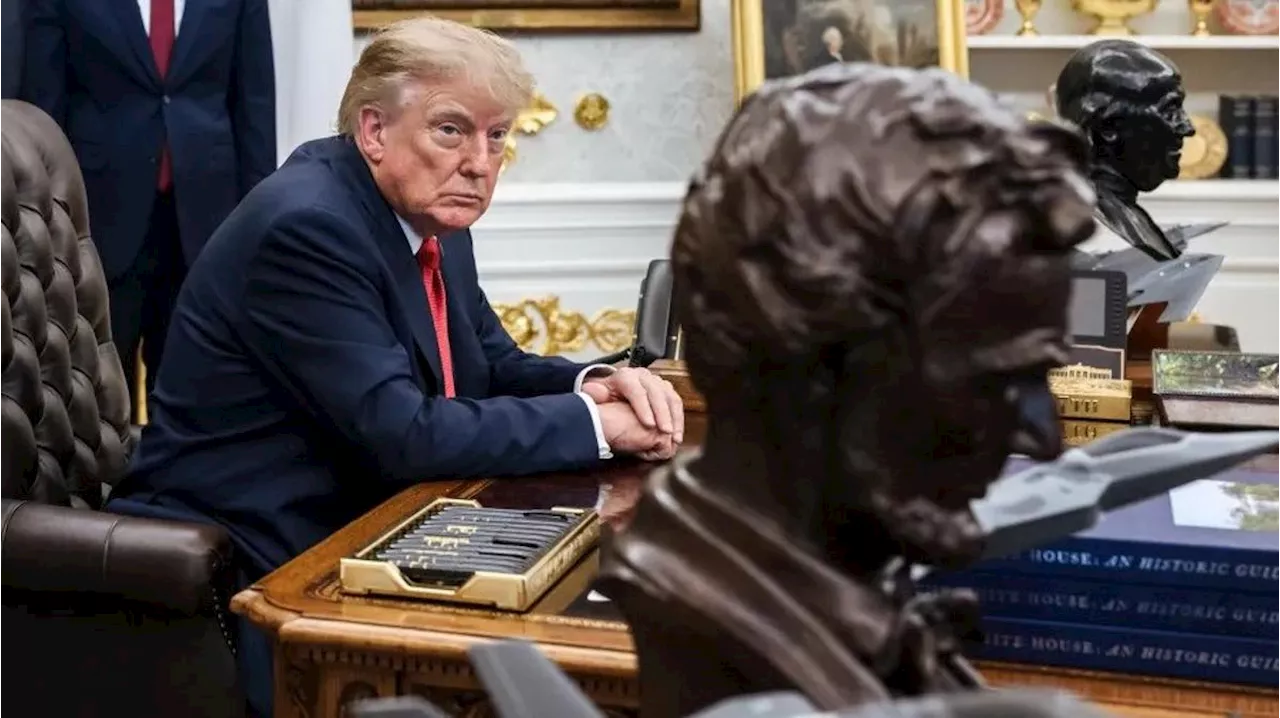
With only 39 days remaining until the midterm elections, a growing number of Republican candidates are distancing themselves from Donald Trump. This shift follows a plunge in the president's popularity , marked by a net -22.4 approval rating.
The vanishing 'Trump-Endorsed' labels on Byron Donalds' website
For many GOP candidates, the retreat from Donald Trump is happening quietly in the digital space. According to the report, Florida Representative Byron Donalds has undergone a dramatic website overhaul, stripping away prominent references to his endorsement from Donald Trump. Where Donalds was previously branded as a "TRUMP-ENDORSED Proven Conservative Fighter," he is now presented as a humble servant of Florida.
The scrub extends beyond text; a photograph of Byron Donalds and his wife, Erika, posing with Donald Trump has been removed entirely. Most telling is the shift in priorities: the landing page that once listed "Enact the Trump Agenda" as its primary goal now leads with "affordability." This suggests that for candidates like Byron Donalds,the personal brand of Donald Trump has become a liability rather than an asset in the general election.
Why Ashley Hinson is trailing Josh Turek by 8 points in Iowa
In Iowa, the distancing is more vocal and centered on foreign policy. Republican Senate nominee Ashley Hinson has stated that the war with Iran "needs to be brought to a successful and immediate end," a pivot that comes despite her previously voting against House resolutions to end the conflict. This shift is likely a response to polling indicating that Democratic challenger Josh Turek holds an 8-point lead among registered voters, even in a state that favored Donald Trump by 13 points in 2024.
Ashley Hinson is not alone in this strategic pivot. Fellow Iowa Representatives Zach Nunn and Mariannette Miller-Meeks recently joined House Democrats in a symbolic vote to limit the war powers of Donald Trump. Similarly, Michigan GOP Senate nominee Mike Rogers has called for the Iran war to end quickly. These moves signal a broader trend where Republican candidates are attempting to insulate themselves from the perceived failures of Donald Trump's administration to survive a "blue tsunami" at the polls.
Maria Elvira Salazar's claim that Hispanic voters feel 'betrayed'
While some are scrubbing websites, Florida Representative Maria Elvira Salazar has taken the more direct route of public rebuke. In a campaign advertisement, Salazar complained to Donald Trump that his immigration enforcement efforts have "gone too far," claiming that the Hispanic constituents who helped elect him in 2024 now feel "betrayed." This is a stark reversal for a politician who previously championed the administration's hardline stance.
The tension is particularly acute given the demographics of the region.. As the report notes, Donald Trump won the state of Florida by 13 points in 2024, and Maria Elvira Salazar won her own district by nearly 21 points. Salazar's decision to publicly clash with Donald Trump suggests a belief that her base now despises the president, making a public break necessary for her own political survival.
The net -22.4 approval rating driving a GOP retreat
This wave of defections is anchored in a collapse of public support for Donald Trump, who has hit a historic low with a net -22.4 approval rating. The retreat is most evident among candidates in "purple" states, but it is also appearing in deep red territory. For example, Kentucky's Andy Barr is navigating a campaign in a state Donald Trump won by 32 points in 2024, yet the general atmosphere within the GOP is one of strategic avoidance.
This pattern echoes previous political cycles where candidates used a polarizing figure to win primaries only to pivot toward the center for the general election. However, the current scale of the retreat suggests that the "Trump brand" is currently viewed as toxic regarding "kitchen table issues" and economic stability, forcing candidates to choose between party loyalty and their own seats in Congress.
Why Trump hasn't yanked endorsements from Hinson and Rogers
One of the most puzzling aspects of this current political climate is the silence from the White House. In the past, Donald Trump would have likely retaliated against candidates like Ashley Hinson or Mike Rogers by withdrawing his endorsements. However, the report suggests that Donald Trump is now tolerating these defections to avoid further scrutiny and attention.
This lack of retaliation raises a critical question: has Donald Trump lost the psychological control he once held over the Republican party? While the report highlights the rate of defections, it remains unclear if this is a calculated move by Donald Trump to stay out of the spotlight or a sign that he no longer possesses the power to intimidate his own party members into total submission.
Comments 0