


The Myth of the Grand Escape
In modern professional paradigms, the two-week holiday is frequently positioned as the definitive metric of success. This long-duration model regularly induces a plateau in satisfaction, as the initial psychological benefits diminish over time, leading to a volatile re-entry phase. Data suggests that bifurcating this leave into two distinct intervals effectively doubles the frequency of psychological "resets," a vital mechanism for maintaining cognitive health under high-stimulation conditions.

The efficacy of leisure is rooted in "anticipatory joy," a neurochemical process driven by dopamine that mirrors the benefits of the travel experience itself. By scheduling two separate breaks, one constructs two distinct peaks of anticipation. This strategy leverages cognitive spikes to sustain mental clarity and creative output more effectively than a singular, extended temporal block.

Understanding the 'Vacation Plateau'
Analysis of recovery patterns reveals an adaptation phase occurring between seven to ten days. Beyond this timeframe, the novelty of the vacation environment frequently decreases, causing cognitive focus to regress toward professional obligations and domestic maintenance. The data indicates that during long vacations, the mind often fails to maintain a state of deep recovery, signaling a stall in the restorative process.

Research suggests that the utility of downtime is finite. A shift toward compressed, four-to-five-day intervals creates an intentionality that maximizes focus. By restricting the timeframe, the opportunity for passive or detrimental behaviors—such as excessive digital consumption—is statistically reduced in favor of high-engagement activities.
The Neurobiology of Anticipation
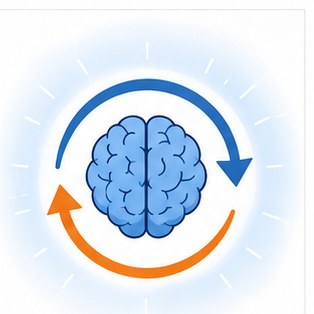
Planning time off serves as a critical variable in mood regulation. Because reward centers in the brain are activated during the planning phase, consolidating all vacation days into a single event limits the subject to one instance of this neurochemical boost. Conversely, dividing the time into two intervals provides a dual-occurrence model, sustaining life satisfaction metrics across a broader span of the calendar.

This multiple-milestone approach serves as a functional buffer against burnout. By replacing one distant objective with smaller, reachable goals, the cognitive load is better managed, mitigating the "languishing" states that often emerge during extended, monotonous work cycles.
Enhancing Re-entry and Reducing Stress
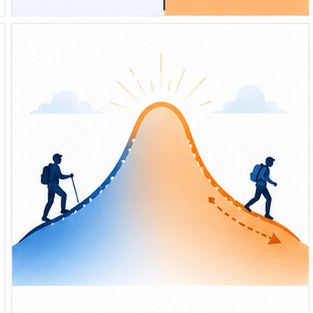
The "re-entry blues" represent a measurable post-vacation slump that can extend for days or weeks. This phenomenon suggests that a two-week detachment creates a significant discrepancy between an individual's vacation state and their work environment, leading to a jarring reintegration.

Shorter vacation durations facilitate a reduced delta between the "holiday self" and the "work self." By maintaining more frequent contact with professional rhythms, the transition back is characterized by a smoother return to flow states rather than a complete recalibration, effectively eliminating the destabilizing "boom-and-bust" cycle.

The Power of Micro-Adventure Design
Micro-adventure design optimizes the quality-to-duration ratio of downtime. By operating within a reduced timeframe, individuals prioritize curative activities over passive scheduling,focusing on the density of the experience rather than the volume of days.

The most restorative experiences are not those that occupy the most time, yet those that occupy the senses completely, leaving no room for the worries of the past or the anxieties of the future.
The four-day micro-adventure framework provides a tangible goal that promotes psychological health through accomplishment. By setting specific,attainable objectives for these compressed time windows, the cognitive benefit is amplified,directly countering the inefficiencies of longer, unstructured periods.

Sustaining Creative Flow
Creative output requires alternating cycles of intense focus and incubation. A two-week duration can exceed the optimal threshold for maintaining momentum,whereas a single day is regularly insufficient for deep processing.
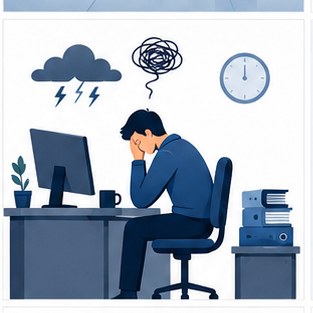
Splitting vacation time into two segments allows for two discrete incubation cycles. In this rhythmic process,the first trip serves as a data-gathering phase, while the subsequent return, integration and second cycle reinforce a productive, balanced internal state. This oscillation mirrors the brain's natural functional requirements for innovation.

Cultivating a Lifestyle of Intentional Rest
Transitioning to a model of multiple,shorter vacations shifts the categorization of rest from a uncommon reward to a recurring maintenance requirement. Auditing the calendar for these windows prioritizes the cognitive benefit of scenery changes and disconnection over the cost or distance of the endeavor.

The evidence indicates that recovery is a byproduct of structural organization. By diversifying these rest periods, one enhances resilience against modern stress factors, building a lifestyle characterized by architectural intent rather than reactive burnout.

Ultimately, distributing rest across multiple chapters creates a more spacious and resilient calender. When evaluating vacation balances, prioritizing two distinct periods of leave, rather than one consolidated block, optimizes the trajectory of both professional performance and personal restoration.

Note: Some images in this content were generated by AI.
Comments 0